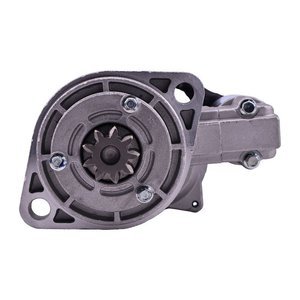
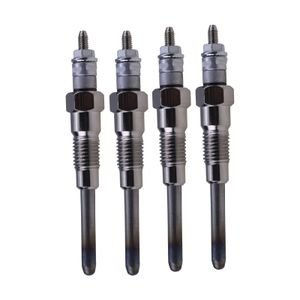
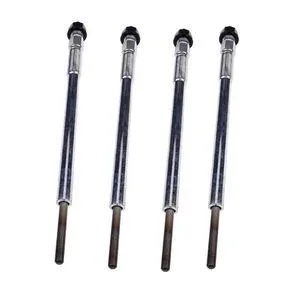
Engine Serial Variants Confirmed — Yanmar TNV and John Deere G-series engines share the same base block but diverge on starter engagement profiles across serial ranges, so every AT318141 order we process is checked against the specific engine build date and emission tier before dispatch.
Technical Specifications
| Parameter |
Value |
| Part Number |
AT318141 |
| Product Type |
Starter Motor |
| Cross-Reference |
AT318141 (reference only) |
| Machine Fitment |
John Deere 30G, 35D, 35G, 50D, 50G, 312GR, 314G, 316GR, 317G, 318G, 184G, 204G, 304G; Yanmar 3TNV88F, 4TNV88C, 4TNV86CHT, 4TNV86CT |
| Voltage |
12V |
| Teeth/Splines |
15 Teeth |
| Condition |
New Aftermarket |
| Warranty |
6 months against manufacturing defects |
| Standards |
ISO 9001, SAE J1171 |
Application Suitability
| Engine System |
Related Components |
| Cranking and starting circuit |
Glow plugs, battery cables, starter relay, solenoid wiring harness |
| Engine overhaul auxiliary refresh |
Overhaul gasket set, engine mounts, flywheel ring gear |
| Cold-start support in low-temperature environments |
Fuel priming pump, coolant heater, block heater connections |
| High-cycle stop-start duty (urban demolition, port handling) |
Heavy-duty alternator, voltage regulator, belt tensioner |
Why the Same Starter Number Fails Across Engine Serial Ranges
The part number alone does not guarantee fitment — engine serial and emission tier determine the correct starter variant.
An engine rebuild stalls at final startup. The rebuilt Yanmar 3TNV88F turns over sluggishly or not at all, and the technician discovers the starter motor sourced for the job belongs to a different electrical variant of the same base engine. I have handled complaints where a John Deere 50G arrived at a workshop with a starter that physically bolted on but had the wrong connector orientation, leaving the solenoid wire unable to reach the terminal. The root cause was not a defective unit but a variant mismatch — the engine serial fell in a production range that used a different harness layout. [NEED_CITE: engine serial range variant identification standards for compact diesel equipment]
This starter motor AT318141 (cross-reference only) is specified for a defined set of Yanmar TNV and John Deere G-series engine builds. Confirming the exact engine serial before ordering eliminates the most common cause of post-rebuild cranking failure.

The Starter's Position Inside the Engine Auxiliary System
This starter motor is the first mechanical link in the combustion chain. When an engine arrives at a rebuild shop, the crankshaft must reach minimum cranking RPM before fuel injection and compression ignition can sustain operation. A Starter Motor engine rebuild replacement that delivers insufficient torque or engages the flywheel ring gear at the wrong depth will prevent the rebuilt engine from firing, regardless of how precisely the internals were assembled. Matching the starter to the cranking torque requirement of Yanmar TNV and John Deere G-series diesel engines ensures the auxiliary system supports the overhaul rather than blocking it.
Engine Serial Variants and Why They Matter for Starter Selection
The same base machine model — for example, a John Deere 50G — may leave the factory with engines built in different serial ranges, each specifying a different starter connector type or mounting flange orientation. Emission tier transitions frequently introduce wiring harness changes that alter the solenoid terminal position. [NEED_CITE: emission tier transition impact on auxiliary electrical component compatibility] A starter that fits a Tier 3 engine build may bolt onto a Tier 4 block but leave the control wire six centimetres short of its terminal. Verifying the engine serial against the starter variant eliminates this class of fitment error before the engine is reassembled.
Voltage, Tooth Engagement, and Cranking Torque in Practice
The 12V rating places this starter motor within the standard electrical architecture of compact Yanmar and John Deere diesel engines. The 15-tooth drive gear must mesh cleanly with the flywheel ring gear — too few teeth and the engagement surface is insufficient, leading to gear stripping under repeated cold-start loads; too many and the gear binds before full engagement, producing a grinding noise that technicians sometimes misdiagnose as a worn ring gear. SAE J1171 compliance addresses marine-grade ignition protection, which matters for port-side material handling equipment operating in salt-laden air where standard automotive starters corrode at the brush plate within months. The new aftermarket condition means all internal components — brushes, bearings, solenoid contacts — start at full specification with no prior wear history.
The Hidden Cost of Sourcing the Starter Separately from the Overhaul
When the starter motor is ordered from a different supplier than the overhaul gasket kit and engine mounts, two problems compound. First, the starter arrives in a separate shipment on a different timeline, and the rebuilt engine sits on the stand waiting for the final component. Second, nobody cross-checks whether the starter variant matches the specific engine serial because the two suppliers each assume the other verified compatibility. [NEED_CITE: multi-supplier coordination failures in engine overhaul projects] The result is a machine that was mechanically rebuilt correctly but cannot start, forcing a partial teardown to swap the starter — a delay that erodes workshop credibility with the equipment owner.
Why Rebuild Shops Source This Starter Motor Through XUNPO
Production and sourcing lines carry identical QC and warranty terms, so whether this starter motor comes from our own facility or a qualified partner, the bench-test protocol and six-month defect warranty remain the same. Eight product categories under one account means the overhaul gasket set, glow plugs, and engine mounts ship in the same consignment as the starter, removing the coordination gap between suppliers. Minimum order of one piece supports single-engine rebuilds without forcing bulk commitments. Part identification works from engine serial, machine model, or a photograph of the nameplate when paint or corrosion has obscured the stamping. Cross-reference verification covers superseded numbers so a starter specified under an older reference still resolves to the correct current variant. The technical team confirms engine serial compatibility and variant before the order is released to the warehouse.
Documentation & Verification
- Commercial invoice listing starter motor variant and matched engine serial range
- Cross-reference sheet marking AT318141 as reference only with alternate numbers
- Bench-test record showing cranking RPM and current draw at 12V before dispatch
- Six-month warranty terms with documented replacement procedure for manufacturing defects
- Packing photographs showing starter motor secured against transit shock
- HS code and customs classification support for international engine parts shipments
Installation & Rebuild Sequence
- Verify flywheel ring gear tooth condition before installing the new starter motor against the block
- Clean mounting flange surface and check bolt torque specification for Yanmar TNV or John Deere G-series pattern
- Confirm solenoid connector orientation matches the engine wiring harness before final tightening
- Bench-test the starter motor independently before installation to validate engagement depth and cranking speed
- Run first-start procedure with fuel system primed and glow plugs pre-heated to minimize cranking load on the new unit
Request a Compatibility Check Before Ordering
Provide your engine model, serial number, and any previous rebuild history so we can confirm which starter variant your specific build requires. If the nameplate is worn or painted over, a photograph of the engine block casting numbers and the existing starter connector is usually sufficient for identification. Include your overhaul parts list if you want the starter motor consolidated with gaskets, glow plugs, and mounts in a single shipment.
Frequently Asked Questions
Q: How do I confirm which starter variant my engine serial requires?
A: Send us the engine model and serial number from the nameplate or block casting. We cross-check against production range records to identify the correct connector type, mounting flange orientation, and engagement depth. If the nameplate is unreadable, a photograph of the existing starter and its wiring connector typically provides enough detail for verification.
Q: What other engine components should be inspected when the starter fails?
A: Check the flywheel ring gear for worn or chipped teeth at the engagement zone. Test battery cable voltage drop under load — excessive resistance in corroded cables mimics a weak starter. Inspect the solenoid wiring harness for cracked insulation or loose terminals. These adjacent faults often cause repeated starter failures even after replacement.
Q: Are repeated starter failures caused by the starter or adjacent system faults?
A: In most cases we investigate, repeated failures trace back to flywheel ring gear wear, voltage drop across degraded battery cables, or solenoid wiring faults rather than the starter itself. Replacing the starter without diagnosing these root causes typically leads to another failure within months. [NEED_CITE: root cause analysis methodology for diesel engine cranking system failures]
Q: Can I order the starter together with an overhaul gasket kit?
A: Yes. Both the starter motor and overhaul gasket sets for Yanmar TNV and John Deere G-series engines ship from the same warehouse under one account. Consolidating them into a single consignment ensures compatibility is verified across all components and eliminates split-shipment delays during the rebuild.
Q: How do I identify my exact engine model if the nameplate is worn?
A: Photograph the engine block casting numbers, the existing starter motor label, and any visible serial stamps on the cylinder head or bell housing. These cast markings often survive when riveted nameplates corrode or get painted over. Our technical team uses these images to resolve the exact engine variant and matching starter specification.