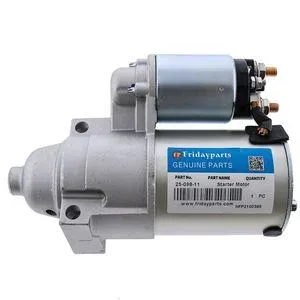
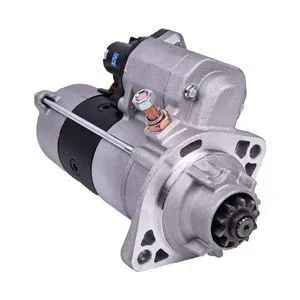
Engine sequence variants confirmed — every 25-098-11 starter motor ships with cross-reference verification matched to your specific Kohler CH or CV engine serial prefix, ensuring the correct ring gear mesh and mounting configuration before dispatch.
Technical Specifications
| Parameter |
Value |
| Part Number |
25-098-11 |
| Product Type |
Starter Motor |
| Cross-Reference (reference only) |
25-098-11-S, 2509811, 2509811S, 128000-7480, 1280007480 |
| Machine Fitment |
Kohler CH12.5–CH1000, CV12.5–CV730 series |
| Voltage |
12 V |
| Rotation |
CCW (Counter-Clockwise) |
| Pinion Teeth |
10 |
| Power Output |
0.8 kW |
| Condition |
New Aftermarket |
| Armature Shaft Material |
40Cr steel, heat-treated to HRC 52–55 |
| Field Coil Insulation |
Class H rated to 180°C |
| Solenoid Contacts |
Silver-alloy plated |
| Mounting Flange Tolerance |
±0.05 mm |
| Pinion Centerline Tolerance |
±0.05 mm |
| Standards |
ISO 9001, SAE J1171, ISO 8528-3 |
| Warranty |
3–12 months against manufacturing defects |
Application Suitability
| Engine System |
Related Components |
| Starting circuit — Kohler CH/CV twin-cylinder and V-twin engines |
Flywheel ring gear, battery cables, solenoid wiring harness |
| Engine overhaul — full rebuild with starting system refresh |
Overhaul gasket set, crankshaft seals, flywheel housing gasket |
| Industrial generator and light tower prime mover start |
Voltage regulator, ignition module, charging stator |
| Skid steer and irrigation pump auxiliary engine |
Ignition switch, safety interlock relay, starter solenoid circuit |
Why Replaced Starters Fail Again Within Weeks on Kohler CH/CV Engines
A starter motor that burns out shortly after replacement usually signals an unresolved fault elsewhere in the starting system, not a defective unit.
In my years working across job sites in Dubai and Riyadh, I have seen Kohler CH and CV engines go through two or three Starter Motor engine replacement units before anyone thought to inspect the flywheel ring gear teeth. Worn or chipped teeth on the ring gear cause the 10-tooth pinion to partially engage, generating excessive current draw that destroys the new starter's solenoid contacts and armature windings. The failure pattern repeats because the root cause was never addressed [NEED_CITE: common causes of repeated starter motor failure in small industrial engines]. Voltage drop across corroded battery cable terminals is another frequent culprit — a drop of even a fraction of a volt at the solenoid forces the motor to draw higher amperage, overheating the field coils well beyond normal operating range. Rebuild shops that only swap the starter without tracing the full circuit often see the machine back on the bench within a month.

The Starting System Context for Kohler Twin-Cylinder Engines
This Starter Motor engine replacement sits at the beginning of the Kohler CH/CV power delivery chain. The 0.8 kW output is matched to the compression ratio and displacement of these twin-cylinder and V-twin configurations, from the CH12.5 up through the CH1000. When an engine rebuild shop overhauls a Kohler CV730, the starting system must be validated as part of the complete assembly — installing a freshly rebuilt engine behind a weak or marginal starter invites cranking failures that the customer will blame on the rebuild itself. Inspecting the ring gear, verifying battery cable integrity, and testing solenoid engagement timing are steps that belong in every overhaul workflow where this starter is involved.
Engine Serial Variants and Fitment Accuracy Across the CH/CV Range
Kohler produced the CH and CV series across multiple generations, and internal changes between production runs affect starter fitment in ways that are not always visible from the model number alone. The mounting flange bolt pattern, the pinion-to-ring-gear centerline distance, and even the ring gear tooth count can shift between serial prefixes within the same displacement class [NEED_CITE: Kohler engine serial number variant identification for CH CV series]. Before shipping any starter for this range, I verify the engine serial number prefix against the cross-reference list — numbers like 25-098-11, 25-098-11-S, and 128000-7480 all point to the same base unit, but the specific application depends on the exact engine build. An incorrect variant means the pinion either fails to reach the ring gear or jams against it, and no amount of shimming will correct a fundamental centerline mismatch. The ±0.05 mm tolerance on both the mounting flange and pinion centerline is held specifically to avoid this problem across the full model range.
What the Specifications Mean in Practice on a Hot Job Site
The Class H field coil insulation rated to 180°C is not a marketing number — it defines how long the starter can sustain cranking before thermal breakdown begins. On a Riyadh construction site in summer, ambient temperatures inside an enclosure or engine bay easily push component temperatures higher, and engines that have sat overnight with thick oil require extended cranking sequences. Standard insulation classes would degrade under these repeated thermal cycles. The 40Cr steel armature shaft, heat-treated to HRC 52–55, resists the torsional shock that occurs when the pinion engages a high-compression twin-cylinder engine at full battery voltage. Silver-alloy plated solenoid contacts handle the inrush current without welding shut — a common failure mode on cheaper units where plain copper contacts fuse after repeated high-load starts. The 10-tooth CCW pinion must rotate counter-clockwise to match the Kohler flywheel direction, and installing a CW-rotation starter on these engines would result in the pinion disengaging under load rather than driving the crankshaft.
The Cost of Skipping System-Level Diagnosis Before Replacement
Replacing the starter without checking the ring gear, battery circuit, and solenoid wiring leads to a predictable pattern: the new unit fails within weeks, the customer assumes poor quality, and a second replacement follows — sometimes a third. Each repeat failure means another engine teardown on a skid steer or generator set, lost equipment availability on a job site, and eroded trust between the repair centre and its customer [NEED_CITE: cost impact of misdiagnosed starting system faults in mobile equipment].*ulative labor and downtime from treating the symptom rather than the cause. An engine rebuild shop that documents flywheel inspection and circuit voltage readings alongside the starter replacement protects both its reputation and its warranty position.
What Sets This Supply Channel Apart for Engine Shops
Our own production lines and qualified sourced partners operate under one account and one warranty, so whether a starter comes from our Guangzhou facility or a vetted ISO-certified partner, the QC terms are identical. Minimum order is one piece — an emergency single-unit request for a downed generator in Qatar ships without MOQ barriers. Part identification works from a part number, a machine model, a photograph of the nameplate, or even a worn label image, which matters when Kohler engine plates are painted over or heat-damaged beyond readability. Cross-reference verification covers superseded numbers and alternate references, catching errors that copied tables between sellers tend to carry forward. Sample supply is available so a repair centre can confirm fitment on the bench before committing to a bulk order for fleet stocking. The technical team confirms compatibility and grade based on engine serial data, not just model numbers.
Documentation & Verification
- Commercial invoice and packing list listing each starter with its matched Kohler engine serial prefix
- Part compatibility and cross-reference sheet marking all OEM numbers as reference only
- Quality inspection record covering torque output, engagement timing, and voltage-drop measurement at 12V DC
- Warranty terms specifying coverage period against manufacturing defects
- Packing photographs taken before crate closure for shipment verification
- HS code and customs documentation support for international engine parts consignments
Installation & Rebuild Sequence
- Verify flywheel ring gear teeth condition before mounting the new starter — damaged teeth cause immediate repeat failure
- Clean mounting flange mating surface to ensure the ±0.05 mm tolerance is not compromised by debris
- Torque mounting bolts to Kohler specification in the correct sequence to avoid flange distortion
- Check battery cable terminals for corrosion and measure voltage drop across the full circuit before first crank
- Confirm CCW rotation and 10-tooth pinion engagement with a bench spin test prior to final installation
- Record first-start cranking time and current draw as a baseline for future starting system diagnostics
Request a Compatibility Confirmation
Send your Kohler engine model, serial number prefix, and any rebuild history so we can verify which variant of this starter matches your specific engine build. If the nameplate is unreadable, a photograph of the old unit and the flywheel housing will usually provide enough information for accurate identification. Engine shops planning a fleet overhaul can submit a unit list with serial ranges to receive matched starter and ring gear recommendations in a single response.
Frequently Asked Questions
Q: What other engine starting system components should be inspected when replacing this starter motor?
A: The flywheel ring gear teeth must be examined for wear, chipping, or uneven spacing — damaged teeth destroy new starter pinions quickly. Battery cable terminals and ground straps need corrosion inspection and voltage-drop testing. The solenoid control wire and ignition switch contacts should also be checked, as high resistance in any part of the starting circuit forces the starter to overwork and overheat.
Q: How do Kohler engine serial number variants affect starter fitment across CH and CV series?
A: Kohler changed mounting configurations, ring gear tooth counts, and pinion centerline distances across CH and CV production runs. Two engines with the same model designation may require different starter variants. Providing the full engine serial number allows us to confirm the correct cross-reference match and avoid shipping a unit that physically bolts on but fails to engage the ring gear properly.
Q: What is included in the bench test report shipped with each starter unit?
A: Each report documents torque output at 12V DC, pinion engagement timing relative to solenoid activation, no-load current draw, and voltage-drop measurements across the solenoid contacts. These readings confirm the unit performs within specification before dispatch and give the installing technician a baseline for comparison during post-installation system checks.
Q: How do I confirm whether the cross-reference number matches my specific engine build?
A: Submit your Kohler engine model and serial number prefix along with any previous part numbers found on the old starter. We cross-check these against our verified reference database — which covers superseded and alternate numbers — rather than relying on copied tables that may contain carried-forward errors. A photo of the nameplate or old unit speeds up the process significantly.
Q: What system-level faults cause repeated starter motor failure even after replacement?
A: Worn ring gear teeth, corroded battery cable connections, undersized replacement wiring, and faulty ignition switch contacts all create excessive current draw that shortens starter life. A previous engine rebuild that altered flywheel seating depth can shift the pinion-to-ring-gear centerline outside tolerance. Identifying and correcting these faults during starter replacement prevents the new unit from following the same failure path.