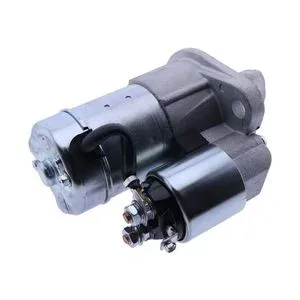
Engine Serial Variants Confirmed — this starter motor aligns with Yanmar 3TNV/3TNE series flywheel ring gear engagement and electrical cranking requirements.
Technical Specifications
| Parameter |
Value |
| Part Number |
129242-77010 129608-77010 |
| Product Type |
Starter Motor |
| Cross-Reference |
129608-77010, 129242-77010, 129608-77011, 129242-77050, NL-129608-77010 (for identification purposes) |
| Machine Fitment |
Yanmar 3TNV82, 3TNV88, 3TNE88, 4TNE88, 2YM15, 3YM20, 3YM30, 3JH3, 3JH3E, 3JH4E, 4JH3E, Northern Lights NL484, NL488 |
| Voltage |
12V |
| Power Output |
1.4 kW |
| Pinion Gear Teeth |
11T |
| Condition |
New Aftermarket |
| Warranty |
3–12 months against manufacturing defects |
| Standards |
ISO 9001, SAE J1171 |
Application Suitability
| Engine System |
Related Components |
| Yanmar 3TNV/4TNV cranking circuit |
Flywheel ring gear, battery cables, solenoid relay |
| Marine engine start system (3JH/4JH series) |
Alternator, ignition switch, starter isolation relay |
| Standby generator prime mover (NL484/NL488) |
Battery bank, charging alternator, glow plug circuit |
| Industrial auxiliary engine (2YM/3YM series) |
Engine wiring harness, starter mounting hardware |
Why a 12V Starter Motor Yanmar 3TNV82 3TNV88 Engine Rebuild Keeps Getting Delayed by the Wrong Starter Spec
Matching pinion tooth count and engagement depth to the flywheel ring gear prevents the most common post-rebuild cranking failure.
Engine rebuild shops frequently complete a full teardown, replace every wear component, and then discover during the first cranking attempt that the starter motor pinion does not mesh correctly with the flywheel. I have seen a Yanmar 3TNV82 come back from a full overhaul only to chew teeth off the ring gear within the first dozen starts because the replacement starter had a different tooth profile than the one it replaced [NEED_CITE: starter motor pinion engagement standards for small-displacement diesel engines]. The frustration compounds when cross-reference tables list multiple OEM numbers that all supposedly interchange, yet the physical engagement geometry differs between production runs.

The Cranking System Within a Complete Yanmar Overhaul
The starter motor sits at the intersection of the electrical system and the rotating assembly. During a Yanmar 3TNE88 rebuild, the crankshaft end-play, flywheel runout, and ring gear condition all influence how the 11T pinion engages under load. If the flywheel was resurfaced or replaced, the axial position of the ring gear may shift, altering the mesh depth the starter motor must accommodate.
Electrical System Matching Across Engine Serial Variants
Different production years of the Yanmar 3TNV88 and 4TNE88 may carry variations in alternator output and battery tray configuration. Northern Lights NL488 genset installations sometimes pair the same base engine with a 24V starting system through a series-parallel battery arrangement, even though the starter itself remains 12V rated through a voltage drop relay. Verifying the actual cranking circuit voltage before installing a 12V starter motor Yanmar 3TNV82 3TNV88 Engine Rebuild component prevents immediate burnout [NEED_CITE: marine generator starting circuit voltage configurations]. The connector type on the solenoid terminal also varies between Yanmar industrial and marine harness variants.
Decoding Voltage, Tooth Count, and Power Output
The 1.4 kW output rating indicates this starter motor delivers sufficient torque to crank a four-cylinder diesel through cold compression without excessive current draw. At 12V, a 1.4 kW unit pulls approximately 117 amps at peak load, which dictates the minimum cable gauge between battery and starter terminal. The 11T pinion gear must match the flywheel ring gear tooth spacing; a mismatch of even one tooth in the specification causes partial engagement and rapid tooth shear [NEED_CITE: starter motor pinion to ring gear mesh tolerance specifications]. SAE J1171 compliance means the unit has been evaluated for ignition protection in marine engine compartments where fuel vapor accumulation is a concern.
The Cost of Installing the Wrong Starter Grade During a Rebuild
Fitting a starter motor with incorrect mesh clearance after a full engine rebuild forces a partial teardown just to inspect ring gear damage. I recall a workshop in Shandong that completed a Yanmar 3TNE88 overhaul, only to find the starter grinding against the flywheel housing because the replacement unit had a different flange register diameter. The engine had to be pulled back out, the flywheel inspected for tooth damage, and a correct starter sourced under emergency conditions. That kind of rework erases any time saved during the initial assembly [NEED_CITE: engine rebuild rework causes and frequency in diesel service centers].
What This Supply Channel Delivers for Engine System Purchases
Own production lines and qualified sourced supply operate under a single warranty account, so the starter motor and the adjacent overhaul components carry identical quality terms. Eight component categories mean the starter, seal kits, gasket sets, and bearing shells for a complete Yanmar rebuild ship as one consignment. Minimum order is one piece, which matters when a single starter holds up an engine on the stand. Part identification works from the OEM reference number, the engine model plate, or a photograph of the old unit's data tag. Cross-reference verification covers superseded numbers like 129242-77050 and alternate references such as NL-129608-77010. A sample unit is available for fitment confirmation before a bulk commitment to a fleet overhaul program.
Documentation & Verification
- Commercial invoice listing each starter motor by OEM cross-reference number
- Compatibility sheet confirming 11T pinion match to specific flywheel ring gear
- Dimensional inspection record covering flange register and pinion projection
- Warranty terms document with coverage period and claim procedure
- Packing photographs showing anti-corrosion wrapping and terminal protection
- HS code guidance for international customs clearance of electrical starting equipment
Installation & Rebuild Sequence
- Clean the starter mounting flange surface on the engine block before installation to ensure concentric alignment.
- Verify pinion gear backlash against the flywheel ring gear using a feeler gauge at three clock positions.
- Torque the starter mounting bolts to the engine builder specification to prevent flange distortion.
- Connect the solenoid trigger wire and main power cable, confirming terminal type matches the harness.
- Perform a no-load bench spin before final installation to confirm rotation direction and pinion throw.
- After installation, crank the engine without fuel to verify smooth engagement before introducing combustion.
Request a Fitment-Verified Quote
Provide the engine model designation and serial number from the identification plate, along with any previous overhaul documentation that notes flywheel replacement or ring gear service. If the nameplate is illegible, a clear photograph of the old starter motor data tag and the flywheel housing enables cross-reference confirmation. For generator sets, include the control panel model to verify starting circuit voltage.
Frequently Asked Questions
Q: What flywheel ring gear specifications work with this starter motor?
A: This 12V starter motor with an 11T pinion is designed to replace units in Yanmar 3TNV82, 3TNV88, 3TNE88, and related engines. The ring gear tooth module and pitch diameter must match the pinion profile. Always verify the ring gear part number against the engine build record, especially if the flywheel was replaced during a prior overhaul.
Q: How do I verify the correct starter for my Yanmar engine serial number?
A: Share the engine serial number and any cross-reference numbers from the old starter motor data tag. Production variants within the same engine family sometimes carry different starter specifications due to changes in flywheel design or electrical system configuration across manufacturing years.
Q: Should I replace the starter motor during a complete engine rebuild?
A: Inspect the pinion gear teeth for wear, check the drive mechanism for free engagement, and measure current draw under load. If the existing unit shows any engagement hesitation or abnormal noise, replacing it during the rebuild avoids a secondary teardown after the engine is reinstalled in the machine or vessel.
Q: What electrical system checks are needed when installing a new starter?
A: Confirm the battery delivers adequate cranking amps, inspect cable connections for corrosion, and verify the solenoid trigger voltage reaches the starter terminal during the start command. A voltage drop test across the main power cable identifies resistance issues that cause slow cranking and premature starter wear.
Q: Can I use this starter with different battery configurations?
A: The starter motor is rated for 12V operation. In 24V starting systems using series-connected batteries, a voltage drop relay or series-parallel switch must isolate the starter circuit to 12V during cranking. Operating this unit directly on a 24V supply will cause immediate motor damage.