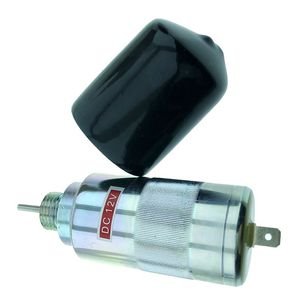
Engine Series Variants Verified — Each 12V fuel stop solenoid is matched against the specific Kubota engine serial range before dispatch, preventing stroke mismatch and incomplete fuel cutoff.
Technical Specifications
| Parameter |
Value |
| Part Number |
16851-60014 |
| Product Type |
Stop Solenoid |
| Cross-Reference (reference only) |
1685160014, 052600-4530, 052600-4531, 052600-453, 0526004530, 0526004531, 052600453, 16851-60010, 16851-60012, 16851-60013, 16851-60015 |
| Machine Fitment |
B7410D, BX1500D, BX1800D, BX1830D, BX1850D, BX1860, BX2230D, BX2350D, BX2360, BX24D, BX25, G1700, G1800, G1800-S, G1900, G1900-S, G2160, G2160AU, G2160-DS, GF1800, GF1800E, GR2100, GR2110, GR2120, GR2120B, T1600H, T1600H-EUROPE, T1600H-G, TG1860 |
| Electrical Specification |
12V DC |
| Coil Insulation |
Class H (180°C) |
| Plunger Rod Material |
Stainless Steel |
| Winding |
Precision-machined copper |
| Seal Standard |
SAE J1926 |
| Seal Pressure Rating |
Up to 4 bar |
| Condition |
New Aftermarket |
| Warranty |
6 months against manufacturing defects |
| MOQ |
1 piece |
Application Suitability
| Engine System |
Related Components |
| Fuel injection pump shutdown circuit |
Fuel shutoff lever, pump mounting gasket, wiring harness connector |
| Engine electrical control loop |
Ignition switch relay, fuse block, terminal crimp set |
| Fuel delivery and filtration |
Inline fuel filter, primer pump diaphragm, banjo bolt washers |
| Compact tractor power unit service |
Valve cover gasket set, rocker arm adjuster, injector return line |
Why the Same Part Number Ships in Multiple Variants
A 12V fuel stop solenoid engine rebuild replacement must match the exact fuel pump variant, not just the tractor model badge.
Early in my career handling parts verification across European and Central Asian distribution channels, I shipped a stop solenoid for a Kubota tractor based solely on the catalog number. The coil engaged, but the plunger travel was wrong for that engine serial range — the unit could not fully cut fuel on shutdown. That single mismatch cost the customer an extra teardown and a delayed return to the field [NEED_CITE: Kubota engine serial range variant documentation for fuel pump assemblies].
Across the BX and GR series, Kubota revised the fuel pump interface multiple times within the same model generation. The superseded part numbers in the cross-reference list — from 16851-60010 through 16851-60015 — reflect those revisions. Ordering without confirming the engine serial number against the specific pump casting is a pattern I encounter regularly when distributors consolidate orders across mixed fleets.
Fuel System Context and Adjacent Component Matching
This 12V fuel stop solenoid engine rebuild replacement interfaces directly with the fuel injection pump and the engine shutdown circuit. When a solenoid fails, the fault may originate in the wiring harness — a corroded connector or a fatigued wire crimp — rather than in the solenoid coil itself. Replacing the solenoid without checking the upstream circuit invites the same failure within a short operating window.
For a complete fuel system service on Kubota BX1800D or GR2120 units, the pump mounting gasket, banjo bolt sealing washers, and inline fuel filter should ship in the same consignment. This approach eliminates the situation where the main component arrives but the small sealing items remain on backorder from a separate supplier, holding the engine on the bench [NEED_CITE: fuel system sealing component replacement intervals for compact diesel engines].
Plunger Stroke, Coil Grade, and Engine Serial Verification
The solenoid plunger must travel the exact distance required by the fuel pump shutoff lever. A stroke that is too short leaves the rack partially open; the engine will not shut down cleanly. A stroke that is too long causes the plunger to bottom out, generating heat in the coil and eventually burning the winding insulation.
Class H insulation rated to 180°C provides thermal headroom in enclosed engine compartments where ambient temperatures climb during sustained mowing or tilling operations. The stainless steel plunger rod resists corrosion in humid environments and coastal regions where fuel system metalwork degrades faster. Before dispatch, verifying the cross-reference numbers against the specific engine build — rather than relying on a generic interchange table — prevents the variant mismatch that forces a second disassembly [NEED_CITE: solenoid coil insulation class selection criteria for mobile engine compartments].
Reading the Specification Sheet for Real-World Impact
The 12V DC rating means this 12V fuel stop solenoid engine rebuild replacement is designed for standard tractor and mower electrical systems operating on a single-battery circuit. Voltage sensitivity during actuation determines whether the solenoid pulls in reliably when the battery is under load from glow plugs or cold-cranking current.
SAE J1926 seal compliance ensures the integrated O-ring maintains fuel-tight integrity at the pump interface under pressure fluctuations up to 4 bar during normal injection pump operation. The precision-machined copper winding delivers consistent magnetic force across the coil's operating temperature range, which directly affects plunger response time during shutdown commands. An underspecified winding will show delayed shutoff — the engine runs on for several seconds after the key is turned — indicating the coil cannot generate sufficient holding force at elevated underhood temperatures.

The Hidden Cost of Swapping Without Diagnosing the Root Cause
Installing a new stop solenoid over a fault that originated elsewhere in the fuel or electrical system leads to predictable repeat failures. If the wiring harness connector has corroded terminals, the new coil will experience voltage drop, producing weak magnetic pull and premature winding burnout. The machine returns to the workshop within weeks, not because the replacement part was defective, but because the underlying circuit fault was never addressed.
Similarly, if the fuel pump mounting surface is scored or warped, the O-ring seal on the solenoid will not seat correctly, causing fuel weepage that accelerates electrical connector degradation. This cycle of reactive part swapping — replacing the symptom rather than the cause — accumulates teardown hours and erodes confidence in aftermarket supply [NEED_CITE: diesel fuel system root cause analysis procedures for solenoid failures].
Why Source This Component Through Our Supply Chain
Our production lines and qualified sourced partners operate under the same quality control and warranty terms, so whether a stop solenoid comes from our own facility or a certified partner, the verification standard is identical. Eight product categories under one account means the solenoid, fuel filter, sealing washers, and wiring connectors ship together in a single consignment.
Minimum order of one piece supports emergency single-unit replacements as well as distributor stock planning. Our Guangzhou warehouse maintains ready inventory on common fuel system items for fast dispatch. Part identification from the machine model, engine serial number, or a photograph of the existing nameplate eliminates guesswork when the original part number is worn or painted over. Cross-reference verification covers superseded and alternate numbers across the Kubota engine range. Sample units are available for fitment confirmation before bulk commitment. Our technical team confirms compatibility, plunger stroke, and insulation grade for each specific engine serial variant.
Documentation & Verification
- Commercial invoice and packing list itemizing each solenoid by engine serial range
- Part compatibility and cross-reference sheet marked as reference only
- Quality inspection record covering pull-in voltage and seal pressure test
- Six-month warranty terms against manufacturing defects
- Packing photographs showing protective wrapping and connector caps
- HS code and customs documentation support for cross-border fuel system part shipments
Installation & Rebuild Sequence
- Inspect the fuel pump mounting surface for scoring before seating the new solenoid O-ring
- Verify wiring harness terminal condition and crimp integrity before electrical connection
- Confirm plunger engagement with the shutoff lever by hand-cycling before energizing
- Perform first key-on/key-off cycle and observe complete fuel cutoff within the expected response window
- Check for fuel weepage at the seal interface after the initial heat cycle
Request a Matched Quote
Provide the Kubota engine model and serial number, along with any previous rebuild history or pump replacement records, so the correct solenoid variant and matched fuel system seals can be confirmed for your specific build.
Frequently Asked Questions
Q: What other fuel system components should be inspected or replaced when changing the stop solenoid?
A: The fuel pump mounting gasket, banjo bolt sealing washers, inline fuel filter, and wiring harness connector should all be reviewed during the same service window. Corroded terminals or fatigued wire crimps can cause the new solenoid to underperform. Replacing these adjacent items together prevents a second teardown caused by a secondary fault in the fuel delivery or shutdown circuit.
Q: How do I confirm the correct solenoid variant for my engine serial number?
A: The tractor model badge alone is insufficient because Kubota revised fuel pump interfaces within the same generation. Provide the engine serial number from the nameplate or the casting number on the fuel pump body. Our technical team cross-references these against variant records to confirm plunger stroke, mounting pattern, and connector type before shipment.
Q: Can this solenoid be included in a complete engine overhaul kit?
A: Yes. For Kubota BX and GR series engine rebuilds, the stop solenoid can be consolidated with piston rings, bearing shells, gasket sets, and fuel system seals in a single overhaul package. Provide the engine serial number and any previous bore or crankshaft regrind history so all matched components align with the current engine dimensions.
Q: What electrical circuit checks should be performed before installing a new solenoid?
A: Measure voltage at the solenoid connector with the key in the run position to confirm the circuit delivers the required 12V DC under load. Check for corrosion on terminals, insulation damage on wiring, and relay function in the shutdown control loop. A voltage drop at the connector indicates an upstream fault that will shorten the new solenoid's service life.
Q: How do I verify the engine model when the nameplate is worn or unreadable?
A: Send a photograph of the engine block casting numbers, the fuel pump body, or any remaining identification markings. Our team can also cross-reference the tractor chassis serial number against Kubota production records to determine the original engine specification and the correct solenoid variant for your build.