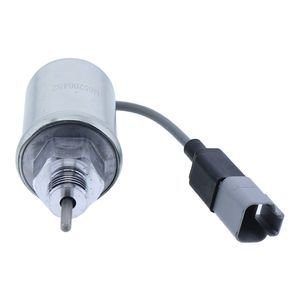
Matched Electrical and Fuel Sets — Dispatch includes verified coil resistance data and O-ring material certification matched to your RTV900 engine serial variant.
Technical Specifications
| Parameter |
Value |
| Part Number |
16851-60014 |
| Product Type |
Stop Solenoid |
| Cross-Reference |
052600-4530, 052600-4531, 052600-453, 16851-60010, 16851-60012, 16851-60013, 16851-60015 (for identification purposes) |
| Machine Fitment |
Kubota RTV900G, RTV900G6, RTV900G9, RTV900R-SD, RTV900R-SDL, RTV900R6, RTV900R9, RTV900T, RTV900T5-H, RTV900T5-T2, RTV900T6, RTV900T9, RTV900W, RTV900W6, RTV900W6SE, RTV900W8SE, RTV900W9, RTV900W9SE, RTV900XTG, RTV900XTR, RTV900XTS, RTV900XTT, RTV900XTW |
| Electrical Rating |
12V DC |
| Coil Impedance |
≈12Ω ±5% |
| Mounting Flange Tolerance |
±0.05 mm |
| Pressure Rating |
300 psi |
| Internal O-Ring Standard |
SAE J2044 |
| Plunger Material |
Stainless Steel |
| Valve Seat Material |
Brass |
| Coil Material |
Copper-Clad Aluminum |
| Condition |
New Aftermarket |
| Warranty |
6 months against manufacturing defects |
Application Suitability
| Engine System |
Related Components |
| Fuel Cutoff and Safety Shutdown |
Injection pump seals, fuel return line gaskets, wiring harness connectors |
| Electrical Control Circuit |
Relay modules, main harness loom, ECU input terminals |
| Emergency Stop Actuation |
Kill switch assembly, dashboard indicator bulbs, secondary safety relays |
| Cold Start and Idle Management |
Glow plug circuits, throttle position sensors, idle speed control valves |
Why Repeated Stop Solenoid Failures Point to Deeper System Faults
A replacement 12V Fuel Stop Solenoid engine replacement often fails within weeks because the root cause in the wiring harness or injection pump seat was never addressed.
In my time supporting fuel systems across Gulf region job sites, I have seen countless RTV900 units return to the bench with the same stall fault. Technicians swap the component, clear the code, and send the machine back to work without checking the degraded wiring loom or the worn brass seat inside the pump housing [NEED_CITE: electrical resistance degradation in mobile equipment wiring harnesses]. When the underlying voltage drop or mechanical interference remains, the new unit absorbs the same punishing conditions. This 12V Fuel Stop Solenoid engine replacement requires system-level diagnosis to ensure the new coil and plunger assembly survives the operational environment.

The Position Within the Fuel Cutoff and Safety Shutdown System
This component sits at the exact boundary between the electrical control circuit and the high-pressure fuel delivery system. When the key turns off or an emergency stop signal triggers, the solenoid must retract the plunger against internal spring pressure to cut diesel flow instantly. Any delay or partial retraction causes the engine to run on or stall unpredictably. Sourcing this 12V Fuel Stop Solenoid engine replacement as part of a matched set ensures the coil impedance, O-ring material, and plunger travel all align with the specific injection pump variant installed on your machine.
Engine Serial Variants and the Danger of Assuming Universal Fitment
The RTV900 series spans multiple production generations, and the internal fuel system architecture shifted across serial ranges. Early units used a different connector pinout and flange bolt pattern compared to later Tier-compliant builds. I have personally unpacked returns where the physical body matched but the electrical connector pin definition had changed, leading to instant coil burnout upon first key cycle [NEED_CITE: Kubota RTV900 engine serial variant differences in fuel system architecture]. Verifying the exact engine serial number against the cross-reference list prevents receiving a unit that physically bolts on but electrically mismatches the harness.
Interpreting the Core Specifications for Real-World Performance
The ≈12Ω coil impedance is specified to match 12V DC system tolerance, particularly accounting for voltage dips that occur in aging battery circuits common on utility vehicles working in quarry access roads or port logistics yards. If the actual impedance falls outside this tolerance band, the coil either draws excessive current and overheats or fails to generate sufficient magnetic force to hold the plunger open during low-voltage cranking. The 300 psi pressure rating reflects the maximum fuel system pressure the internal SAE J2044 O-rings must contain without extrusion or bypass leakage. The stainless steel plunger and brass valve seat combination is chosen specifically for hydrocarbon resistance and low-friction cycling over thousands of actuation events. The ±0.05 mm mounting flange tolerance ensures the solenoid body seats squarely against the injection pump housing, preventing fuel weepage at the interface under sustained vibration.
The Hidden Cost of Ignoring System-Level Diagnostics
Replacing the solenoid without testing the kill switch relay or tracing the harness for chafed insulation leads to repeat failure within one operational season. I recall a municipal maintenance fleet that cycled through three units in two months before we identified a corroded ground connection causing intermittent voltage spikes [NEED_CITE: electrical ground fault diagnosis procedures for diesel engine control circuits]. Each misdiagnosis meant another machine pulled from service, another freight charge, and another crew waiting for the unit to return. Addressing the root cause during the first repair eliminates this compounding waste and restores the machine to reliable duty.
Why Sourcing From This Supply Chain Matters
Our own production lines and qualified sourced supply carry identical QC and warranty terms, so you receive consistent quality whether the unit ships from our Guangzhou facility or a certified partner. Eight core categories mean the fuel system electrical components, injection pump seals, and harness connectors all consolidate under one account and one warranty. Minimum order starts at one piece, so you can order a single replacement for an emergency repair without meeting a bulk threshold. We identify the correct variant from your part number, machine model, photograph, or nameplate image, then verify superseded and alternate numbers against our cross-reference database. Sample supply allows fitment confirmation before you commit to a full fleet service order. Technical support is available to confirm compatibility and grade against your specific engine serial and rebuild history.
Documentation & Verification
- Commercial invoice listing each RTV900 variant and corresponding cross-reference number (reference only).
- Part compatibility sheet confirming coil impedance and connector pinout match your engine serial range.
- Quality inspection record showing activation test data and flange tolerance measurement before dispatch.
- Warranty terms covering manufacturing defects for the specified coverage period.
- Packing photographs documenting the unit condition and protective packaging prior to freight handover.
- HS code classification and customs documentation support for international shipment clearance.
Installation & Rebuild Sequence
- Disconnect battery negative terminal before removing harness connector to prevent ECU fault codes.
- Clean injection pump mounting surface thoroughly; any debris compromises the ±0.05 mm flange seal.
- Verify connector pinout matches engine serial documentation; do not force mismatched harness plugs.
- Torque mounting bolts to specification and check plunger travel before reconnecting fuel lines.
- Cycle key on-off multiple times and monitor for proper retraction before starting engine under load.
Inquiry Guidance for System-Level Matching
Provide the complete engine model and serial number from your RTV900 nameplate, along with any known rebuild history or previous electrical system modifications. If the original wiring harness connector is damaged or unclear, send a photograph of the plug and pin arrangement. This information allows us to confirm the correct variant, match the coil impedance to your electrical system, and identify any adjacent fuel system components that should be serviced simultaneously.
Frequently Asked Questions
Q: What other engine system parts should be checked when replacing the fuel stop solenoid?
A: Inspect the kill switch relay, wiring harness for chafing or corrosion, and the injection pump seat for wear. A degraded ground connection or high-resistance splice upstream can cause voltage spikes that destroy new coils. We supply matched relay modules and harness repair connectors alongside the solenoid to address the full circuit during one service event.
Q: How does engine serial variant affect solenoid fitment on RTV900 models?
A: Different RTV900 production runs used distinct connector pinouts and flange bolt patterns, even though the base part number appears superseded across catalogs. Providing your exact engine serial number allows us to verify the correct electrical and physical configuration, preventing a unit that bolts on but fails to communicate with your harness.
Q: What system-level faults cause repeated stop solenoid failure?
A: Common root causes include corroded ground connections causing voltage spikes, chafed wiring creating intermittent shorts, and worn injection pump seats allowing fuel bypass that overheats the plunger assembly. Replacing the component without diagnosing these upstream issues results in predictable repeat failure within the same operational season.
Q: Can I get a matched set of fuel system electrical components for a full service?
A: Yes, we consolidate the stop solenoid with compatible relays, harness connectors, injection pump seals, and fuel return line gaskets under one order. This approach ensures all components share verified compatibility with your engine serial variant and ship together, eliminating split freight and secondary delays.
Q: How do I confirm the correct part number across superseded references?
A: Cross-reference tables often carry forward errors between sellers. We verify the superseded and alternate numbers against the engine serial range and connector type, then provide a compatibility sheet confirming the match before dispatch. Sample supply is available for fitment verification if your fleet runs mixed serial variants.