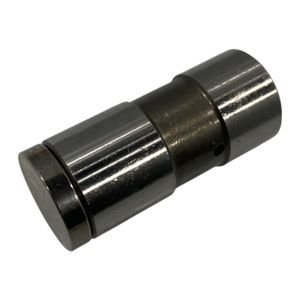
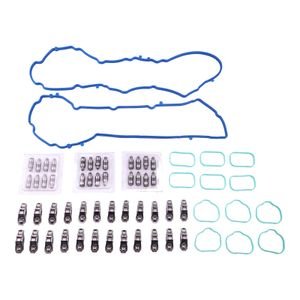
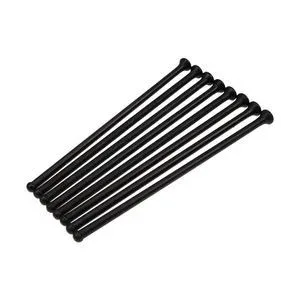
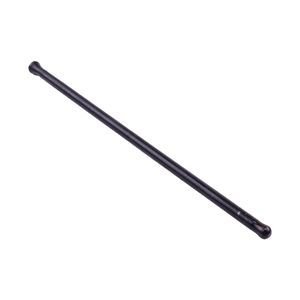
Matched Set Dispatch — Every valve tappet ships alongside verified push rods and rocker arms for your specific Deutz engine build variant.
Technical Specifications
| Parameter |
Value |
| Part Number |
04165057 |
| Product Type |
Tappet |
| Cross-Reference (reference only) |
04165057, 4165057, 04164676, 04139032, 04112032, 0416-5057, 0416-4676, 0413-9032, 0411-2032 |
| Machine Fitment |
Deutz TCD2.9, TCD3.6, TCD2.2L3, TCD2.9L4, TCD3.6L4, TD2.2L3, TD2.9L4, TD2009L4, TD3.6L4, D2.2L3, D2.9L4, D2008L4, D2009L3, D2009L4, G2.2L3 |
| Material |
Forged alloy steel |
| Surface Treatment |
Anti-corrosion phosphate coating |
| Condition |
New Aftermarket |
| Standards |
ISO 9001, ISO 683-17 |
| Warranty |
3–12 months against manufacturing defects |
| MOQ |
1 piece |
Application Suitability
| Engine System |
Related Components |
| Valve Train Actuation |
Push rods, rocker arms, valve stem seals |
| Cylinder Head Assembly |
Valve springs, spring seats, collets |
| Bottom End Rebuild |
Main bearings, connecting rod bearings, thrust washers |
| Lubrication Circuit |
Oil pump, oil cooler, full-flow filter elements |
Why Replacing One Valve Tappet 04165057 Rarely Fixes the Root Problem
A scuffed tappet face usually points to an oil starvation event or incorrect lash setting elsewhere in the system.
When a workshop pulls a single failed tappet and drops in a replacement without tracing the fault path, the new component often follows the same failure trajectory within a short operating window. The cam lobe it rides on may already carry wear that accelerates contact face degradation, and the push rod sitting above it could be bent just enough to alter load distribution [NEED_CITE: valve train wear progression patterns in medium-duty diesel engines]. An engine rebuild that addresses the failed part without examining the surrounding system simply resets the clock on a repeat teardown.

The Valve Train as a Single Mechanical Chain
The valve tappet does not work in isolation. It transfers cam lobe profile into linear motion through the push rod, which pivots the rocker arm to open the valve against spring pressure. Every interface in that chain carries load, and any single component operating outside tolerance shifts stress onto the others. During a Deutz TCD2.9 or TCD3.6 overhaul, treating the valve train as a matched set ensures that contact geometry, lift characteristics, and lash settings all fall within specification simultaneously rather than fighting each other across mixed-age components.
Engine Serial Variants That Change the Order List
Deutz produced several build variants within the TCD2.9 and TCD3.6 families, and valve train geometry can differ between them. A tappet that fits an early-build TCD2.9L4 may not match the push rod length or cam profile specified for a later TCD2009L4 production run [NEED_CITE: Deutz TCD series engine serial variant documentation]. Confirming the engine build number before sourcing a matched set prevents receiving components that appear identical on a cross-reference table but differ in stem length, contact radius, or hardness specification at the functional interface.
Dimensional Tolerances and Contact Face Requirements
The forged alloy steel construction provides the core structural integrity needed to withstand repeated cam lobe impact loading. Surface hardness in the HRC 58–62 range ensures the contact face resists pitting and spalling under high-cycle operation. The contact face flatness tolerance of ≤0.005 mm matters directly at the cam interface, where even minor deviation concentrates load onto a smaller area and initiates micro-cracking. Stem surface finish at Ra ≤0.4 μm reduces friction inside the tappet bore, which affects how freely the component follows the cam profile at higher engine speeds. The anti-corrosion phosphate coating protects storage and pre-installation integrity without altering functional dimensions.
The Hidden Cost of Skipping System-Level Diagnosis
Installing a fresh tappet into an engine where the underlying oil delivery problem remains unresolved means the replacement operates under the same starvation conditions that destroyed its predecessor. The workshop absorbs a second teardown, the equipment owner absorbs additional downtime, and the root cause — perhaps a blocked oil gallery or a failing pump — continues deteriorating other bearing surfaces [NEED_CITE: lubrication system fault propagation in inline diesel engines]. A replacement strategy that ignores the failure pathway converts a planned overhaul into a cycle of reactive repairs.
Sourcing That Accounts for the Entire Rebuild Sequence
Our Guangzhou warehouse stocks this tappet reference alongside the push rods, rocker arms, and valve stem seals that complete a valve train refresh, so a full job list ships under one account and one warranty. Cross-reference verification covers superseded and alternate numbers across the Deutz TCD family, reducing the risk of receiving a dimensionally incompatible variant. The technical team confirms grade and specification against your engine serial number before dispatch. Sample supply is available for fitment confirmation before you commit to bulk quantities. Minimum order starts at one piece, supporting both single-cylinder repairs and full multi-cylinder overhauls from the same inventory.
Documentation & Verification
- Commercial invoice listing each valve train component with cross-reference numbers marked reference only
- Part compatibility sheet mapping tappet variant to your specific engine serial and build number
- Dimensional inspection record confirming contact face flatness and stem diameter per batch
- Warranty terms covering manufacturing defects with claim documentation requirements stated upfront
- Packing photographs showing component count and protective separation before crate closure
- HS code and customs documentation support for international shipment clearance
Installation & Rebuild Sequence
- Inspect cam lobe profile for wear before installing the new tappet; a damaged lobe destroys replacement contact faces rapidly
- Verify push rod length matches the engine serial variant specification before assembling the valve train chain
- Confirm valve lash setting against the Deutz service manual specification for your particular TCD build
- Apply clean assembly lubricant to the tappet contact face and stem bore to prevent dry-start scoring during initial cranking
- Run the engine through a graduated break-in sequence, monitoring valve train noise for the first operating hours
Request a Matched Rebuild Quotation
Provide your Deutz engine model, serial number, and any known rebuild history so we can confirm the correct tappet variant and identify companion components that should be replaced in the same overhaul cycle. If your engine has undergone previous machining, share the oversize or undersize grades already in use so the valve train set matches existing dimensions.
Frequently Asked Questions
Q: What other valve train components should be replaced at the same time as the tappets?
A: Push rods, rocker arms, and valve stem seals should be assessed together with the tappets during any overhaul. A worn push rod transfers uneven load to a new tappet, and aged valve stem seals allow oil consumption that contaminates the combustion chamber. Replacing the full set ensures all interfaces operate within tolerance from the same starting point.
Q: How do I confirm the correct tappet variant for my specific engine serial number?
A: Supply the full engine serial number and build plate details. Cross-reference tables alone can be misleading across Deutz TCD production variants, where tappet stem length and contact geometry changed between runs. We verify the correct specification against the engine build record before confirming your order.
Q: The old tappet failed early — what system-level causes should I check before installing the replacement?
A: Check oil delivery pressure at the tappet bore, inspect the corresponding cam lobe for abnormal wear patterns, and verify that the push rod is straight and within length specification. Early tappet failure often traces back to lubrication starvation or incorrect valve lash rather than the component itself.
Q: Can I order a complete valve train overhaul kit matched to my engine build?
A: Yes. Provide your engine model and serial number, and we assemble a matched kit covering tappets, push rods, rocker arms, valve stem seals, and associated fasteners. Every component in the kit is verified against your specific engine build variant before dispatch under a single warranty.