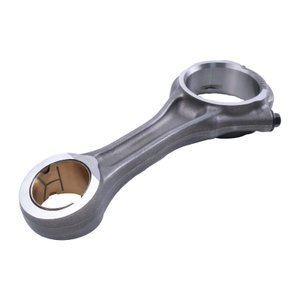
System-Matched Tappet Sets — Engine serial variants verified before dispatch to ensure correct dimensional grade for TCD and TD series rebuilds.
Technical Specifications
| Parameter |
Value |
| Part Number |
04165057 |
| Product Type |
Tappet |
| Cross-Reference |
04112032, 04139032, 04164676 (reference only) |
| Machine Fitment |
TCD2.9, TCD3.6, D 2.2 L3, D 2.9 L4, D 2008 L4, D 2009 L3, D 2009 L4, G 2.2 L3, TCD 2.2 L3, TCD 2.9 L4, TCD 3.6 L4, TD 2.2 L3, TD 2.9 L4, TD 2009 L4, TD 3.6 L4 |
| Brand Compatibility |
DEUTZ |
| Part Name |
Valve Tappet |
| Condition |
New Aftermarket |
| Warranty |
3-12 months |
| MOQ |
1 piece |
| Manufacturing Standard |
ISO-certified |
Application Suitability
| Engine System |
Related Components |
| Valvetrain Actuation |
Camshaft lobes, push rods, rocker arms |
| Cylinder Head Sealing |
Valve stem seals, valve guide bushings |
| Top-End Overhaul |
Head gasket set, valve cover gasket, injector seals |
| Bottom-End Interface |
Tappet bore condition, camshaft bearing journals |
| Timing System |
Timing gears, timing chain or belt tensioner |
Why the Same Tappet Number Fits Multiple Engine Builds
Engine serial range dictates internal clearances, not just external dimensions.
A valve tappet engine rebuild on a TCD 2.9 L4 versus a TD 2.9 L4 involves different cylinder block casting generations, and the tappet bore diameter, camshaft base circle, and push rod geometry can vary between production runs. I have seen workshops order tappets against a parts book number only to find the cam contact face sits slightly high or low once the cylinder head is torqued down, throwing off valve lash across the entire bank. [NEED_CITE: Deutz engine serial variant identification procedures for valvetrain components]
The superseded numbers 04112032, 04139032, and 04164676 each appeared in different factory service bulletins covering the same engine family but distinct build periods. Assuming interchangeability without checking the engine serial plate leads to fitment that physically drops in but operates outside design tolerance.

Valvetrain System Context for This Tappet
This valve tappet engine rebuild component sits at the base of the valvetrain, directly contacting the camshaft lobe. Its surface finish and base curvature must match the cam profile to distribute load evenly across the contact patch. When a tappet fails prematurely, the root cause frequently traces back to a worn cam lobe or contaminated lubrication circuit rather than the tappet itself. Replacing tappets without inspecting the camshaft, push rods, and rocker arm pivots leaves the failure mechanism active, guaranteeing a repeat visit to the teardown bench.
Engine Serial Variants and Dimensional Confirmation
Deutz TCD and TD engines in the 2.2 through 3.6 litre range have gone through multiple internal revisions, and tappet specifications shifted accordingly. A TCD 3.6 L4 from an earlier production block may specify a different tappet body length than a later-build unit sharing the same model designation. [NEED_CITE: OEM service bulletin practices for valvetrain dimensional changes across engine serial breaks] Confirming the engine serial number — not just the model badge — before ordering ensures the supplied tappet matches the bore depth and cam lift geometry of the specific block on the stand. This step eliminates the scenario where half the tappets seat correctly and the other half require shimming that the factory never designed for.
Dimensional Accuracy and Surface Treatment Rationale
The tappet face that rides on the camshaft lobe requires a specific surface hardness and micro-finish to survive the sliding contact loads at operating temperature. A surface that is too rough accelerates cam lobe wear; one that is too smooth prevents the oil film from establishing during cold starts. The dimensional tolerance on the tappet body diameter controls the oil bleed rate past the bore, which directly affects hydraulic lash behaviour in engines that use it for valvetrain damping. Manufacturing to ISO-certified processes ensures these parameters stay within the range that the engine designer specified, rather than relying on batch-average values.
The Cost of Missing the Root Cause
Swapping worn tappets without measuring camshaft lobe lift or checking push rod straightness turns a valvetrain overhaul into a temporary patch. [NEED_CITE: valvetrain failure root cause analysis methodology for diesel engines] The new tappet follows the same wear path as the one it replaced, and the engine returns to the workshop within months. A rebuild shop quoting an overhaul should factor in camshaft inspection, valve guide clearance checks, and lubrication system flush to prevent the replacement tappets from inheriting the fault that destroyed the originals. Downtime from a repeat teardown far exceeds the time spent on system-level diagnostics during the first visit.
Why Source This Tappet Through XUNPO
Own production lines and qualified sourced supply share identical QC and warranty terms, so every tappet ships under one accountability framework. Eight product categories mean an overhaul gasket set, valve stem seals, push rods, and bearing shells all consolidate into a single shipment against one purchase order. Minimum order of one piece covers the emergency single-cylinder repair, while bulk pricing applies when a rebuild shop is restocking for a fleet overhaul program. Guangzhou warehouse stock enables same-day dispatch on common Deutz TCD and TD valvetrain items. Cross-reference verification covers superseded and alternate numbers with engine serial validation. Sample units ship for fitment confirmation before a shop commits to bulk quantity.
Documentation & Verification
- Commercial invoice itemised by tappet part number and engine application for customs clearance.
- Cross-reference sheet mapping 04112032, 04139032, 04164676 against applicable engine serial ranges (reference only).
- Dimensional inspection record covering body diameter and contact face profile per unit.
- Warranty certificate stating coverage period and conditions for manufacturing defects.
- Packing photographs confirming tappet orientation and protective separation in carton.
- HS code classification and export documentation support for destination country requirements.
Installation & Rebuild Sequence
- Measure tappet bore diameter in the block before installation to confirm clearance against specification.
- Inspect each camshaft lobe profile with a dial indicator; replace the camshaft if lift loss is detected.
- Lubricate tappet contact face with assembly lube before dropping into the bore to prevent dry-start scuffing.
- Verify push rod seating in the tappet socket and rocker arm cup before torquing the cylinder head.
- Set initial valve lash to specification, then re-check after the first heat cycle and oil change.
Requesting an Accurate Quotation
Provide the engine model designation and the serial number from the block identification plate. If the engine has been previously rebuilt, note any oversize or modified components already installed in the valvetrain. For a complete overhaul quotation, share the full repair list so tappets can be grouped with gaskets, seals, and bearing sets in one consolidated proposal.
Frequently Asked Questions
Q: What other valvetrain components should be replaced alongside the tappets during an overhaul?
A: Valve stem seals and push rods are the minimum companion items. Rocker arm pivots and valve guide bushings should be measured for wear, as excessive clearance in either transfers uneven load back to the tappet face. The overhaul gasket set covers all sealing surfaces disturbed during head removal. Addressing the full valvetrain path prevents the new tappets from inheriting wear patterns created by adjacent worn components.
Q: How do I determine which cross-reference number applies to my specific engine?
A: The engine serial number on the block plate is the decisive identifier. Cross-references 04112032, 04139032, and 04164676 each correspond to different production periods within the TCD and TD families. Share the serial number and our technical team maps it to the correct tappet variant, confirming bore dimensions and cam contact geometry before the order is released.
Q: What typically causes tappet failure, and how do I prevent the same failure after replacement?
A: Contaminated lubrication and cam lobe wear are the two dominant causes. Metal particles circulating through the oil gallery score the tappet bore, while a flattened cam lobe creates impact loading on the contact face. A full lubrication system flush, new oil filter, and camshaft inspection address both mechanisms. Skipping these steps leaves the replacement tappets exposed to the same conditions that destroyed the originals.
Q: Does a standard overhaul kit include tappets, or are they ordered as separate line items?
A: Most gasket and seal overhaul kits do not include tappets, as they are considered wear components replaced based on inspection rather than automatically. Tappets are quoted separately so the buyer can order the correct quantity for the cylinders requiring replacement — sometimes a full set, sometimes individual units. Confirm the kit contents list before ordering to avoid gaps in the rebuild material.
Q: Can I order a sample tappet to verify fitment before committing to a full set?
A: Yes. A single sample unit ships for physical fitment check in the tappet bore and against the camshaft lobe. This confirms dimensional accuracy before the full production batch is released, eliminating the risk of a complete engine teardown waiting on a corrective shipment.