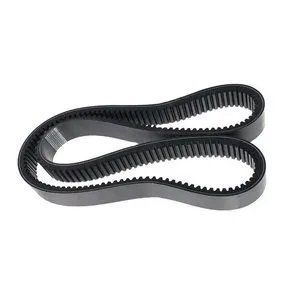
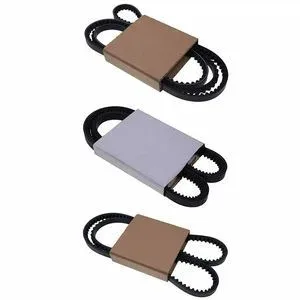
Matched Set Dispatch — Every V Belt MD145156 16692 order verified against L3E engine serial variant and pulley configuration before leaving Guangzhou warehouse.
Technical Specifications
| Parameter |
Value |
| Part Number |
MD145156 16692 |
| Product Type |
V Belt |
| Cross-Reference |
MD145156 (reference only), 16692 (for identification purposes) |
| Machine Fitment |
Mitsubishi T120SS, Generac MLT3060MV |
| Material |
Chloroprene rubber (CR) compound with high-resistance fabric cord reinforcement |
| Pitch Length |
1451 mm |
| Cross-section Profile Tolerance |
±0.3 mm |
| Cord Adhesion Strength |
Exceeds 12 N/mm² |
| Surface Hardness |
70±3 Shore A |
| Operating Temperature Range |
–25°C to +85°C |
| Condition |
New Aftermarket |
| Warranty |
3–12 months against manufacturing defects |
| Standards |
ISO 9001, ISO 4184:2019 |
Application Suitability
| Engine System |
Related Components |
| Alternator drive on Mitsubishi L3E |
Alternator pulley, tensioner assembly, mounting bracket bolts |
| Cooling fan drive on Mitsubishi L3E |
Fan hub bearing, fan pulley, belt guard hardware |
| Auxiliary power drive on Generac MLT3060MV |
Light tower generator coupling, idler pulley, tensioner spring |
| Overhaul belt kit consolidation |
Matched belt sets, seal kits for tensioner, gasket sets for front cover |
The Belt Broke Again — What the Engine Is Actually Telling You
A replacement V Belt MD145156 engine rebuild replacement that fails within weeks is rarely a belt problem; it is a system problem left undiagnosed.
In our Guangzhou warehouse, we have handled dozens of L3E belt drive inquiries where the buyer replaced the belt two or three times before calling us. Each time the story is similar: a new belt is installed, tension looks correct, the machine runs for a short period, then the belt glazes, slips, or snaps. The root cause usually sits in the tensioner bearing clearance, the pulley groove wear, or a misalignment introduced during a previous overhaul. We see this pattern often enough to know that treating the belt as an isolated consumable creates a cycle of repeat failures and unnecessary machine downtime [NEED_CITE: engine belt drive failure root cause analysis for small diesel engines].
A belt that appears dimensionally correct but sits even slightly off in pitch length will ride high or low in the pulley groove, concentrating load on a narrow band of the cord reinforcement. Over hours of cyclic loading in an engine bay environment where temperatures swing from cold start to sustained operation, that concentrated stress accelerates cord separation from the rubber matrix. The belt does not just wear — it fails structurally, and the alternator output drops or the cooling fan slows precisely when the engine needs them most.

The Belt Drive System Around the L3E Crankshaft
This V Belt MD145156 engine rebuild replacement sits in a belt drive system that manages two critical engine auxiliaries on the Mitsubishi L3E: the alternator and the cooling fan. When an engine rebuild shop is reassembling an L3E, the belt is the final link connecting the crankshaft output to these systems. If the alternator pulley bearing has developed radial play during the engine's previous service life, that play transfers irregular loads to the belt every revolution, and a new belt inherits the same destructive pattern within its first hours of operation.
The same logic applies to the fan hub. A fan hub bearing with worn races introduces axial wobble that the belt must absorb as lateral flexing, a load condition the cord reinforcement is not designed to sustain over extended periods. Checking both pulley bearings with a dial indicator during the rebuild and replacing any that exceed the service manual specification prevents the new belt from becoming a diagnostic indicator for problems that should have been corrected at the component level.
Engine Serial Variants and the Pulley Configuration Trap
Not every Mitsubishi L3E engine uses the same pulley geometry, even within the same base model designation. Production runs across different years introduced changes in alternator mounting bracket design, pulley groove profile, and tensioner arrangement. A belt that fits an early L3E serial range may seat incorrectly in the pulley groove of a later variant, or vice versa. This is where pitch length and cross-section profile tolerance become more than specification sheet entries — they determine whether the belt makes full contact with the pulley groove walls or rides on the groove edges [NEED_CITE: Mitsubishi L3E engine serial variant pulley configuration differences].
The Generac MLT3060MV light tower application adds another layer. These units use the L3E in a continuous-duty auxiliary power role where the belt drives a generator coupling under steady load for extended periods. The thermal environment differs from intermittent construction equipment use, and the belt material must sustain performance at the upper end of its temperature range without softening or losing cord adhesion. Verifying the specific Generac model serial and its L3E variant ensures the correct belt specification reaches the job.
Reading the Specifications Against the Operating Reality
The chloroprene rubber compound in this V Belt MD145156 engine rebuild replacement is selected specifically for engine bay environments where oil mist, coolant vapor, and elevated temperatures are constant exposure conditions. Chloroprene outperforms generic EPDM compounds in oil resistance, a critical distinction when the belt runs near the front crankshaft seal and any minor seepage reaches the belt surfaces. EPDM belts in this position tend to swell and soften when exposed to petroleum-based contaminants, losing their grip on the pulley groove.
The pitch length of 1451 mm is held to a cross-section profile tolerance of ±0.3 mm. This tolerance window ensures the belt seats fully in the OEM pulley groove without bottoming out on the groove floor or riding above the groove walls. A belt that bottoms out loses its wedging action and relies only on friction on the groove bottom, dramatically reducing its power transmission capacity. A belt that rides high concentrates stress on the cord layer nearest the belt back, accelerating delamination.
Surface hardness at 70±3 Shore A balances grip with flexibility. A harder compound would resist wear but transmit more shock load to the alternator and fan bearings. A softer compound would grip well initially but wear the groove profile faster, requiring replacement sooner. The specified hardness range maintains the intended friction coefficient across the operating temperature range from cold start at –25°C to sustained operation approaching +85°C.
Cord adhesion exceeding 12 N/mm² addresses the cyclic peel stress that occurs every time the belt wraps and unwraps around the pulleys. Each wrap cycle applies a peeling force to the bond between the cord reinforcement and the surrounding rubber matrix. Higher adhesion strength means the belt sustains more wrap cycles before internal delamination initiates, which is particularly relevant in the L3E application where the belt negotiates multiple pulleys in a compact routing.
What Repeat Failures Actually Cost the Rebuild
When a belt drive component is replaced without diagnosing the system condition that caused the original failure, the engine leaves the shop with a known defect hiding behind a new part. The belt fails again, the machine returns to the workshop, and the rebuild shop absorbs the warranty cost of a second teardown. This cycle erodes customer confidence and consumes technician hours that could be spent on revenue-generating work [NEED_CITE: engine rebuild warranty claim patterns related to belt drive system diagnosis].
For fleet maintenance teams standardizing parts across multiple L3E-powered units, an incorrect belt specification discovered after bulk purchase means either forcing an ill-fitting part into service or writing off inventory and reordering. Neither outcome serves the maintenance budget. The cost of a sample fitment check before committing to fleet quantities is minimal compared to the cost of discovering incompatibility after the order has arrived and the machines are waiting.
Why Source This Belt Drive Component Through XUNPO
Our production lines and qualified sourcing partners operate under the same quality control and warranty terms, so whether a V Belt MD145156 engine rebuild replacement is produced in our facility or sourced from a certified partner, the dimensional verification and material standards are identical.
Eight product categories under one account means the belt arrives with the tensioner, pulley bearings, front cover gasket, and any other items on the rebuild list in a single consignment, eliminating the mismatched lead times that leave engines half-assembled waiting for one component.
One-piece minimum order quantity means a rebuild shop can order a single belt for an emergency repair or a sample fitment check without being blocked by volume thresholds designed for high-volume distributors.
Guangzhou warehouse stock on common engine drive components enables fast dispatch for standard L3E belt specifications, reducing the wait between order confirmation and installation.
Part identification from engine model, serial number, photograph, or nameplate image means buyers who cannot read a worn belt number or are unsure of their L3E variant can still get the correct component confirmed before ordering.
Cross-reference verification covers superseded numbers and alternate references, catching errors that propagate through copied tables and ensuring the belt matches the actual engine serial and pulley configuration.
Documentation & Verification
- Commercial invoice listing each belt drive component with individual part identification and cross-reference numbers marked as reference only
- Compatibility confirmation sheet showing verified engine serial range, pulley configuration, and alternator model cross-checked against the order
- Quality inspection record documenting pitch length measurement, cross-section profile check, and surface hardness verification for each production batch
- Warranty terms covering manufacturing defects with clear coverage period and claim procedure for belt drive system components
- Packing photographs showing belt condition and protective packaging before dispatch, providing visual record for receiving inspection
- HS code classification and customs documentation support for international engine parts shipments with correct commodity descriptions
Installation & Rebuild Sequence
- Inspect alternator and fan pulley bearings for radial and axial play before installing the new V Belt MD145156 16692
- Clean all pulley grooves with solvent to remove oil residue and rubber deposits that affect belt seating
- Verify belt seating depth in each pulley groove — the belt back should sit flush or slightly below the pulley outer diameter
- Apply specified tension per L3E service manual and recheck after initial run-in period of operation
- Confirm alternator output voltage and cooling fan airflow during first operational cycle to validate correct belt drive function
Request a Compatibility Confirmation Before You Order
Provide your Mitsubishi L3E engine model and serial number, or the Generac MLT3060MV unit serial, so we can verify the pulley configuration and confirm this V Belt MD145156 engine rebuild replacement matches your specific variant. If your engine has a rebuild history with modified components or non-standard alternator fitment, share those details so we can cross-check the belt routing and tensioner arrangement. For fleet orders, request a single sample for fitment confirmation before committing to full quantity.
Frequently Asked Questions
Q: How do I confirm this V Belt MD145156 16692 fits my specific L3E engine serial variant?
A: Provide the full engine serial number from the nameplate. We cross-reference the serial against pulley configuration records and alternator mounting variants to confirm the correct pitch length and cross-section profile match your engine. Early and late L3E production runs may differ in tensioner design and pulley groove geometry.
Q: Should I inspect the alternator and fan pulley bearings when replacing this belt during an engine rebuild?
A: Yes. Check both pulley bearings for radial and axial play with a dial indicator before installing the new belt. Worn bearings introduce irregular loads that accelerate belt cord failure. Replacing bearings that exceed service limits during the rebuild prevents the new belt from becoming a symptom of an undiagnosed bearing problem.
Q: What other belt drive components should I order together with this belt for a complete L3E overhaul?
A: The tensioner assembly, tensioner spring, alternator pulley, fan hub bearing, and front cover gasket are commonly replaced during the same service interval. Consolidating these into one order ensures matched lead times and avoids leaving the engine partially assembled while waiting for a single component to arrive.
Q: How do I verify pitch length and profile match before installing the belt on the engine?
A: Compare the new belt against the removed original or the service manual specification. Seat the belt in each pulley groove by hand and check that the belt back sits flush or slightly below the pulley rim. A belt riding above the rim indicates incorrect cross-section profile for that pulley geometry.
Q: Can I get a sample to confirm fitment before ordering belts for the whole fleet?
A: Yes. Our one-piece minimum order applies to samples as well as production orders. Fleet operators and rebuild shops commonly order a single belt for trial fitment on one unit, verify correct pulley seating and tension behavior, then confirm the bulk order for remaining units.