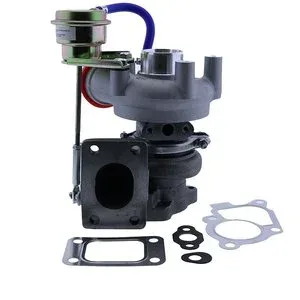
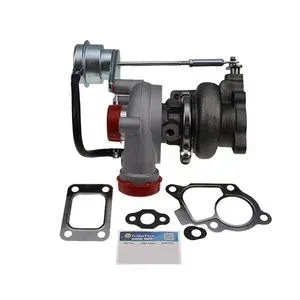
System-Level Engine Rebuild — Matched turbocharger and adjacent gasket sets ship together after C3.3B serial verification, preventing second orders that stall reassembly.
Technical Specifications
| Parameter |
Value |
| Product Type |
Turbocharger |
| Part Number |
436-1920 |
| Cross-Reference |
436-1920, CA436-192, 436-192, 436192 (reference only) |
| Machine Fitment |
308, 308.5, 308E2 CR, 308E2 SR, 309, 310, 236D, 236D3, 242D, 242D3, 246D, 246D3, 257D, 257D3, 259D, 259D3, 262D, 262D3, 277D, 279D, 279D3, 287D, 289D, 289D3, AP300F, AP355F, 906M, 907M, 908M |
| Engine Fitment |
CAT C3.3B |
| Turbo Model |
TD04L4, TD04L4-09TK3-5.0 |
| Condition |
New Aftermarket |
| Turbine Housing Material |
Ni-Resist D2 alloy |
| Compressor Wheel Material |
Forged 7075-T6 aluminum |
| Bearing Type |
Dual ceramic ball bearings |
| Operating Ambient Temperature Range |
-25°C to +110°C |
| Quality Standards |
ISO 9001, ISO 8573-1 Class 2 |
| Warranty |
12 months against manufacturing defects |
Application Suitability
| Engine System |
Related Components |
| Intake and Forced Induction |
Air filter housing seals, intake ducting clamps, intercooler gaskets |
| Lubrication Supply to Turbo |
Oil feed line banjo bolts, oil return tube gaskets, crankcase breather |
| Exhaust Gas Recirculation (EGR) |
EGR cooler mounting gaskets, EGR valve interface seals, exhaust manifold studs |
| Exhaust Routing |
V-band clamps, flex pipe sections, turbine outlet gaskets, heat shield fasteners |
Why a TD04L4 Turbocharger 436-1920 CAT C3.3B Engine Rebuild Fails When the Parts List Stops at the Turbo
A replacement turbo dropped into a C3.3B without addressing the oil feed circuit, exhaust manifold joint condition, and EGR interface almost guarantees a repeat failure within the first several hundred hours.
When I first started tearing down small-frame machines at a job site in West Africa, a seized TD04L4 was treated as an isolated swap. The mechanic would unbox a fresh unit, bolt it on, and fire the engine. Three days later the shaft would lock again. The root cause was upstream: carbon-clogged oil feed galleries starving the ceramic ball bearings, or a warped exhaust manifold flange dumping hot gas onto the turbine housing. The turbo was never the problem. The system around it was [NEED_CITE: common root causes of turbocharger shaft seizure in small diesel engines].
A TD04L4 turbocharger 436-1920 CAT C3.3B engine rebuild only succeeds when the parts list extends beyond the turbo itself. The gasket thickness between the exhaust manifold and the turbine housing, the condition of the oil inlet banjo screen, and the seal integrity at the compressor outlet all determine whether this component survives its first heat cycle.

How the TD04L4 Sits Inside the C3.3B Induction and Emission Loop
The turbocharger is the mechanical link between exhaust energy recovery and intake charge density. On the C3.3B, the TD04L4 spools against a specific compressor map that the ECU expects when calculating fuel delivery and EGR flow rates. If the replacement unit does not match the wastegate calibration of the original build generation, the engine will either run rich under load or fail to reach target boost, triggering derate codes that get misdiagnosed as injector or sensor faults. This is why matching the TD04L4 turbocharger 436-1920 CAT C3.3B engine rebuild to the exact engine serial range matters before the crate is opened.
What Engine History Changes About the Parts You Actually Need
Every C3.3B that reaches overhaul stage has a rebuild history, and that history changes what belongs in the kit. An engine that has already been through one rebuild may have polished oil galleries from prior abrasive contamination, altered bearing bore clearances from line-bore correction, or non-standard gasket thicknesses left behind by a previous shop. The TD04L4 variant designation TD04L4-09TK3-5.0 must be cross-checked against the engine serial to confirm the compressor wheel trim and turbine A/R ratio match the ECU calibration file. Installing a variant meant for a different build generation introduces a boost deviation the engine controller cannot compensate for [NEED_CITE: turbocharger compressor map matching to engine ECU calibration files].
Reading the Specifications That Matter on Site
The Ni-Resist D2 alloy turbine housing is selected for thermal stability under sustained exhaust temperatures typical of compact loader and excavator duty cycles. This material resists the micro-cracking that gray cast iron develops after repeated heat-soak and rapid cooldown cycles in stop-start municipal work. The forged 7075-T6 aluminum compressor wheel carries higher tensile strength than cast alternatives, reducing the risk of blade deformation when foreign object ingestion occurs through a degraded intake seal. Dual ceramic ball bearings in the center cartridge tolerate the momentary oil starvation that happens during cold cranking before the pump reaches full pressure, a condition particularly relevant in high-ambient-temperature regions where machines sit overnight without block heaters. The operating range of -25°C to +110°C covers the envelope from cold-morning starts to sustained full-load operation in tropical quarry environments [NEED_CITE: material selection criteria for turbocharger turbine housings in off-highway diesel applications].
The Cost of Skipping the System Check
A shop that orders only the turbo and reuses the existing oil feed line, exhaust gasket, and intake duct seals is betting that none of those components contributed to the original failure. In practice, a restricted oil feed screen or a fatigued exhaust stud that no longer clamps the manifold evenly will produce the same shaft-play and bearing-wear signature within weeks. The machine comes back to the bay, the turbo gets pulled again under warranty suspicion, and the real fault remains hidden in the adjacent plumbing. Each repeat teardown adds labor hours, consumes another gasket set, and erodes the customer's confidence in the diagnosis [NEED_CITE: diagnostic procedures for repeat turbocharger failure in compact diesel engines].
What This Supply Channel Provides for a C3.3B Overhaul
Selected turbocharger lines are produced in-house while complementary gasket sets, oil feed hoses, and seal kits are sourced from ISO-certified partners, all carrying the same warranty terms under one account. A complete overhaul list — turbo, matched gaskets, V-band clamps, oil inlet and outlet seals — ships as a single consignment from the Guangzhou warehouse rather than arriving in staggered deliveries from separate vendors. Identification is confirmed from engine serial number, machine model, or a photograph of the existing nameplate when the original tag is unreadable. Cross-reference verification covers superseded numbers so that an older part listing is traced to the current applicable variant. Sample units are available for fitment confirmation before a distributor commits to bulk stock. A technical team reviews engine serial data and prior rebuild history to confirm the correct TD04L4 variant and appropriate gasket stack thickness before the order ships.
Documentation & Verification
- Commercial invoice and packing list itemizing turbo part number alongside every gasket and clamp in the kit
- Compatibility and cross-reference sheet marking 436-1920 and related numbers as reference only
- Quality inspection record covering shaft runout check and compressor wheel balance verification
- Warranty terms specifying twelve-month coverage against manufacturing defects with claim documentation requirements
- Packing photographs confirming kit completeness and protective wrapping before crate closure
- HS code and customs documentation support for destination-country turbocharger import classification
Installation & Rebuild Sequence
- Flush oil feed and return lines before installing the TD04L4 center cartridge to remove prior carbon deposits
- Verify exhaust manifold flange flatness before mating to the Ni-Resist D2 turbine housing to prevent exhaust leak
- Confirm V-band clamp engagement and torque sequence on compressor outlet and turbine inlet connections
- Pre-lube ceramic ball bearings with clean engine oil before first cranking to prevent dry-start scoring
- Run engine at idle for initial break-in period to seat bearing surfaces and verify boost pressure buildup
Requesting a Matched Rebuild Package
Provide the C3.3B engine serial number and any available prior rebuild documentation so the correct TD04L4 variant can be confirmed against the compressor map and wastegate calibration. Share the full teardown parts list so that adjacent gaskets, oil feed components, and EGR interface seals can be quoted as a single matched package rather than a standalone turbo line item.
Frequently Asked Questions
Q: What other components should be replaced together with the turbo during a C3.3B overhaul?
A: The oil feed line and banjo bolt screen, exhaust manifold gasket and studs, turbine outlet V-band clamp, compressor inlet and outlet seals, and oil return tube gasket should all be evaluated and typically replaced. Reusing any of these items risks reintroducing the contamination or leak path that caused the original turbo failure, making the new TD04L4 turbocharger 436-1920 CAT C3.3B engine rebuild a repeat repair rather than a resolution.
Q: How does engine serial number affect which TD04L4 variant fits my C3.3B?
A: The C3.3B was produced across multiple build generations with different ECU calibration files, each expecting a specific compressor wheel trim and wastegate crack pressure. The variant designation TD04L4-09TK3-5.0 corresponds to a particular serial range. Providing the engine serial number allows confirmation that the boost curve of the replacement matches the engine controller's expectation, preventing persistent derate codes after installation.
Q: What caused the original turbo to fail — and how do I prevent repeat failure?
A: Common root causes include restricted oil feed galleries from carbon buildup, exhaust manifold leaks that overheat the turbine housing, and contaminated intake air from degraded duct seals. Inspection of shaft play direction, bearing wear patterns, and compressor wheel condition on the removed unit reveals which system fault is responsible. Addressing that fault with matched replacement components prevents the cycle from repeating.
Q: Does the overhaul kit include all gaskets needed for turbo installation?
A: A properly assembled kit should contain the turbine housing to manifold gasket, oil inlet and outlet gaskets, V-band clamps, heat shield fasteners, and compressor outlet seal. Before confirming the order, request the full contents list and compare it against your teardown notes to ensure no adjacent seal has been omitted, which would otherwise force a second order and delay engine reassembly.
Q: How do I confirm the engine build variant before ordering matched components?
A: Locate the engine serial number on the C3.3B data plate and cross-reference it against the build generation records. If the nameplate is worn or painted over, a photograph of the block casting numbers and existing turbo data plate can be used to trace the correct variant. This step ensures the TD04L4 turbocharger 436-1920 CAT C3.3B engine rebuild package matches the specific engine configuration on your bench.