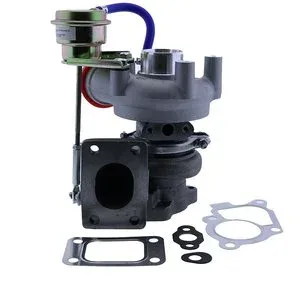
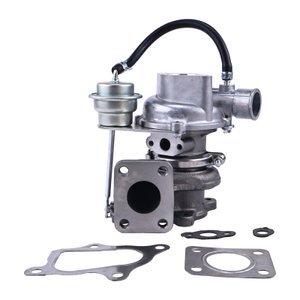
System-Matched Supply — Each Turbocharger 482-8480 ships with verified compatibility for the CAT C3.8 intake and lubrication circuit, not as an isolated component.
Technical Specifications
| Parameter |
Value |
| Part Number |
482-8480 |
| Product Type |
Turbocharger |
| Cross-Reference |
482-8480 (reference only), 4828480 (reference only) |
| Engine Fitment |
CAT C3.8 |
| Machine Fitment |
272D2, 272D2 XHP, 272D3, 272D3 XHP, 297D2, 297D2 XHP, 299D2, 299D2 XHP, 299D3, 299D3 XHP, 299D3 XE |
| Condition |
New Aftermarket |
| Warranty |
3–12 months against manufacturing defects |
| Quality Standard |
ISO 9001 |
Application Suitability
| Engine System |
Related Components |
| Intake & Forced Induction |
Inlet and outlet gaskets, air filter elements, intake hose clamps |
| Lubrication Supply & Return |
Oil feed line, oil return line, bearing housing oil gallery seals |
| Exhaust Routing |
Exhaust manifold gasket, manifold-to-turbine flange hardware |
| Emission Control Interface |
Crankcase ventilation lines, charge air cooler connections |
Diagnosing the Failure Before the Turbocharger 482-8480 Goes On the Bench
A replacement turbo solves nothing if the system fault that killed the last one is still active.
In the Yangtze Delta equipment corridor, I spent years on the buyer side before moving to supply. The pattern repeats: a workshop replaces a failed turbo on a skid steer loader, the machine runs for a few weeks, then the new unit is leaking oil or showing shaft play. The root cause — a restricted oil return line creating backpressure at the bearing housing — was never checked. [NEED_CITE: turbocharger failure root cause analysis for diesel engines in off-highway applications] The Turbocharger 482-8480 for CAT C3.8 engine rebuild must be treated as a system event, not a single-swap repair. Overlooking the lubrication and intake circuit means the next failure is already in motion before the first hour of operation is logged.

Where This Turbocharger Sits in the C3.8 Engine System
The turbocharger is the mechanical link between the exhaust energy leaving the cylinders and the pressurized air entering them. On the C3.8 platform, it connects downstream of the exhaust manifold and upstream of the charge air cooler. The bearing housing taps directly into the engine lubrication circuit. This means the Turbocharger 482-8480 for CAT C3.8 engine rebuild operates within a network where oil quality, air filtration integrity, and exhaust flow all determine service life.
Why System Checks Matter More Than the Part Itself
Before installation, the oil feed line must be inspected for internal carbon buildup that restricts flow to the bearing housing. The return line must be confirmed clear, because any restriction forces oil past the turbine-end seal. The air filter and intake ducting should be checked for debris ingestion paths that score the compressor wheel. These checks take minutes and prevent a repeat teardown. [NEED_CITE: diesel engine turbocharger lubrication circuit inspection procedures]
Reading the Specs That Determine Fit and Function
The turbine and compressor wheel assembly is balanced for the operating RPM range specific to the C3.8 application. Bearing housing oil gallery alignment must match the engine block feed port position — a mismatch here causes immediate oil starvation on startup. The gasket surfaces at the inlet and outlet flanges require flat, clean mating faces to prevent boost leaks that degrade combustion and raise exhaust temperatures. Condition is listed as New Aftermarket, meaning all wearing surfaces are at nominal dimension without oversize or rework history to account for.
The Hidden Cost of Treating a Turbo as a Standalone Swap
When a workshop installs a turbo without verifying the oil return path or replacing the inlet and outlet gaskets, the failure mode shifts rather than disappears. A leaking gasket introduces unmetered air, altering the air-fuel ratio and raising cylinder temperatures. An unchecked return restriction forces oil past the turbine seal, contaminating the exhaust side and accelerating carbon buildup. The machine comes back to the bench within a short period, and the diagnosis starts over. [NEED_CITE: repeat turbocharger failure patterns in compact track loader engines]
Why Source This Turbocharger Through XUNPO
Our own production lines and qualified sourced supply operate under a single warranty, so a turbo and its companion gasket set carry the same coverage terms. Eight product categories mean the gaskets, oil line seals, and air filter for a C3.8 job consolidate into one shipment from one account. Orders start from a single piece for emergency rebuilds. Compatibility identification works from a part number, machine model, or a photograph of the nameplate. Cross-reference verification covers superseded and alternate numbers to catch catalog errors before dispatch. A sample can ship ahead of a bulk commitment for fitment confirmation on the first unit.
Documentation & Verification
- Commercial invoice listing Turbocharger 482-8480 with cross-reference only notation for OEM numbers
- Compatibility sheet confirming C3.8 engine serial variant and matched gasket references
- Quality inspection record covering rotational balance and housing pressure test results
- Warranty terms specifying coverage scope for system-related manufacturing defects
- Packing photographs showing turbocharger secured with inlet and outlet flange protection
- HS code and customs documentation support for cross-border engine parts shipments
Installation & Rebuild Sequence
- Verify oil feed and return line condition before mounting the turbocharger to the C3.8 block
- Install new inlet and outlet gaskets with fasteners torqued to engine service manual sequence
- Prime the bearing housing oil gallery with clean engine oil before first cranking cycle
- Confirm boost pressure and exhaust gas temperature within expected range during initial run-in
Requesting a System-Matched Quote
Provide the engine serial number and any prior rebuild history so we can confirm bearing housing configuration and gasket set match. If the nameplate is worn, send a photograph of the mounting flange and oil port positions. This lets us verify the complete intake and lubrication interface before the quote is issued.
Frequently Asked Questions
Q: What gaskets and seals should be replaced together with the turbocharger?
A: The inlet flange gasket, outlet flange gasket, and oil feed line O-rings should all be replaced during turbo installation. Reusing old gaskets risks boost leaks and oil seepage that compromise the new unit. We can supply these as a matched set with the turbocharger for the C3.8 platform.
Q: How do I confirm the C3.8 engine serial variant matches this turbo?
A: Provide the full engine serial number so we can cross-check the bearing housing oil gallery orientation and compressor housing configuration. Some C3.8 build variants use different turbo mounting patterns. Serial-level verification prevents fitment issues at installation.
Q: What system checks should be done before installing a replacement turbo?
A: Inspect the oil feed and return lines for restrictions, verify air filter housing integrity, and confirm the exhaust manifold mating surface is flat. These upstream and downstream conditions directly affect turbocharger service life. Addressing them during installation prevents early repeat failure.
Q: Is the oil feed line included or sourced separately?
A: The turbocharger is supplied as a standalone unit. The oil feed line and associated fittings are available as separate line items. Consolidating them in one order ensures compatibility and allows the entire lubrication interface to ship together for the rebuild job.
Q: What does the warranty cover if the failure was caused by an upstream issue?
A: The warranty covers manufacturing defects in the turbocharger assembly for the stated period. Failures traced to external system faults such as oil starvation or foreign object damage fall outside manufacturing defect coverage. We support diagnosis to distinguish between unit defect and system-origin failure.