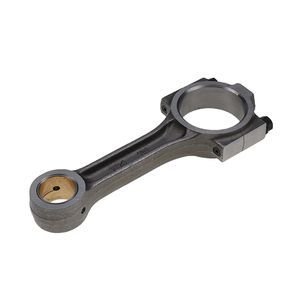
Matched Tolerances — every 31A19-10024 rod is weighed and bore-checked against S3L/S4L overhaul kit requirements before dispatch, eliminating the mismatch that causes repeat teardowns.
Technical Specifications
| Parameter |
Value |
| Part Number |
31A19-10024 |
| Product Type |
Connecting Rod |
| Cross-Reference |
31A1910024 (reference only) |
| Machine Fitment |
T233, T273 |
| Brand Compatibility |
Mitsubishi S3L, S4L, S3L2, S4L2 |
| Material |
Forged 40Cr steel |
| Big-End Bore Tolerance |
±0.005 mm |
| Surface Treatment |
Shot-peened |
| Inspection Method |
Magnetic particle inspection |
| Condition |
New Aftermarket |
| Warranty |
6 months against manufacturing defects |
| MOQ |
1 piece |
| Standards |
ISO 9001, ISO 6892-1, JIS G4051 |
Application Suitability
| Engine System |
Related Components |
| Block & rotating assembly |
Rod bearing shells (STD, 0.25, 0.50 oversize), main bearing set |
| Piston & cylinder group |
Piston assemblies, cylinder liners, piston ring sets |
| Lubrication circuit |
Oil pump, oil cooler, full gasket overhaul kit |
| Valve train |
Valve stem seals, valve guides, cylinder head gasket |
Why Rebuilds Stall Before the First Crankshaft Turn
The rod is only half the equation — the bearing grade must match what the crankshaft journal actually measures after inspection.
Engine overhaul shops regularly face a situation where the Mitsubishi S3L S4L Connecting Rod engine rebuild kit arrives, but the rod bearing shells inside are STD grade while the crankshaft was reground to 0.25 oversize during a previous service. The entire rebuild halts while the correct oversize set is sourced. In other cases, the connecting rod big-end bore sits at the upper tolerance limit and the bearing clearance ends up too tight, causing oil starvation within the first hours of operation [NEED_CITE: engine bearing clearance standards for diesel rebuild]. These are not material failures — they are identification and matching failures that no amount of quality in the rod itself can prevent.

The Rotating Assembly as a Matched Set
A connecting rod does not work alone inside the block. It sits between the piston assembly above and the crankshaft journal below, with a bearing shell separating it from the journal surface. When planning a Mitsubishi S3L S4L Connecting Rod engine rebuild, the rod must be evaluated alongside the actual crankshaft journal diameter, the required bearing oversize grade, and the piston weight class. Supplying rods as isolated components without this context is how tolerance stacking problems begin.
What the Crankshaft Journal Tells You Before You Order
The crankshaft journal condition determines everything downstream. If a previous rebuild reground the journal to 0.25 mm oversize, then STD bearing shells will not achieve the correct oil film thickness regardless of rod bore accuracy. Measure the journal first, select the bearing grade second, then confirm that the rod big-end bore combined with the chosen bearing shell produces clearance within the engine manufacturer specification [NEED_CITE: crankshaft journal measurement and bearing grade selection procedure]. This sequence prevents the most common cause of early rod bearing failure in rebuilt Mitsubishi S3L and S4L engines.
Forged 40Cr Steel and Shot-Peening in Context
The 31A19-10024 connecting rod is forged from 40Cr steel, a chromium-alloyed grade recognized under JIS G4051 for components subject to cyclic fatigue loading. Shot-peening the rod surface introduces compressive residual stress that resists crack initiation at the bolt hole and shank transition areas — the locations where fatigue failures typically originate in high-cycle diesel service. The ±0.005 mm big-end bore tolerance ensures that when paired with the correct bearing shell grade, oil clearance remains consistent across all cylinders, which is critical for engines like the S4L where four rods share a common crankshaft.
The Cost of Skipping the Root-Cause Check
Replacing a failed connecting rod without diagnosing what destroyed the original one is a direct path to repeat failure. Bearing shell wear patterns reveal whether the cause was oil starvation, contamination, overloading, or incorrect clearance from a prior rebuild. Installing new rods and bearings into an engine with a compromised oil pump or blocked lubrication passage simply resets the clock on the same failure [NEED_CITE: diesel engine bearing failure root cause analysis patterns]. Shops that skip this step often see the replacement rod fail within a fraction of the original service interval.
Why Source This Rod Through XUNPO
XUNPO produces selected part lines in-house and sources the remainder from ISO-certified manufacturing partners, with both carrying identical QC and warranty terms. For the 31A19-10024 connecting rod, this means dimensional inspection and weight consistency data ship with every order. The engine system catalog covers all eight categories needed for a complete S3L or S4L overhaul — rods, bearings, pistons, gaskets, seals — under one account and one warranty. Minimum order is one piece, so a single emergency replacement does not force a bulk purchase. The technical team confirms bearing grade compatibility and engine serial variant differences before dispatch, not after the parts arrive on the bench.
Documentation & Verification
- Commercial invoice listing 31A19-10024 with cross-reference 31A1910024 marked reference only
- Dimensional inspection record covering big-end bore, weight, and magnetic particle test results
- Bearing grade compatibility sheet matching rod bore to available oversize shell options
- Overhaul gasket and seal kit contents list verified against specific engine serial variant
- Packing photographs showing rod protection and crate condition before dispatch
- HS code and customs documentation support for international engine parts shipments
Installation & Rebuild Sequence
- Clean block oil galleries thoroughly before installing the 31A19-10024 rod to prevent debris scoring the new bearing shell
- Plastigauge each rod bearing after torque to confirm clearance matches the selected oversize grade
- Verify rod weight consistency across all cylinders before final assembly of the S3L or S4L rotating assembly
- Torque rod bolts to specification in the prescribed sequence; never reuse stretched fasteners
- Prime the lubrication system before first start to ensure oil reaches every rod bearing immediately
Before You Request a Quote
Provide the engine model (S3L, S3L2, S4L, or S4L2), engine serial number, and any known rebuild history including whether the crankshaft has been reground. If the original rod or bearing shell is available, share photographs of the bearing wear pattern and the rod stamping. This information allows confirmation of the correct bearing grade, internal dimension variant, and any superseded part numbers before the order is placed.
Frequently Asked Questions
Q: What else should be replaced together with the connecting rods during an S3L/S4L overhaul?
A: A complete overhaul typically requires rod and main bearing shells matched to crankshaft journal condition, piston assemblies with rings, cylinder liners if worn, a full engine gasket set, valve stem seals, and an oil pump inspection or replacement. Ordering these as a consolidated kit prevents tolerance mismatches between components sourced separately.
Q: How do I confirm whether my crankshaft needs STD or oversize bearing shells with these rods?
A: Measure the crankshaft journal diameter with a micrometer and compare against the engine manufacturer specification. If a previous rebuild reground the journal, the required oversize grade (0.25, 0.50) must match. The rod big-end bore combined with the selected bearing shell must produce the specified oil clearance.
Q: Are there internal differences between S3L and S3L2 that affect rod fitment?
A: Yes. The S3L2 and S4L2 variants may have different internal dimensions or component specifications compared to the base S3L and S4L. Providing the engine serial number allows verification of which variant is in your machine and ensures the correct connecting rod and matched components are supplied.
Q: What caused the original connecting rod or bearing to fail, and how do I prevent it?
A: Common root causes include oil starvation from pump wear, lubrication contamination, incorrect bearing clearance from a prior rebuild, or overloading. Inspecting the failed bearing shell wear pattern reveals the cause. Addressing the underlying system issue prevents the replacement rod from suffering the same failure.
Q: Can I order a matched set of rods, bearings, and pistons for a complete rebuild?
A: Yes. Supplying the engine model and serial number allows assembly of a matched kit where rod bore, bearing grade, piston weight class, and gasket specifications are all verified for compatibility. This approach eliminates the tolerance stacking risk that occurs when components are sourced from multiple suppliers.