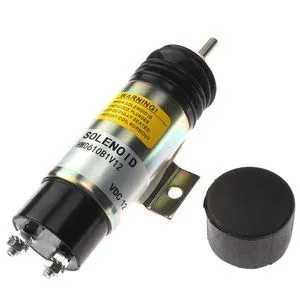
Engine Sequence Variants Verified — Pull-in and hold-in coil parameters tested against Kubota WG750 and DF752 harness configurations before dispatch.
Technical Specifications
| Parameter |
Value |
| Part Number |
D610-B1V12 68990-015 |
| Cross-Reference |
D610-B1V12, 68990-015 (reference only) |
| Product Type |
Stop Solenoid |
| Machine Fitment |
WG750, DF752, DF-750, DF972, D905 |
| Voltage |
12V |
| Coil Type |
Dual Coil Pull |
| Terminals |
2 |
| Condition |
New Aftermarket |
| Warranty |
3-12 months against manufacturing defects |
| Standards |
ISO (factory certified) |
Application Suitability
| Engine System |
Related Components |
| Fuel Shut-Off Control |
Injection pump linkage, shutdown lever gaskets |
| Electrical Actuation |
Wiring harness connectors, fuel system relays |
| Top-End Overhaul |
Fuel filters, injection line seals, cylinder head gaskets |
Why the Stop Solenoid Fails Before the Engine Does
A replacement solenoid rarely fixes the root cause if the upstream fuel system or wiring harness remains degraded.
In the workshop, I have documented numerous cases where a Stop Solenoid engine rebuild replacement was installed on a Kubota WG750, only for the unit to fail again within weeks. The dual coil pull mechanism requires stable voltage to maintain the fuel rack in the correct position. When wiring insulation degrades or fuel contamination increases internal resistance, the new electrical component absorbs the excess thermal load [NEED_CITE: electrical actuator thermal degradation in mobile diesel applications]. Diagnosing the circuit and fluid condition prevents the new part from carrying the burden of a broader system fault.

The Fuel Shut-Off Circuit and Adjacent Systems
This stop solenoid belongs to the engine fuel shut-off control system, acting as the primary electrical actuator that terminates combustion by manipulating the injection pump rack. During any top-end rebuild, the condition of the mechanical linkage and the shutdown lever gaskets directly affects how smoothly the dual coil pull mechanism can engage. Replacing the electrical actuator without verifying the fuel filter condition or the injection line seals leaves the new component exposed to the same contamination or pressure irregularities that may have contributed to the previous failure. A systematic approach to the fuel system ensures the Stop Solenoid engine rebuild replacement functions as designed within the broader assembly.
Engine Serial Variants and Harness Compatibility
Kubota engine builds across the WG750, DF752, and D905 platforms often feature subtle differences in terminal configuration and connector types, even when the base part number remains constant. Verifying the engine serial number is necessary to confirm whether the two-terminal interface matches the specific harness variant on the machine. An incorrect match leads to intermittent hold-in coil function, which manifests as unpredictable shutdown behavior under load [NEED_CITE: Kubota engine serial variant identification procedures for aftermarket electrical components]. Matching the exact build variant ensures the electromagnetic pull-in and hold-in functions align with the engine's original control logic.
Interpreting the Dual Coil Pull Specification
The 12V dual coil pull design incorporates two distinct electromagnetic circuits: a high-current pull-in coil to move the fuel rack initially, and a low-current hold-in coil to maintain that position. This configuration reduces continuous heat generation, which is critical for components mounted near the engine block. The two-terminal interface requires the machine's control module to switch between these circuits correctly. If the voltage supply fluctuates or the grounding path shows high resistance, the hold-in coil may disengage prematurely, causing the engine to stall or fail to shut down when the ignition is turned off. Understanding this electrical logic is fundamental to troubleshooting persistent no-start or no-shutdown faults.
The Cost of Ignoring Upstream Faults
Installing a new Stop Solenoid engine rebuild replacement without inspecting the injection pump linkage or the wiring harness often results in repeat failures. When the root cause is a short circuit or a mechanical binding in the fuel rack, the new solenoid coil absorbs the excess current and burns out prematurely. This leads to unplanned downtime and additional labor costs for a second teardown. System-level diagnosis, including a review of the fuel lines and circuit grounding, ensures the replacement part achieves its intended service life [NEED_CITE: root cause analysis protocols for repeated diesel engine actuator failures].
Sourcing Matched Components for the Fuel System
XUNPO maintains production and qualified sourcing lines that cover both the electrical actuators and the adjacent fuel system seals required for a complete overhaul. Every unit undergoes a functional test to verify the pull-in and hold-in coil parameters before it leaves the facility. We supply components across eight core categories, allowing rebuild shops to consolidate their fuel filters, gaskets, and electrical parts under one account and one warranty terms. Our technical team reviews engine serial variants and cross-reference tables (for identification purposes) to confirm compatibility before dispatch. Sample units are available for fitment confirmation prior to bulk commitment, ensuring the terminal configuration matches the specific harness on your Kubota equipment.
Documentation & Verification
- Commercial invoice listing the dual coil stop solenoid and matched fuel system seals.
- Part compatibility sheet confirming Kubota WG750 and D905 engine serial variants.
- Quality inspection record verifying 12V pull-in and hold-in coil resistance values.
- Warranty terms covering manufacturing defects for 3 to 12 months.
- Packing photographs showing terminal protection and anti-corrosion packaging.
- HS code and customs documentation support for international electrical component shipments.
Installation & Rebuild Sequence
- Disconnect the battery and verify the wiring harness connector pins for corrosion before removing the old unit.
- Inspect the injection pump linkage and shutdown lever gaskets for mechanical binding or wear.
- Install the new D610-B1V12 68990-015 stop solenoid, ensuring the two-terminal interface seats fully.
- Perform a continuity test on the hold-in coil circuit to confirm proper grounding and voltage stability.
- Cycle the ignition to verify the dual coil pull mechanism engages the fuel rack smoothly without hesitation.
Rebuild Planning and System Verification
Provide your engine model, serial number, and any history of previous fuel system repairs to confirm the correct solenoid variant. Supplying photographs of the existing harness connector and the injection pump mounting face allows our technical team to verify the terminal configuration and mechanical linkage alignment. This information ensures the Stop Solenoid engine rebuild replacement arrives matched to your specific Kubota build and ready for immediate installation within the broader overhaul sequence.
Frequently Asked Questions
Q: What other fuel system components should be inspected when replacing the stop solenoid?
A: When replacing the stop solenoid, inspect the injection pump linkage for mechanical binding and check the shutdown lever gaskets for leaks. Fuel filters and injection line seals should also be reviewed, as contamination or pressure irregularities in these adjacent components can cause the new electrical actuator to fail prematurely by forcing it to work against abnormal resistance.
Q: How do engine serial variants affect solenoid terminal and connector compatibility?
A: Kubota engine builds across the WG750, DF752, and D905 platforms may feature different harness connectors despite sharing a base part number. Verifying the engine serial number confirms whether the two-terminal interface matches your specific machine variant, preventing intermittent hold-in coil function and unpredictable shutdown behavior under load.
Q: Can a failed solenoid indicate a deeper fuel system or wiring fault?
A: Yes. A solenoid that fails repeatedly often points to upstream issues such as wiring harness degradation, poor circuit grounding, or fuel contamination increasing internal resistance. The dual coil pull mechanism absorbs excess thermal load when the circuit is unstable, making system-level diagnosis necessary to prevent the new unit from burning out prematurely.
Q: How do I confirm the correct solenoid variant when the engine nameplate is worn?
A: If the nameplate is unreadable, provide photographs of the existing solenoid, the wiring harness connector, and the injection pump mounting face. Our technical team uses these visual cues alongside cross-reference tables to verify the terminal configuration and mechanical linkage alignment against known Kubota engine build variants.