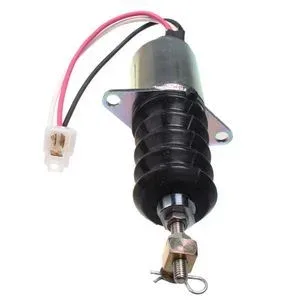
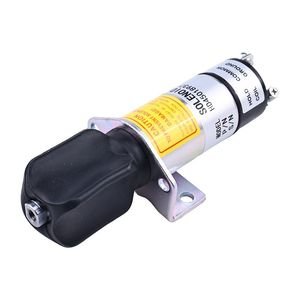
Matched to Engine Build — Coil resistance and plunger travel verified against the specific Woodward engine serial to prevent no-start or runaway conditions after installation.
Technical Specifications
| Parameter |
Value |
| Part Number |
1502-12A2U1B2 |
| Product Type |
Stop Solenoid |
| Cross-Reference |
150212A2U1B2, 1500-2114, 15002114 (reference only) |
| Machine Fitment |
Woodward models requiring stop solenoid 1502-12A2U1B2 or 1500-2114 |
| Voltage |
12V |
| Condition |
New Aftermarket |
| Warranty |
3-12 months against manufacturing defects |
| MOQ |
1 piece |
| Certification |
ISO |
| Applications |
Construction equipment, agricultural machinery, industrial generators, mining operations |
Application Suitability
| Engine System |
Related Components |
| Fuel shutoff and safety interlock |
Stop relay, shutdown linkage, fuel rack actuator |
| Electrical control circuit |
Wiring harness connectors, inline fuses, control module |
| Engine auxiliary subsystem |
Adjacent relays, ignition switch contacts, governor interface |
| Overhaul support |
Gasket set for solenoid mounting flange, sealing O-ring |
Why the Same Stop Solenoid Part Number Fails Repeatedly on Rebuilt Engines
The solenoid is rarely the root cause — it is usually the first component to burn out when the shutdown circuit has been modified during a previous rebuild.
Across Central Asian distributor networks and equipment repair centres, I have reviewed return logs where a Stop Solenoid engine replacement was installed on a Woodward unit, functioned for a handful of operating cycles, and then failed again with an open coil. In nearly every case the underlying fault sat upstream: a degraded control relay that was passing intermittent voltage, a harness connector corroded at the pin, or a shutdown linkage that had been adjusted too tight during reassembly. [NEED_CITE: common root causes of solenoid coil burnout in diesel engine shutdown circuits] Replacing the solenoid without tracing these system-level faults leads to repeated returns and eroded confidence in the replacement part itself.

Positioning the Stop Solenoid Inside the Engine Auxiliary Safety Chain
The stop solenoid sits at the final link in the engine shutdown safety chain. When the ignition key is turned off or an emergency stop signal is triggered, the 12V coil energises and drives the plunger to cut fuel delivery. This Stop Solenoid engine replacement must coordinate with the governor mechanism and the shutdown linkage to achieve a clean cessation of combustion. If any adjacent component in this chain has drifted out of specification — a worn linkage pivot, a sticky fuel rack, a relay that no longer switches cleanly — the solenoid absorbs the mechanical or electrical stress and fails prematurely. Understanding this position within the auxiliary system is the difference between a lasting repair and a cycle of repeat replacements.
Tracing the Circuit Before Swapping the Component
Before removing the failed solenoid, a continuity check from the control relay through the harness connector to the solenoid terminal reveals whether the coil actually received stable voltage during its last operating cycle. Wiring degradation, especially in mining and construction environments where vibration and moisture are constant, often manifests as intermittent high resistance rather than a clean open circuit. [NEED_CITE: electrical fault diagnosis methods for heavy equipment engine control circuits] A Stop Solenoid engine replacement installed onto a degraded harness will draw excessive current during the pull-in phase, overheat the coil winding, and fail within days. Confirming coil resistance against specification, checking connector pin condition, and verifying that the shutdown linkage moves freely through its full travel are all prerequisites before the new unit is powered.
Voltage, Coil Resistance, and Plunger Travel Explained
The 12V rating defines the nominal operating voltage, but the coil resistance determines how much current the solenoid draws and how quickly it generates magnetic force. A coil wound to tighter resistance tolerances reaches full magnetic saturation faster, pulling the plunger decisively rather than allowing it to hover in a partially energised state where heat builds up. The plunger travel distance must match the fuel rack cutoff point specific to the Woodward engine variant — too short and the engine will not shut down cleanly, too long and the plunger mechanically overstrokes, accelerating wear on the internal stop surface. Connector type and pin configuration must match the existing engine harness after any prior electrical repairs that may have introduced splice connectors or substitute terminals.
The Hidden Cost of Skipping System-Level Diagnosis
Installing a new solenoid onto a circuit with an undetected relay fault or harness degradation results in the replacement unit absorbing the same destructive conditions that killed the original. The coil burns out, the machine is down again, and the repair centre faces a second teardown. For fleet operators, this pattern compounds: each repeat failure adds labour cost, idle equipment time, and eroded trust in aftermarket components. [NEED_CITE: cost impact of repeat engine auxiliary component failures in fleet maintenance] A Stop Solenoid engine replacement is only as reliable as the circuit it is installed into.
Supply Backed by Engine System Knowledge
Our own production lines and qualified sourced supply operate under one account with one warranty, so whether the stop solenoid is self-produced or sourced, QC terms are identical. Eight product categories mean the replacement solenoid, associated relays, connector repair kits, and mounting gaskets ship as a single consignment. Minimum order is one piece, supporting emergency single-unit repairs without blocking on volume thresholds. Part identification proceeds from the part number, the engine model, or a photograph of the nameplate and old solenoid. Cross-reference verification covers superseded and alternate numbers including 1500-2114 variants. Technical staff confirm voltage match and plunger travel against the specific engine serial before dispatch.
Documentation & Verification
- Commercial invoice and packing list referencing solenoid part number and cross-reference designations
- Compatibility sheet confirming Woodward engine model match with OEM numbers marked reference only
- Coil resistance measurement and actuation test recorded per unit before dispatch
- Warranty terms covering manufacturing defects for 3-12 months from delivery
- Packing photographs showing solenoid, connector, and accessories before crate sealing
- HS code and customs classification support for international engine parts shipments
Installation & Rebuild Sequence
- Clean the solenoid mounting flange and surrounding governor housing before fitting to prevent debris ingress into the fuel rack mechanism.
- Verify the shutdown linkage moves freely through full travel before connecting the new solenoid plunger to the linkage arm.
- Check connector pin condition on the engine harness; replace corroded or spread pins before mating with the new Stop Solenoid engine replacement.
- Apply specified torque to the mounting bolts to avoid flange distortion that could bind the plunger.
- Energise the solenoid with the engine off to confirm full plunger stroke before starting the engine for the first run cycle.
- Run the engine through multiple shutdown cycles to verify clean fuel cutoff and confirm no abnormal coil heating during the pull-in phase.
Requesting a Quotation
Provide the Woodward engine model, serial number, and any prior rebuild history so we can confirm the correct solenoid variant and identify any superseded part numbers. If the existing solenoid or nameplate is still legible, a photograph accelerates identification. Share the condition of the shutdown circuit — relay age, harness modifications, linkage adjustments — so we can advise on adjacent components worth replacing during the same service event.
Frequently Asked Questions
Q: What other engine auxiliary components should be inspected when replacing the stop solenoid?
A: Inspect the shutdown relay, wiring harness connectors for corrosion or pin spread, the mechanical linkage between the solenoid plunger and the fuel rack, and any inline fuses in the control circuit. These components interact directly with the solenoid during every shutdown cycle, and failure in any one of them can cause the replacement unit to burn out prematurely.
Q: How do I confirm the correct solenoid variant for my Woodward engine serial number?
A: Provide the engine model and serial number so we can cross-reference against the applicable variant table. Woodward engines across different production periods may use solenoids with the same base designation but different plunger travel, connector types, or mounting patterns. We verify the match before dispatch to avoid fitment issues.
Q: What causes repeated stop solenoid failure and how should I address the root cause?
A: Repeated failure typically traces to upstream electrical faults — a failing relay, degraded wiring, or intermittent connector contact — or to a mechanical linkage that has been adjusted too tight. Diagnose the full shutdown circuit before installing the replacement to prevent the new unit from absorbing the same destructive conditions.
Q: Does a standard overhaul kit include this solenoid or is it ordered separately?
A: Most overhaul gasket and seal kits do not include the stop solenoid. It is typically ordered as a separate line item within the engine auxiliary category. Confirm your kit contents list before ordering to avoid gaps in the rebuild parts supply.
Q: How do I verify coil voltage and connector type match the existing engine harness?
A: Measure the voltage at the solenoid connector with the ignition in the shutdown position to confirm 12V is present when expected. Compare the connector shell shape, pin count, and pin arrangement on the new solenoid against the harness plug. Any mismatch from a prior harness repair may require an adapter or connector replacement.