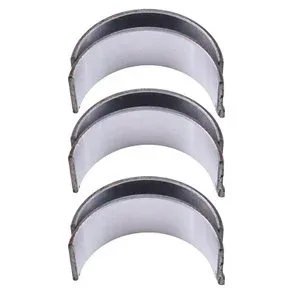
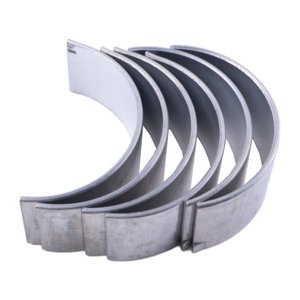
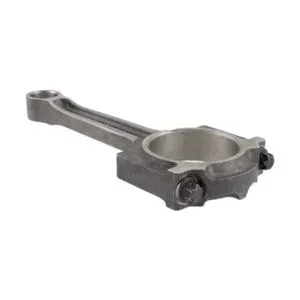
Oversize Grade Matched — Crankshaft journal diameter confirmed against regrind history before this STD connecting rod bearing set ships, eliminating the mismatch that causes repeat bearing failure after teardown.
Technical Specifications
| Parameter |
Value |
| Part Number |
15531-22310 |
| Product Type |
Con Rod Bearing |
| Cross-Reference |
15531-22310 (reference only), 15261-22310 (reference only), 15694-22310 (reference only) |
| Machine Fitment |
Kubota B1550D, B1702, B1750D, B2150E, B7100HST-D, B8200, F2000, GL-6500S, KH-35, KH-50 and related models |
| Engine Compatibility |
Kubota D722, D750, D850, D950, V1100, V1200, Z482, Z600, E75-NB3-HG-2, EA300-ENB1-1 |
| Oversize Grade |
STD |
| Material |
High-tin aluminum alloy with steel back, precision-ground surface |
| Condition |
New Aftermarket |
| Warranty |
6 months against manufacturing defects |
| MOQ |
1 set |
| Standards |
ISO 9001, SAE J356, ISO 4382-2 |
Application Suitability
| Engine System |
Related Components |
| Crankshaft-connecting rod assembly |
Main bearings, thrust washers matched to the same oversize grade |
| Piston and cylinder liner group |
Piston rings, wrist pin bushings inspected for ovality during bearing replacement |
| Lubrication circuit feeding rod journals |
Oil pump, pressure relief valve, full-flow filter replaced to address contamination root cause |
| Bottom-end overhaul kit consolidation |
Complete gasket set, seal kit, crankshaft end-play shims included in system-level supply |
Why the Wrong STD Connecting Rod Bearing Kubota Engine Rebuild Still Fails After Teardown
A standard-grade bearing in a reground crankshaft is a failure waiting to happen. Rebuild shops across Latin America and beyond regularly encounter engines where the crankshaft was machined during a prior overhaul, yet the replacement rod bearings ordered were still STD grade. The mismatch only becomes apparent when the engine seizes within operating hours of restart [NEED_CITE: crankshaft regrind documentation practices in diesel engine rebuild shops]. This STD connecting rod bearing Kubota engine rebuild scenario represents one of the most common root causes of repeat bottom-end failure in small-displacement diesel platforms. The bearing shell contacts the journal at a clearance that is either too tight, causing localized overheating and wipe, or too loose, allowing destructive oil pressure loss. Neither condition is caught during a static assembly check — the damage accumulates under load, making post-failure diagnosis costly and inconclusive.

The Rod Bearing Position Within the Kubota Bottom-End System
The connecting rod bearing sits at the intersection of the crankshaft journal and the connecting rod big end, transferring combustion forces from the piston through to the rotating assembly. In Kubota D722, D750, D850, and EA300 engine families, the rod bearing must maintain precise oil film thickness under the cyclic loading typical of agricultural PTO operation and generator continuous duty. When planning a STD connecting rod bearing Kubota engine rebuild, the rod bearing grade must match not only the factory specification but also the actual current state of the crankshaft journals — a dimension that changes every time the crankshaft passes through a regrinding operation.
Oversize Grade Selection and Crankshaft Regrind History
Selecting the correct oversize grade requires measuring the crankshaft journal diameter directly and comparing it against the factory STD dimension, 0.25 mm undersize, and 0.50 mm undersize thresholds. An engine that has already undergone one regrind will require 0.25 oversize bearings, not the STD grade listed in the original parts manual. Cross-referencing the engine serial prefix against known production variants within the D-series and EA-series families helps narrow down which bearing shell dimensions apply, since Kubota introduced dimensional changes across serial ranges without always updating the top-level engine model designation [NEED_CITE: Kubota engine serial variant bearing dimension differences]. This verification step prevents the situation where a D722-EA300 platform receives a STD connecting rod bearing Kubota engine rebuild kit that physically fits the bore but operates at incorrect clearance on a previously machined journal.
Interpreting Material and Clearance Specifications
The high-tin aluminum alloy bearing surface with steel backing provides a balance of conformability and load capacity suited to the Kubota small diesel operating envelope. The steel back ensures dimensional stability under thermal cycling, while the aluminum-tin overlay offers embeddability — the capacity to absorb minor contamination particles without scoring the crankshaft journal. The precision-ground surface finish controls initial oil film formation during the critical first minutes of operation after rebuild. Clearance between the bearing shell and the journal is a function of both the oversize grade and the connecting rod bore condition; a rod that has been resized or heat-distorted will alter the effective clearance even with a correctly graded bearing. This is why system-level rebuild supply includes connecting rod bushings and bolts, which must be replaced to maintain clamping force and prevent cap walk under load [NEED_CITE: connecting rod bolt stretch and clamp load specifications for small diesel engines].
The Cost of Grade Mismatch and Missed Root Causes
Sending STD bearings to an engine with a reground crankshaft means the entire bottom-end teardown must be repeated — labor, gaskets, seals, and machine downtime all duplicated. Beyond the direct rework cost, the secondary failure often damages the crankshaft journal beyond further regrind, converting a bearing replacement into a crankshaft replacement. Equally costly is replacing the bearing without diagnosing the lubrication fault that destroyed the original set. Oil starvation from a blocked gallery, a failing oil pump, or contaminated fluid will destroy the new bearing within the same operating window, creating a cycle of repeat failure that erodes trust in the rebuild itself [NEED_CITE: root cause analysis methodology for engine bearing failure patterns].
Why Source This Bearing Through a System-Level Supplier
Our own production lines and qualified sourced supply operate under a single warranty, meaning the rod bearing and every matched component in the overhaul kit carry identical terms. Eight product categories ship under one account, consolidating bottom-end bearings, gasket sets, piston assemblies, and filters into a single dispatch. The minimum order starts at one set, supporting emergency rebuilds without forcing surplus stock. Guangzhou warehouse inventory enables fast dispatch on common Kubota engine families. Part identification proceeds from the engine serial number, a photograph of the nameplate, or the existing bearing shell markings — cross-reference verification covers superseded numbers across the D722 through EA300 range. Technical staff confirm oversize grade applicability before the order is finalized, and sample supply is available for fitment confirmation before bulk commitment on fleet rebuild programs.
Documentation & Verification
- Commercial invoice and packing list itemize each bearing set by oversize grade and engine family.
- Cross-reference sheet lists 15531-22310, 15261-22310, and 15694-22310 as reference only for interchange identification.
- Quality inspection record documents shell wall thickness and surface finish verification per SAE J356.
- Warranty terms specify 6-month coverage against manufacturing defects with clear claim procedure.
- Packing photographs confirm anti-rust paper wrapping and foam cushioning before crate sealing.
- HS code and customs documentation support provided for international bearing shipments.
Installation & Rebuild Sequence
- Verify crankshaft journal diameter with a micrometer at two planes before selecting STD or oversize bearing shells.
- Clean connecting rod big-end bore and cap mating surfaces to ensure bearing shell back contacts without voids.
- Install bearing shells with oil groove aligned to the connecting rod oil feed hole, checking for crush height interference.
- Torque rod bolts to specification using new fasteners, then confirm side clearance with a feeler gauge.
- Prime the lubrication system before first cranking and monitor oil pressure during the initial run-in period.
- Sample engine oil at the first service interval to check for bearing material particulates indicating abnormal wear.
Requesting the Right Kit for Your Rebuild
Provide the engine model designation, serial number prefix, and any known crankshaft regrind history so the correct oversize grade and variant-specific components can be confirmed. If the engine nameplate is worn or painted over, a photograph of the existing bearing shell stamping or the connecting rod casting number allows cross-reference verification. For fleet overhaul programs, share the unit list with engine serial ranges to receive a consolidated kit quote covering all required grades and system components.
Frequently Asked Questions
Q: What does the overhaul kit include beyond the connecting rod bearings?
A: A system-level overhaul kit for Kubota D722 and EA300 families typically includes matched main bearings, thrust washers, piston ring sets, a complete gasket set, crankshaft seals, and rod bolts. Each item is selected for the specific engine serial variant to ensure no missing components during assembly. The kit contents checklist is provided with the quotation for verification against your rebuild scope.
Q: Which oversize grade do I need if the crankshaft has been reground?
A: Measure the crankshaft rod journal diameter at two perpendicular planes and compare against the factory STD dimension. If the journal has been machined to 0.25 mm undersize, you need 0.25 oversize bearings — not the STD grade listed in the original manual. Provide the measured dimensions or the machinist's regrind report so the correct grade is confirmed before shipping.
Q: Do different engine serial numbers within the same Kubota model use different bearings?
A: Yes. Kubota introduced dimensional changes across production runs within the D722, D750, and EA300 families without always changing the top-level model designation. Engine serial prefix verification is required to confirm which bearing shell dimensions apply to your specific unit. Provide the serial number so the cross-reference is checked against known variant breakpoints.
Q: What other system components should I inspect when replacing rod bearings?
A: Inspect the oil pump for wear, check the pressure relief valve for proper operation, replace the full-flow oil filter, and flush the oil galleries to remove contamination that caused the original failure. Connecting rod bolts should be replaced rather than reused, and the connecting rod bore should be checked for out-of-round condition that would affect bearing crush height and clearance.
Q: How do I confirm my exact engine variant when the nameplate is unreadable?
A: A photograph of the existing bearing shell, the connecting rod casting number, or the cylinder block casting mark allows identification even when the nameplate is worn or painted over. Cross-referencing these physical markings against the Kubota engine family database narrows the variant to a specific serial range, ensuring the correct bearing dimensions are supplied.