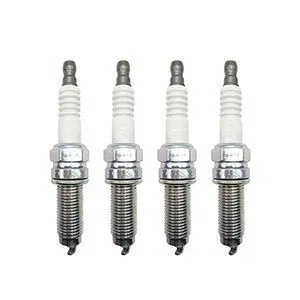
Matched Set Dispatch — Each laser iridium spark plug ships with verified gap records and cross-reference sheets to confirm fitment across Honda K-series variants.
Technical Specifications
| Parameter |
Value |
| Part Number |
SILZKR7C11S 92932 |
| Cross-Reference |
SILZKR7C11S (reference only), SILZKR7C-11S (reference only), 92932 (reference only) |
| Product Type |
Spark Plug |
| Machine Fitment |
CR-V (2012-2016), Accord (2008-2012) |
| Brand Compatibility |
Designed to replace plugs fitted in compatible Honda engines |
| Electrode Type |
Laser Iridium |
| Center Electrode Diameter |
0.6mm |
| Shell Finish |
Nickel-plated |
| Condition |
New Aftermarket |
| Quality Standard |
ISO 9001 |
Application Suitability
| Engine System |
Related Components |
| Ignition Subsystem (Honda K-series) |
Ignition coils, plug tube seals, valve cover gasket |
| Fuel Delivery System |
Fuel injectors, fuel filter, fuel pressure regulator |
| Cylinder Head Assembly |
Head gasket, head bolts, valve stem seals |
| Emission and Exhaust |
Oxygen sensors, catalytic converter, EGR valve |
| Engine Management |
Crankshaft position sensor, camshaft position sensor |
Why Misfires Return Weeks After a Plug Swap
A laser iridium spark plug engine rebuild replacement only resolves the symptom when the root cause sits in the plug itself. Most repeat misfires trace back to ignored upstream faults.
I once supplied a full set to a rebuild shop that replaced plugs without checking the ignition coils or measuring compression across cylinders. Within weeks the customer returned with the same misfire code. The number two cylinder had low compression from a worn ring land — the new plugs were firing perfectly into a cylinder that could not hold pressure. [NEED_CITE: engine misfire diagnostic sequence covering ignition, fuel, and mechanical causes] Shops that skip coil output testing, fuel trim analysis, and compression balancing before installing a laser iridium spark plug engine rebuild replacement often find themselves tearing down the same engine bay twice.

The Ignition System Context for Honda K-Series Platforms
This spark plug sits within the ignition subsystem of Honda K-series four-cylinder engines, where stable arc formation depends on matched components working within tight tolerances. A laser iridium spark plug engine rebuild replacement must account for the condition of the ignition coils seated directly above it, since weak coil output will degrade spark quality regardless of electrode condition. Rebuild shops refreshing these engines typically address the full ignition circuit — coils, plug tube seals, and wiring connector integrity — alongside the plugs themselves.
What Previous Rebuilds Change About Plug Selection
Engines that have undergone head resurfacing or head gasket replacement may have altered combustion chamber volumes, which shifts the thermal environment the plug operates within. When a previous rebuild reduced deck height or swapped to a thinner head gasket, the compression ratio rises and the plug may need to shed heat differently. I always ask for the engine serial and any rebuild records before confirming a set. Assuming the factory heat range still applies after machine work is how shops end up with pre-ignition damage that shows up hundreds of kilometers later. [NEED_CITE: effects of head resurfacing on combustion chamber volume and spark plug heat range selection]
Reading the Specs That Matter in the Cylinder Head
The 0.6mm laser-welded iridium center electrode maintains a sharp firing edge across extended service intervals, resisting the erosion that widens the gap on conventional nickel plugs. A widening gap forces the ignition coil to produce higher voltage to bridge the distance, which accelerates coil failure in high-mileage K-series engines. The nickel-plated shell resists corrosion from coolant vapor and combustion byproducts that accumulate around the plug well, particularly in engines where plug tube seals have begun to weep. Consistent electrode geometry ensures the spark kernel forms at the same location each cycle, which matters for the stratified combustion behavior Honda tuned into these cylinder heads.
The Cost of Skipping System-Level Diagnosis
When a rebuild shop installs new plugs without verifying coil output and fuel injector balance, the weakest cylinder continues to run lean or rich, fouling the fresh plug within a short service window. [NEED_CITE: fuel trim imbalance effects on spark plug fouling in multi-cylinder engines] I have seen shops blame the plug brand when the real fault was a clogged injector leaning out one cylinder. The replacement plugs then get pulled, inspected, and pronounced defective — when the engine management data would have pointed to the fuel system from the start.
Why Shops Source This Through Our Engine Systems Desk
Our production and sourcing lines operate under a single warranty account, so a matched set of spark plugs carries the same quality terms as the overhaul gaskets and bearings in the same order. We stock across eight categories, meaning ignition components, seal kits, and engine internals consolidate into one consignment rather than arriving from separate suppliers on mismatched schedules. Minimum order starts at one piece, which matters when a single cylinder needs an emergency plug after a diagnostic pull. Our technical team verifies fitment from engine serial, rebuild history, and variant-specific requirements — not just from a catalog number that may span multiple engine generations. Cross-reference verification covers superseded numbers and alternate listings, catching errors that copied tables often carry forward between sellers.
Documentation & Verification
- Commercial invoice listing each spark plug with engine compatibility notation
- Cross-reference sheet mapping SILZKR7C11S interchange numbers (reference only)
- Dimensional inspection record including electrode gap measurement before dispatch
- Warranty terms covering manufacturing defects under stated service conditions
- Packing photographs showing plug sets secured against impact damage
- HS code documentation for customs clearance at destination
Installation & Rebuild Sequence
- Verify plug thread condition in the cylinder head before installing the nickel-plated shell to avoid cross-threading damaged aluminum
- Confirm electrode gap matches K-series specification using a wire gauge, as transit vibration can shift the 0.6mm center electrode
- Install plug tube seals and inspect ignition coil boots before seating coils over the new plugs
- Torque to the cylinder head specification for Honda aluminum heads to prevent shell distortion
- Run initial start-up and monitor short-term fuel trim for each cylinder to confirm balanced combustion
Requesting a Fitment-Confirmed Quote
Send the engine code, engine serial number, and any rebuild records so we can verify whether the factory heat range still applies or if previous head work shifted the requirement. If the machine model is known but the nameplate is worn, a photograph of the valve cover and engine block casting numbers is usually enough to narrow down the correct variant. For shops planning a full ignition refresh, include the coil and seal quantities so the matched set ships as one consignment.
Frequently Asked Questions
Q: What else should be inspected when replacing spark plugs on this engine?
A: Test each ignition coil's primary and secondary resistance, measure compression across all cylinders, and review short-term fuel trim data. Worn plug tube seals allow oil into the well, which degrades the coil boot. Addressing these items alongside the plug replacement prevents the new plugs from inheriting the same fault environment that destroyed the previous set.
Q: Does a previous head resurface change the plug heat range needed?
A: Head resurfacing reduces combustion chamber volume, which raises the compression ratio and increases thermal load on the plug tip. If the rebuild removed material beyond the factory tolerance, the engine may require a plug one step colder to resist pre-ignition. Always provide rebuild records so the correct thermal grade can be confirmed before dispatch.
Q: Are ignition coils and plug tube seals included in overhaul kits?
A: Overhaul kits typically cover internal engine gaskets, bearings, and piston components rather than ignition system parts. Ignition coils, plug tube seals, and valve cover gaskets are usually sourced as a separate ignition refresh bundle. We consolidate both categories into one shipment so the complete job list arrives together.
Q: How do I confirm the correct plug variant across different engine serial numbers?
A: The base plug number may span multiple Honda engine generations, but variant differences in combustion chamber design or head casting can change the required reach or heat range. Providing the engine serial number allows us to cross-reference the specific production batch and confirm the plug matches the cylinder head configuration on your engine.