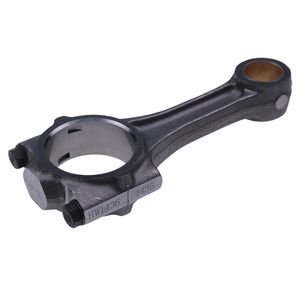
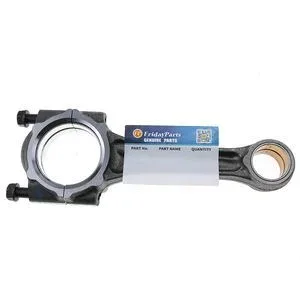
Engine Rebuild Matched Supply — Every Rocker Lever 4065636 ships with verified dimensional records matched to your specific QSK series engine serial range.
Technical Specifications
| Parameter |
Value |
| Part Number |
4065636 |
| Product Type |
Rocker Arm |
| Cross-Reference |
4065636 (for identification purposes) |
| Machine Fitment |
K19, QSK19 CM500, QSK19G, QSK45 CM500, QSK60 CM2150 K132M, QSK60 CM2150 MCRS, QSK60 CM2150 MCRS G, QSK60 CM2150 MCRS M, QSK60 CM2250 K112, QSK60 CM2350 K116, QSK60 CM2350 K117, QSK60 CM2350 K121, QSK60 CM2350 K135, QSK60 CM2350 K136, QSK60 CM2350 K149M, QSK60 CM500, QSK60 CM850 MCRS, QSK60 G CM2358 K110, QSK60G |
| Condition |
New Aftermarket |
| Warranty |
3-12 months against manufacturing defects |
| Quality Standard |
ISO 9001 |
Application Suitability
| Engine System |
Related Components |
| Valve Train Actuation |
Push rods, valve bridges, crosshead guides |
| Overhead Cam Assembly |
Rocker shaft, shaft bushings, retaining springs |
| Injector Actuation Linkage |
Injector rocker, actuator lever, fuel system interface hardware |
| Cylinder Head Rebuild |
Overhead gasket set, valve stem seals, keeper locks |
Why Rebuild Shops Order Rocker Lever Engine Rebuild Parts Too Late
The failed rocker lever is rarely the only worn component in the valve train.
When a K19 or QSK60 comes in with valve noise or timing loss, the teardown often reveals scoring on the push rod ball end, wear steps on the crosshead guide, and elongation in the rocker shaft bushing — all of which will destroy a new Rocker Lever 4065636 within weeks if left unaddressed. [NEED_CITE: diesel engine valve train wear progression patterns in high-cycle industrial service] Rebuild shops that order the lever alone end up placing a second order mid-job, extending engine downtime while the machine sits on the stand with the head exposed to contamination. Matching every valve train component at the quoting stage prevents this costly sequencing failure.

Valve Train System Context for QSK Series Engines
This Rocker Arm sits at the critical junction between the cam-driven push rod and the valve bridge or injector actuator. In QSK45 CM500 and QSK60 CM2350 variants, the lever geometry and shaft bore tolerance directly affect valve opening duration and injector plunger stroke. Any deviation transfers load asymmetrically to the crosshead, accelerating guide wear and eventually causing valve float at governed speed. Sourcing the Rocker Lever 4065636 alongside matched push rods and valve bridges ensures consistent actuation timing across all cylinders.
Engine Serial Variants and Geometry Differences
Within the QSK60 family alone, CM2150, CM2250, and CM2350 designations carry different rocker lever profiles and shaft bore positions. A lever from a K116 build will physically mount on a K121 block but may produce incorrect valve lash range, leading to either excessive clearance noise or insufficient seat pressure. Confirming engine model, CM designation, and serial number before release prevents this silent misfit that only shows up during lash adjustment or, worse, after restart under load. [NEED_CITE: Cummins QSK60 engine serial variant valve train geometry differences]
Heat Treatment and Dimensional Verification
The lever operates in a high-temperature, high-cycle environment where the push rod contact face endures repeated impact loading at engine speed. Material hardness at the ball socket and shaft bore roundness are checked against OEM-equivalent specifications to maintain oil film integrity at the bushing interface. Heat treatment depth on the valve bridge contact pad ensures the surface resists spalling through extended service intervals without becoming brittle enough to crack under thermal shock.
The Hidden Cost of Skipping Adjacent Component Inspection
Replacing the lever without checking the rocker shaft for scoring, the push rod ends for mushrooming, or the crosshead for lateral play invites rapid repeat failure. The new Rocker Lever 4065636 absorbs the mismatch load that the worn adjacent parts create, concentrating stress at the shaft bore until cracking initiates. [NEED_CITE: valve train repeat failure root cause analysis in heavy-duty diesel overhauls] Shops that overhaul the full valve train as a system report meaningfully longer intervals between warranty returns compared to those addressing only the visibly failed component.
Why Rebuild Shops Source Through This Channel
Self-produced lines and qualified sourced supply carry identical QC and warranty terms under a single account, so a complete valve train order — levers, shafts, bushings, push rods — ships as one consignment with consistent documentation. Minimum order starts at one piece for emergency single-cylinder repairs, while bulk pricing applies to full-engine overhaul quantities. Cross-reference verification covers superseded numbers across QSK generational changes, and the technical team confirms serial-level compatibility before release. Sample supply allows fitment confirmation on the bench before committing to fleet-scale orders.
Documentation & Verification
- Commercial invoice listing each valve train component by QSK engine serial match
- Cross-reference sheet noting 4065636 interchange reference and superseded variants
- Dimensional inspection record covering shaft bore roundness and contact face hardness
- Warranty terms document specifying coverage period for manufacturing defects
- Packing photographs showing lever protection and anti-corrosion treatment before crating
- HS code classification support for customs clearance in destination country
Installation & Rebuild Sequence
- Verify rocker shaft bore diameter and surface finish before pressing new bushings into the lever
- Clean all oil passages in the rocker shaft assembly to prevent startup lubrication starvation
- Torque rocker shaft mounting bolts to engine manual specification in the prescribed sequence
- Set initial valve lash cold, then recheck after first thermal cycle to confirm seat stability
- Inspect push rod ball end and crosshead guide for wear patterns indicating misalignment
- Run break-in procedure at reduced load to allow contact surfaces to conform gradually
Request a Valve Train Matched Quote
Provide your engine model, CM designation, and serial number so we can confirm the correct Rocker Lever 4065636 variant and identify which adjacent valve train components require concurrent replacement. If the engine has undergone a previous rebuild, note any oversize or undersize work already performed so we can match dimensions accordingly. Share photographs of the existing lever, push rod ends, and crosshead if available — these help our technical team assess system-level wear before quoting.
Frequently Asked Questions
Q: What other valve train parts should be inspected when replacing the rocker lever?
A: Push rod ball ends, crosshead guides, rocker shaft bushings, and valve bridge contact faces should all be measured for wear. Replacing the Rocker Lever 4065636 without addressing scoring or elongation in these adjacent components transfers mismatch load to the new lever, causing premature repeat failure. We recommend supplying matched sets to maintain consistent actuation timing.
Q: Do different QSK60 CM serial variants use the same rocker lever?
A: No. CM2150, CM2250, and CM2350 designations within the QSK60 family carry different rocker lever geometry and shaft bore positions. Confirming your engine serial number and CM designation ensures we release the correct variant. Installing a lever from a different serial range may produce incorrect valve lash or injector stroke.
Q: Is this rocker lever included in a complete overhaul gasket kit?
A: The Rocker Arm is typically ordered separately from gasket sets, which cover sealing surfaces rather than moving valve train components. We supply matched valve train kits that bundle levers, shaft bushings, springs, and retaining hardware alongside overhead gaskets for a complete rebuild. Specify your engine serial for an accurate kit configuration.
Q: Can I get a sample to verify fitment before committing to a bulk order?
A: Yes, sample supply is available for first-fit verification on your bench or engine stand. This allows you to confirm shaft bore alignment, push rod interface geometry, and valve bridge contact before releasing the full production batch. Contact us with your engine model and serial number to arrange sample dispatch.
Q: How do I confirm the correct part when the engine nameplate is unreadable?
A: Provide photographs of the existing rocker lever showing the shaft bore and contact face profile, along with any visible casting numbers. Our technical team cross-references these against known QSK serial variant geometries to identify the correct Rocker Lever engine rebuild parts match, even when the dataplate is worn or painted over.