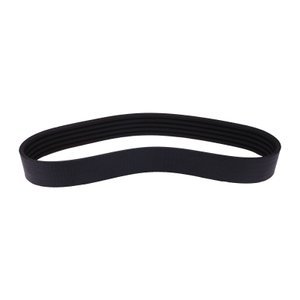
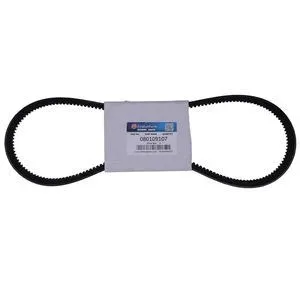
Engine Serial Variants Verified — belt routing and pulley configurations differ across D 2.9, TD 2.9, TCD 2.9, and TCD 2.2 families, so we cross-check the engine serial before dispatch to confirm the correct Ribbed V-Belt variant ships.
Technical Specifications
| Parameter |
Value |
| Part Number |
01184002 04131488 |
| Product Type |
Belt |
| Cross-Reference |
01184002, 0118-4002, 1184002, 04131488, 0413-1488, 4131488 (reference only) |
| Machine Fitment |
D 2.9 L4, TD 2.9 L4, TCD 2.9 L4, TCD 2.2 L3 |
| Part Name |
Ribbed V-Belt |
| Condition |
New Aftermarket |
| Material |
High-strength synthetic rubber compounds with reinforced polyester cords |
| Assembly State |
Individual unit |
| Warranty |
3–12 months against manufacturing defects |
| Standards |
ISO (manufacturing partners ISO-certified) |
Application Suitability
| Engine System |
Related Components |
| Belt drive — crankshaft to auxiliary power transmission |
Belt tensioner, idler pulleys, pulley bearings |
| Cooling system drive (water pump circulation) |
Water pump seal, thermostat housing gasket |
| Charging system drive (alternator output) |
Alternator mounting bracket bolts, alternator connector |
| Hydraulic pump drive (model-dependent) |
Pump shaft seal, pump mounting O-ring |
| Emission and exhaust auxiliary drive |
EGR cooler mounting gaskets, associated hose clamps |
Why a Belt Failure Is Rarely Just a Belt Problem
Address the tensioner and pulley bearings, or the new belt will follow the same failure path.
In the Pearl River Delta workshops I have worked around, Deutz D2.9 engines frequently return with early ribbed V-belt wear that traces back to pulley misalignment or a fatigued tensioner spring rather than belt quality. One customer replaced only the belt on a TCD2.2 unit, and the squealing noise returned within the first shift because the underlying bearing play was never checked. When an engine is already torn down for overhaul, the belt drive system is one of the easiest subsystems to refresh completely — and the hardest to justify revisiting once the engine is buttoned back up. [NEED_CITE: belt drive system inspection procedures during diesel engine overhaul]

The Belt Drive System Inside a Deutz Overhaul
This ribbed V-belt for Deutz engine rebuild sits at the front of the engine, wrapping the crankshaft pulley and routing power to the alternator, water pump, and — depending on the engine layout — a hydraulic pump or fan drive. During a full engine rebuild, the belt drive components are among the last items installed, which means any overlooked wear on a tensioner arm or idler bearing forces a partial disassembly to correct. Including this ribbed V-belt in the overhaul parts list alongside matched tensioners and pulley kits keeps the rebuild sequence clean and avoids post-assembly rework.
Engine Serial Variants That Change the Belt You Need
Within the D 2.9, TD 2.9, TCD 2.9, and TCD 2.2 families, the same base engine block can ship with different pulley diameters, rib counts, or belt routing paths depending on the application and production batch. A TCD 2.9 L4 in a wheel loader may use a different belt length than the same designation in an industrial generator set. Confirming the engine serial number against the build record is the only reliable way to rule out variant mismatches — cross-reference numbers 01184002 and 04131488 alone do not always distinguish between these configurations. [NEED_CITE: Deutz engine serial number identification and variant cross-referencing]
Reading the Specifications That Matter in the Field
The synthetic rubber compound used in this belt must withstand continuous exposure to engine bay temperatures and occasional contact with oil mist or coolant spray — material degradation here shows up as rib cracking or glazing long before the cord reinforcement fails. The polyester cord reinforcement carries the tensile load; if the cord stretches beyond specification under high-load conditions typical in construction applications, the belt slips on the pulleys and accelerates wear on every downstream accessory bearing. Rib profile geometry must match the pulley grooves precisely: even a minor profile mismatch concentrates load on the outer ribs, creating uneven wear patterns that shorten belt service life noticeably. The assembly state as an individual unit means this belt ships without a matched tensioner — which is intentional, because the correct tensioner variant depends on the specific engine serial and application.
The Hidden Cost of Skipping the Adjacent Components
Replacing a ribbed V-belt without inspecting the tensioner spring force and idler pulley bearing play often results in a repeat failure within weeks — the new belt absorbs the same misalignment or insufficient tension that destroyed the previous one. On a TCD 2.9 that has already undergone one rebuild, pulley bearing wear may have progressed enough to cause visible wobble, and fitting a fresh belt over a wobbling pulley accelerates rib edge wear across the entire belt width. In fleet maintenance scenarios, the labor cost of a second teardown to chase a belt noise complaint regularly exceeds the cost of replacing the full belt drive set during the first service event. [NEED_CITE: belt drive system failure root cause analysis for diesel engines]
Why Rebuild Shops Source This Belt Through Our Account
Our own production lines and qualified sourced supply operate under one account and one warranty, so whether this ribbed V-belt ships from our facility or a partner line, the QC terms are identical. Eight product categories under a single order means the gasket kits, bearing sets, and seal kits for the same Deutz overhaul travel in one consignment — no second shipment arriving days later with the engine block waiting on a bench. Minimum order starts at one piece, which suits the engine rebuild shop ordering for a single job rather than stocking a warehouse. Guangzhou warehouse stock on common belt drive items allows fast dispatch when a machine is already down. Part identification works from a part number, a machine model, or a photograph of a worn nameplate — helpful when paint and grime have made the engine plate unreadable. Cross-reference verification covers superseded and alternate numbers across the Deutz 2.9 and 2.2 range, and sample supply is available for fitment confirmation before a bulk commitment.
Documentation & Verification
- Commercial invoice and packing list itemized by engine system category for customs clearance
- Part compatibility and cross-reference sheet for 01184002 and 04131488 marked reference only
- Quality inspection record covering rib profile dimensions and cord tensile verification
- Warranty terms stating 3–12 months coverage against manufacturing defects
- Packing photographs showing belt condition and packaging integrity before dispatch
- HS code and customs documentation support for international engine parts shipments
Installation & Rebuild Sequence
- Inspect all pulley grooves for rib profile wear and bearing play before fitting this ribbed V-belt
- Clean pulley contact surfaces of oil residue and debris to prevent early belt slippage
- Route the belt according to the engine-specific diagram — routing varies across D 2.9 / TCD 2.9 variants
- Set tensioner to manufacturer-specified deflection and verify alignment across all pulley planes
- Run the engine at idle for initial seating, then re-check tension after the first thermal cycle
- Record belt installation date and engine hour meter reading for scheduled maintenance tracking
Before You Request a Quote
Provide the Deutz engine model designation, the full engine serial number from the nameplate or build record, and any notes on previous rebuilds or tensioner replacements. If the nameplate is worn or painted over, a photograph of the engine block casting numbers and the existing belt routing layout helps confirm the correct variant. Mention any adjacent belt drive components you plan to replace in the same service event so we can verify compatibility across the full set.
Frequently Asked Questions
Q: What other belt drive components should I replace when changing this ribbed V-belt?
A: We recommend inspecting the belt tensioner assembly, all idler pulleys, and the pulley bearings at each mounting point. On Deutz 2.9 and 2.2 series engines, any seal located behind a pulley — such as the front crankshaft seal or water pump seal — should also be evaluated since removal of the belt drive exposes these surfaces. Addressing the full belt drive system during one service event prevents repeat teardowns.
Q: How do I confirm which belt variant fits my specific Deutz engine serial number?
A: The cross-reference numbers 01184002 and 04131488 appear across several engine configurations, but belt length and rib count can differ between variants. Provide the full engine serial number from your Deutz D 2.9, TD 2.9, TCD 2.9, or TCD 2.2 — we cross-check the build record to confirm the exact belt routing and pulley configuration your engine uses before shipping.
Q: Can I get a complete belt drive system kit including tensioner and pulleys in one order?
A: Yes. We consolidate belt drive components — this ribbed V-belt, tensioner assemblies, idler pulleys, and associated seals — under a single order with unified warranty terms. This avoids split shipments and ensures all belt drive parts arrive together for one uninterrupted rebuild sequence on your Deutz engine.
Q: What cross-reference numbers are equivalent to 01184002 and 04131488?
A: Equivalent references for identification purposes include 0118-4002, 1184002, 0413-1488, and 4131488. These are cross-reference numbers only and should be verified against your specific engine serial number, as superseded numbers or alternate references may appear across different Deutz engine production batches and application variants.
Q: How do I identify my Deutz engine model when the nameplate is unreadable?
A: Send a photograph of the engine block casting numbers, the existing belt routing path, and any visible stampings on the cylinder head or crankcase. Our technical team uses these visual references alongside cross-reference verification to narrow down the engine family and serial variant, confirming the correct ribbed V-belt before any parts ship.