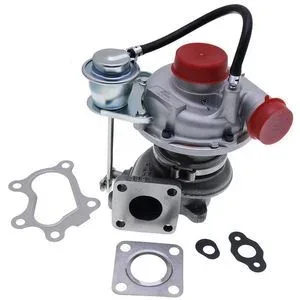
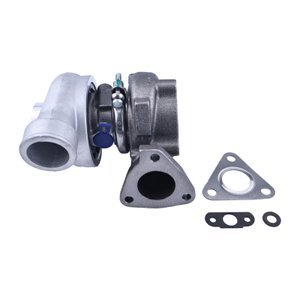
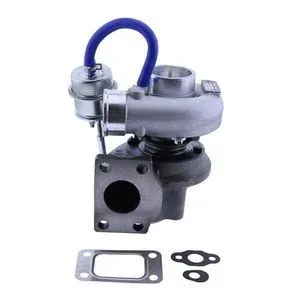
Matched Engine Rebuild Sets — Turbocharger, manifold gaskets, and oil feed components ship verified against your CAT C2.2 or 3024C engine serial number to prevent variant misfitment during overhaul.
Technical Specifications
| Parameter |
Value |
| Part Number |
513-6823 |
| Product Type |
Turbocharger |
| Turbo Model |
RHF4-46001P8.5NHBRL323CAZ |
| Engine Fitment |
CAT C2.2, CAT 3024C |
| Cross-Reference |
513-6823, CA317-0981, 317-0981, 442-9826, 239-0230, 282-5179, 308-2308, 324-0237, 10R-9578 (reference only) |
| Machine Fitment |
216B, 226B, 226B3, 232B, 242B, 247B, 247B3, 257B |
| Condition |
New Aftermarket |
| Warranty |
6 months standard (extendable to 12 months upon request) |
| Standard |
ISO 9001 |
Application Suitability
| Engine System |
Related Components |
| Emission & Exhaust System |
Exhaust manifold, turbo mounting gasket, oil supply and return lines, intercooler piping |
| Lubrication System |
Oil feed line filter, crankcase ventilation valves, oil cooler seals |
| Intake Tract |
Air filter housing, intake manifold gaskets, boost pressure sensor |
| Complete Engine Overhaul |
Full gasket set, piston rings, main and rod bearings, valve stem seals |
Diagnosing the Real Failure Before the RHF4 Turbocharger for CAT C2.2 Engine Rebuild Goes In
A new turbo bolted onto an engine with coked oil lines or restricted crankcase ventilation will fail within the first operating cycle.
When a skid steer loader comes into the shop with a blown turbo, the instinct is to pull the old unit and bolt on a replacement. I have seen this approach burn through two or three turbos in succession before anyone thought to trace the oil feed line back to the block. Carbon buildup inside that line starves the new turbo bearing within hours [NEED_CITE: engine lubrication system contamination and turbo bearing failure modes]. The exhaust manifold gasket may also be leaking, reducing back-pressure management and forcing the new turbo to work outside its designed map. This RHF4 turbocharger for CAT C2.2 engine rebuild work must therefore start with a full system diagnosis, not just a parts swap.

The Emission and Exhaust System as a Connected Assembly
The turbocharger does not operate in isolation. It sits at the intersection of the intake tract, the lubrication circuit, and the exhaust flow path. When planning an RHF4 turbocharger for CAT C2.2 engine rebuild, the exhaust manifold must be inspected for warping or cracking, since even a minor leak upstream of the turbine housing alters the energy available to drive the compressor wheel. Oil supply and return lines should be flushed or replaced as a set. Intercooler connections and boost hoses need pressure testing to ensure the new turbo is not compensating for leaks elsewhere in the system.
Oil Coking, Crankcase Pressure, and Variant Differences
The C2.2 and 3024C engine family uses specific turbo mounting configurations that vary by serial number range. An engine that has been previously rebuilt may have non-standard clearances or aftermarket gaskets that change the oil feed pressure reaching the turbo center housing [NEED_CITE: engine rebuild dimensional tolerances and turbo oil feed pressure requirements]. Crankcase ventilation is frequently overlooked — if the breather system is blocked, elevated crankcase pressure pushes oil past the turbo seals, mimicking a turbo failure when the root cause sits elsewhere. Confirming the exact engine serial number before ordering prevents receiving a turbo with the wrong port orientation or flange pattern.
Interpreting the Specifications That Matter in the Field
The RHF4-46001P8.5NHBRL323CAZ designation encodes the turbine wheel geometry, compressor trim, and bearing configuration engineered for the displacement and flow characteristics of the C2.2 and 3024C engines. The P8.5 turbine housing aspect ratio balances low-end response with top-end flow, which is critical for skid steer loaders that cycle between idle and high load rapidly in demolition or landfill work. Dynamic balancing of the rotating assembly to specification prevents the high-frequency vibration that destroys floating bearings prematurely. The compressor wheel trim determines the surge line position, meaning a mismatched trim would cause compressor surge at the low RPM operating points common in skid steer travel circuits.
What Happens When the Root Cause Is Ignored
Replacing the turbo without addressing the lubrication and exhaust system creates a cycle of repeat failures. Oil coking in the feed line restricts flow progressively, so the new turbo runs starved from day one. A leaking exhaust manifold gasket reduces turbine inlet pressure, causing the turbo to overspeed in an attempt to reach target boost, which accelerates bearing wear [NEED_CITE: turbocharger overspeed failure analysis and exhaust back-pressure effects]. Each repeat failure means another machine down, another set of gaskets wasted, and another round of freight costs — all preventable with a systematic first repair.
Why This Supply Channel Supports Engine-Level Rebuild Decisions
Selected turbocharger lines are produced in our own facility, while the remainder is sourced from ISO-certified manufacturing partners, both carrying identical QC and warranty terms. Eight product categories allow the turbo, matched gasket set, oil feed components, and overhaul seals to ship under one account and one warranty. Minimum order starts at one piece, so a single emergency rebuild is not blocked by volume requirements. Part identification works from the part number, machine model, photograph, or nameplate image — useful when the turbo data plate is heat-damaged. Cross-reference verification covers superseded numbers like CA317-0981 and 442-9826 against the current 513-6823 designation. Samples are available for fitment confirmation before a distributor commits to bulk stock.
Documentation & Verification
- Commercial invoice and packing list itemizing turbo, gaskets, and associated seals per engine serial
- Part compatibility and cross-reference sheet confirming 513-6823 interchange with CA317-0981 and related numbers (reference only)
- Quality inspection record with dynamic balance validation and center housing oil leak test results
- Warranty terms covering six months standard, extendable to twelve months for fleet overhaul programs
- Packing photographs showing turbo protection and gasket set completeness before crate closure
- HS code and customs documentation support for international engine parts shipments
Installation & Rebuild Sequence
- Verify engine serial number against turbo variant before unboxing the RHF4-46001P8.5NHBRL323CAZ unit
- Flush or replace oil feed and return lines; install new inline filter if equipped on the C2.2 circuit
- Replace exhaust manifold gasket and turbo mounting gasket as a matched set to prevent exhaust leaks
- Torque turbo mounting nuts to specification in sequence, confirming even flange seating on the manifold
- Pre-lube the turbo center housing with clean engine oil before first start to prevent dry bearing contact
- Run the engine at idle for initial break-in, monitoring boost pressure and checking for oil weepage at all new gasket joints
Requesting a System-Matched Overhaul Quote
Provide the engine model (C2.2 or 3024C), engine serial number, and any previous rebuild history so the correct turbo variant and matched gasket grades can be confirmed. If the existing turbo nameplate is illegible, a photograph of the mounting flange and oil port orientation is sufficient for identification. Specify whether the overhaul gasket set, oil feed line, and exhaust manifold gasket should be included in the same consignment.
Frequently Asked Questions
Q: What gaskets and seals should be replaced together with this turbocharger?
A: The turbo mounting gasket, exhaust manifold gasket, oil feed line O-rings, and oil return line seal should all be replaced as a matched set during installation. Reusing old gaskets risks exhaust leaks and oil seepage that compromise the new turbo from the start. Request a complete gasket list matched to your specific engine serial number.
Q: How do I confirm which turbo variant fits my specific C2.2 or 3024C engine serial number?
A: Engine serial variants within the C2.2 and 3024C family may use different turbo mounting configurations and port orientations. Provide the full engine serial number or a photograph of the existing turbo nameplate and mounting flange. Our technical team cross-references the serial against build records to confirm the correct variant before dispatch.
Q: What system-level checks should be done before installing the new turbo to prevent repeat failure?
A: Inspect the oil feed line for carbon buildup, verify crankcase ventilation is unobstructed, pressure-test the intercooler and boost hoses, and check the exhaust manifold for warping or cracks. Addressing these upstream conditions ensures the new turbo operates within its design parameters rather than compensating for faults elsewhere in the system.
Q: Can the turbo, exhaust manifold gasket, and oil feed line be shipped together as one overhaul package?
A: Yes, all associated emission and exhaust system components, gaskets, and seals can be consolidated into a single consignment under one account and one warranty. This eliminates split shipments and ensures every item needed for the rebuild arrives together, reducing the chance of a second order delaying the repair.
Q: How do I identify my engine model if the nameplate is worn or painted over?
A: A photograph of the engine block casting numbers, the injection pump mounting configuration, or the existing turbo flange pattern is usually sufficient for identification. The machine model (216B through 257B) also narrows the engine family. Our team matches these visual indicators against build specifications to confirm the correct turbo and gasket set.