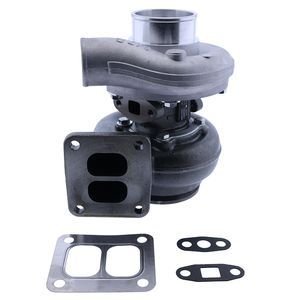
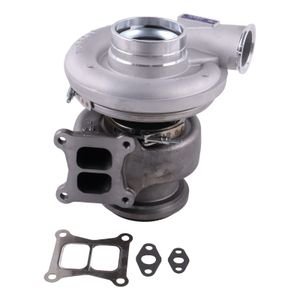
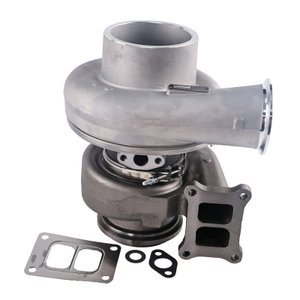
Overhaul Kit Matched — every turbocharger and gasket set verified against your Kubota engine serial before dispatch, so the rebuild bench never waits for a missing seal.
Technical Specifications
| Parameter |
Value |
| Part Number |
49131-02090 |
| Product Type |
Turbocharger |
| Cross-Reference |
49131-02090, 49131-02093, 49131-02092, 49131-02091, 1J403-17015, 1J403-17014, 1J403-17013, 1J403-17010, 1J403-17011, 1J403-17012, 115-8628, 49131-02140, VD410096, 1J403-17016, KEART-1J403, 1E499-17012 (reference only) |
| Turbo Model |
TD03-07G-6.0, TD03-07G-3.3, TD03-07T-4.0 |
| Compatible Engine Brand |
KUBOTA |
| Engine Compatibility |
V2003T, V2003-T, V2403-M-T, V2403-M-T-E3B-KEA-2, V2403 |
| Machine Fitment |
Industrial Tractor, Various with V2403-M-T-E3B-KEA-2 Engine |
| Condition |
New Aftermarket |
| Manufacturing Standard |
ISO-certified facility |
| Warranty |
3-12 months against manufacturing defects |
Application Suitability
| Engine System |
Related Components |
| Intake & Forced Induction |
Exhaust manifold gaskets, intake duct seals, air filter element |
| Lubrication Feed & Return |
Oil supply line banjo washers, oil return pipe O-rings |
| Exhaust & Emission |
Exhaust outlet flange gasket, clamp assemblies |
| Crankcase Ventilation |
PCV hoses, breather filters affecting turbine seal life |
Why a Turbocharger Replacement Rarely Solves the Root Cause Alone
A new turbo on a contaminated oil circuit fails within the first operational shift.
When we pull a seized TD03 cartridge off a Kubota V2003T, the bearing journal almost always shows scoring from carbon-contaminated oil rather than pure fatigue. The turbocharger engine rebuild replacement plan must address the lubrication path upstream and the air filtration path downstream simultaneously. Rebuild shops that swap the unit without flushing supply lines or inspecting the air filter housing end up processing a warranty claim on the same bench weeks later [NEED_CITE: turbocharger failure root cause analysis in diesel service protocols]. The cost is not the second turbo — it is the machine sitting idle while the diagnosis repeats.

Where This Turbocharger Sits Inside the Kubota V-Series System
The TD03 mounts directly to the exhaust manifold outlet on Kubota V2003T and V2403-M-T blocks, receiving hot exhaust gas and forcing compressed air through the intake tract. Its oil feed originates from the main gallery via a restrictive banjo fitting that is sensitive to sludge buildup, while the gravity drain returns to the crankcase. Any crankcase pressure spike from worn piston rings will oppose this drain and push oil past the turbine seal into the exhaust. A proper turbocharger engine rebuild replacement therefore begins with a crankcase pressure check before the old unit comes off the engine.
Serial Variants and Why Three TD03 Sub-Models Exist
Kubota V2003T and V2403-M-T engines share the same block family but differ in swept volume and target boost curve. The TD03-07G-6.0, TD03-07G-3.3, and TD03-07T-4.0 variants each carry distinct compressor trim and turbine A/R ratios calibrated for specific engine serial ranges. Installing the 6.0 trim on an engine calibrated for the 3.3 trim causes over-boost at low RPM and excessive EGT under load. We verify engine serial against Kubota build data before releasing any turbocharger engine rebuild replacement unit from stock, ensuring the compressor map matches the fuel delivery profile [NEED_CITE: Kubota V-series engine serial and turbo variant cross-reference].
Reading the Spec Sheet Beyond the Part Number
The TD03 designation refers to the Mitsubishi turbo family frame size, but the suffix numbers control the flow characteristics. The 07G and 07T prefixes distinguish journal bearing configurations and thrust collar geometry. Journal bearing clearance on these units runs in the range of a few ten-thousandths of an inch — tight enough that oil film quality directly determines service life. The 6.0, 3.3, and 4.0 trailing figures denote compressor wheel exducer diameter in centimeters, which sets maximum airflow. Selecting the correct variant ensures the compressor operates within its surge-free map across the Kubota engine torque band rather than cycling near surge at idle or choking at rated RPM.
The Hidden Cost of Skipping System-Level Diagnosis
Rebuild shops that install a fresh turbocharger without replacing the oil feed banjo washer or cleaning the supply line frequently see carbon scoring on the new thrust bearing within the first hundred hours. The old banjo washer carries embedded debris that bypasses the filter and feeds directly into the turbo journal. Another common miss is the intake duct between the compressor outlet and the charge air cooler — hairline cracks here bleed boost pressure and force the turbo to overspeed trying to maintain target manifold pressure [NEED_CITE: boost leak diagnostic procedures for turbocharged industrial diesel engines]. The result is a warranty return that looks like a manufacturing defect but traces back to an unchecked adjacent component.
What This Supply Channel Delivers for Engine Rebuilds
We run our own production lines for selected turbo components and source remaining assemblies from ISO-certified partners, both covered under the same warranty terms — there is no quality tier distinction between the two supply paths. Our catalogue spans eight core categories, so the exhaust manifold gaskets, banjo washers, and intake duct clamps ride in the same carton as the turbocharger itself. Orders start at one piece for emergency rebuilds, and Guangzhou stock covers high-velocity SKUs for same-day dispatch. When the engine plate is painted over or illegible, our technical team identifies the correct variant from a photograph of the casting marks or the old unit compressor housing. Cross-reference verification covers superseded numbers, including discontinued Kubota references that other aftermarket channels no longer track. Sample units ship ahead of bulk commitments so rebuild shops can bench-fit before authorizing a fleet order.
Documentation & Verification
- Commercial invoice and packing list matching each turbocharger serial to its carton
- Compatibility sheet listing verified cross-reference numbers marked reference only
- Dimensional inspection record covering flange bolt pattern and oil port spacing
- Warranty certificate covering manufacturing defects for 3 to 12 months
- Packing photographs showing turbo cartridge immobilization inside the crate
- HS code guidance for customs clearance under turbocharger classification headings
Installation & Rebuild Sequence
- Clean oil supply line and replace banjo washers before mounting the TD03 unit
- Verify oil drain port orientation matches the crankcase return fitting angle
- Torque exhaust manifold nuts in staged sequence to prevent flange distortion
- Pre-lube turbo journal bearing with clean engine oil before first cranking
- Idle for three to five minutes post-install before applying any load
- Check for boost leaks across all compressor-outlet duct joints at rated RPM
Send Us the Engine Plate Details Before You Order
Provide the full engine model string such as V2403-M-T-E3B-KEA-2 along with the serial number stamped on the block, and we will confirm which TD03 variant matches your build. If the plate is unreadable, a clear photograph of the old turbocharger compressor housing and oil port layout lets our team identify the correct unit. Include any known rebuild history — previous oversize work or non-standard piston sets change the crankcase pressure profile and affect which turbine seal specification we recommend. We return a confirmed part number and a complete list of matched gaskets and seals within one working session.
Frequently Asked Questions
Q: What else should ship in the same carton as the turbocharger for a complete rebuild?
A: A turbocharger engine rebuild replacement job typically requires exhaust manifold gaskets, oil feed banjo washers, oil return pipe O-rings, intake duct clamps, and a fresh air filter element. We consolidate all of these into one shipment so the rebuild bench has everything before the teardown starts, eliminating the split-delivery delay that leaves machines disassembled.
Q: Do V2003T and V2403-M-T engines take the same TD03 turbocharger?
A: No. These engines share a block family but differ in displacement and boost calibration. The V2003T typically uses the TD03-07G-3.3 or TD03-07T-4.0 variant, while the V2403-M-T may require the TD03-07G-6.0 depending on serial range. Always provide the full engine serial so we can confirm the exact compressor trim match.
Q: What system faults cause a turbocharger to fail prematurely?
A: The most common root causes are contaminated oil from overdue filter changes, restricted oil return lines from sludge buildup, air filter bypass allowing dust ingestion into the compressor, and excessive crankcase blow-by opposing the oil drain. Replacing the turbocharger without addressing these faults leads to repeat failure within the first operational cycle.
Q: How do I confirm my engine model when the nameplate is worn or painted over?
A: Photograph the engine block casting numbers, the injector pump data plate, and the old turbocharger compressor housing from two angles. Our technical team cross-references these against Kubota build records to identify the exact engine variant and the matching turbocharger model without relying on the legibility of the main nameplate.
Q: What documentation comes with each turbocharger shipment?
A: Each unit ships with a commercial invoice, packing list, compatibility and cross-reference sheet marked reference only, dimensional inspection record, warranty certificate, packing photographs, and HS code guidance. We also include a matched gasket and seal list when the order includes companion overhaul components.