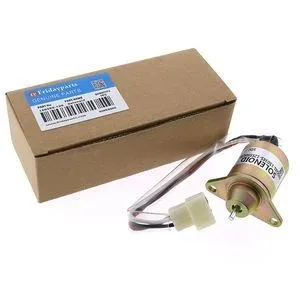
Complete Engine System Match — Every 12V pull stop solenoid ships with verified coil resistance and pull force records matched to your engine serial variant.
Technical Specifications
| Parameter |
Value |
| Part Number |
P610-B1V12 |
| Product Type |
Stop Solenoid |
| Cross-Reference |
P610-B1V12 (reference only), P610B1V12 (reference only) |
| Machine Fitment |
Excavators using Trombetta-style pull solenoid for engine fuel shutoff, Loaders requiring 12V fuel shut off solenoid, Bulldozers with 12V pull solenoid engine shutdown system, Tractors and harvesters with solenoid-based fuel cutoff |
| Electrical Rating |
12V DC, Pull-type operation |
| Winding Material |
Cold-rolled copper windings |
| Insulation Class |
Class H (180°C thermal rating) |
| Plunger Material |
Stainless steel |
| Yoke Material |
Hardened alloy |
| Operational Cycles |
>500,000 |
| Mounting Tolerance |
±0.1mm |
| IP Rating |
IP65 |
| Operating Temperature |
–20°C to +85°C |
| Condition |
New Aftermarket |
| Warranty |
3–12 months against manufacturing defects |
| MOQ |
1 piece |
| Standards |
ISO 9001, ISO 4414 (referenced for reliability benchmarks) |
Application Suitability
| Engine System |
Related Components |
| Engine fuel shutoff circuit |
Ignition switch wiring harness, relay contacts, fuel rack linkage |
| Engine auxiliary electrical system |
Voltage regulator, terminal connectors, circuit protection devices |
| Fuel delivery subsystem |
Fuel line fittings, shutoff lever mechanism, return line seals |
| Engine overhaul refresh |
Gasket sets, seal kits, fuel system components, electrical connector kits |
Why a New 12V Stop Solenoid Engine Fuel Shutoff Fails Within Weeks
The solenoid rarely acts alone — upstream electrical faults burn out replacement coils before the first service interval ends.
I spent years moving from warehouse part-number verification to field technical support across Southeast Asian job sites. One pattern repeats: a workshop replaces a failed stop solenoid, the machine runs for a few days, then the same failure returns. In most cases, the root cause was a corroded terminal, a voltage regulator delivering inconsistent output, or a relay with pitted contacts creating voltage drop. The 12V stop solenoid engine fuel shutoff unit absorbs the consequence, not the cause. Diagnosing the full circuit before installation prevents this repeat failure loop [NEED_CITE: electrical diagnostic procedures for engine shutdown circuits in diesel equipment].

The Fuel Shutoff Circuit as a System
A stop solenoid sits at the intersection of the engine auxiliary electrical system and the fuel delivery mechanism. It receives a signal from the ignition switch circuit, actuates the fuel rack to cut supply, and must do so reliably across thousands of thermal cycles. When sourcing a 12V stop solenoid engine fuel shutoff component, treating it as an isolated replacement ignores the wiring, connectors, and relay contacts that determine whether it survives beyond initial fitment.
What the Engine Serial Number Changes
Engine serial variants affect mounting pattern, plunger stroke length, and the control voltage tolerance band. Two machines carrying the same model badge may use different solenoid variants depending on production year and emissions configuration. Confirming the engine serial number before ordering ensures the mounting tolerance of ±0.1mm aligns with your fuel pump body, and that the pull force matches the fuel rack spring tension specific to your engine build [NEED_CITE: engine serial variant differences in fuel shutoff solenoid specifications].
Reading the Specification Sheet Correctly
Class H insulation at 180°C matters because the solenoid mounts directly on or near the engine block, where ambient temperatures routinely exceed standard insulation limits. The IP65 rating addresses dust intrusion and low-pressure water jets during wash-down — common on demolition and mining sites. Cold-rolled copper windings maintain consistent coil resistance across the –20°C to +85°C operating range, preventing the resistance drift that causes weak actuation in marginal conditions. The hardened alloy yoke and stainless steel plunger resist corrosion from fuel vapor exposure that degrades softer materials over extended service periods.
The Cost of Skipping Root-Cause Diagnosis
Replacing a stop solenoid without checking the wiring harness and relay contacts leads to predictable outcomes. A degraded connector introduces resistance, dropping voltage at the coil and forcing it to draw higher current to achieve the same pull force. This thermal overload breaks down insulation progressively until the coil shorts. The machine stalls again, the workshop orders another unit, and the cycle repeats. Fleet-level maintenance records show this pattern accounts for a significant share of repeat solenoid claims that trace back to unresolved electrical faults rather than component quality [NEED_CITE: root cause analysis methodology for repeat electrical component failures].
What We Verify Before Dispatch
Our production lines and sourced supply operate under a single quality standard and warranty structure. For this stop solenoid, we check coil resistance against specification, verify pull force at rated voltage, and confirm IP65 sealing integrity before packing. Guangzhou warehouse stock enables fast dispatch on common configurations. We identify the correct variant from your engine model, part number, photograph, or nameplate image — whichever you have available. Cross-reference verification covers superseded numbers and alternate references. Sample units ship for fitment confirmation before you commit to bulk quantities. Our technical team confirms voltage compatibility, mounting pattern match, and whether your failure pattern suggests a solenoid issue or a broader circuit problem.
Documentation & Verification
- Commercial invoice and packing list with P610-B1V12 (reference only) cross-reference noted
- Part compatibility sheet matching your engine serial to solenoid variant
- Quality inspection record covering coil resistance, pull force, and seal test
- Warranty terms document specifying coverage period and defect replacement process
- Packing photographs showing unit condition and labeling before crate closure
- HS code and customs documentation support for international shipment clearance
Installation & Rebuild Sequence
- Disconnect battery and verify zero voltage at solenoid terminals before removal
- Inspect wiring harness terminals for corrosion and relay contacts for pitting
- Mount solenoid checking ±0.1mm tolerance alignment with fuel pump body face
- Confirm plunger stroke engages fuel rack fully without binding or excess travel
- Test actuation with ignition cycle before reassembling adjacent engine covers
Confirming the Right Fit for Your Engine
Share your engine model, serial number, and any previous rebuild history so we can verify the correct solenoid variant and check whether the failure pattern points to upstream electrical issues. If you have a photograph of the existing unit or nameplate, that speeds identification considerably.
Frequently Asked Questions
Q: What else in the engine fuel shutoff circuit should I check when replacing this solenoid?
A: Inspect the wiring harness terminals feeding the solenoid, the relay contacts in the ignition circuit, and the voltage regulator output. Corroded connectors and pitted relay surfaces create voltage drop that overloads the new coil. A quick multimeter check across these points during installation catches the faults that cause repeat failures.
Q: How do I confirm whether the solenoid failed or the root cause is elsewhere in the electrical system?
A: Measure coil resistance on the failed unit and compare it to specification. A reading far below spec indicates a short from thermal overload, suggesting upstream voltage issues. Check relay contacts and wiring continuity next. If those check out, the solenoid itself likely reached end of life from normal wear.
Q: Does the engine serial number affect which solenoid variant I need?
A: Yes. Production changes across engine serial ranges alter mounting patterns, plunger stroke, and fuel rack linkage geometry. Two engines sharing a model name may require different solenoid variants. Providing your serial number lets us cross-reference the correct match and avoid fitment issues on arrival.
Q: Can I order a sample to validate fitment and function before committing to a bulk purchase?
A: Sample units ship for fitment testing so you can verify mounting alignment, electrical connector compatibility, and fuel rack engagement before placing a larger order. This is especially useful when replacing across a mixed fleet with varying engine serial ranges.
Q: What engine rebuild kit components should be paired with a fuel system electrical refresh?
A: When refreshing the fuel shutoff circuit during an overhaul, consider replacing the fuel rack linkage seals, ignition switch wiring pigtail, and relay simultaneously. Matched replacement addresses the interconnected wear that causes isolated part swaps to fail prematurely.