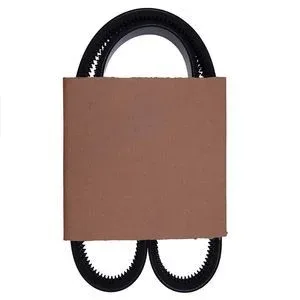
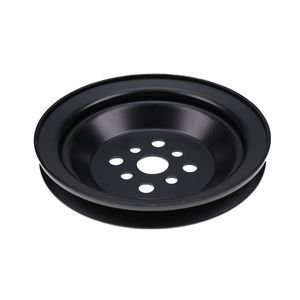
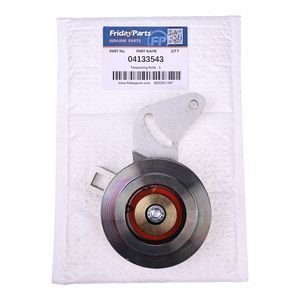
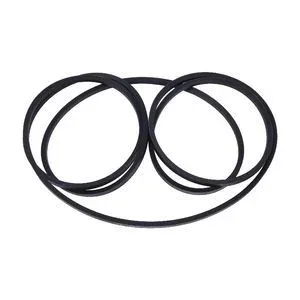
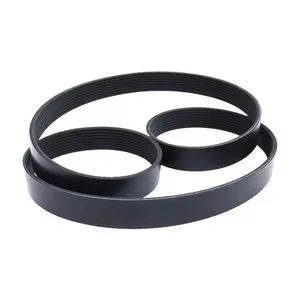
Matched Drive System Sets — every belt shipped against verified engine serial and pump pulley groove profile to prevent mismatched tension paths.
Technical Specifications
| Parameter |
Value |
| Part Number |
6667322 |
| Cross-Reference |
6667322 (reference only) |
| Product Type |
Belt |
| Machine Fitment |
Skid Steer Loader: 653, 751, S130, S150, S160, S175, S185, S205; Compact Track Loader: T140, T180, T190 |
| Part Name |
Main Pump Drive Belt |
| Specification |
Flat, cogged drive belt with 3 grooves |
| Key Features |
Fiber-loaded backing with additional cord support, great wear resistance |
| Condition |
New Aftermarket |
| Warranty |
3-12 months against manufacturing defects |
| Standards |
ISO 9001 |
Application Suitability
| Engine System |
Related Components |
| Engine-to-hydraulic-pump power transfer |
Drive pulleys, tensioner assembly, belt guard hardware |
| Hydraulic pump drive circuit |
Main hydraulic pump shaft seal, pump mounting bolts |
| Engine front-end accessory drive |
Crankshaft pulley, idler pulley, alignment shims |
| Cooling and auxiliary drive overlap |
Fan belt, alternator belt, shared tensioner components |
Why a New Main Pump Drive Belt 6667322 Fails Within Weeks of an Overhaul
The belt is rarely the root cause — the fault lives in the pulley alignment or tensioner that was not addressed during the rebuild.
I spent years on job sites in Indonesia watching loaders come back with shredded belts two weeks after a supposedly complete engine overhaul. The rebuild shop swapped the belt but ignored the worn tensioner bearing or the pulley that had developed a slight wobble from a previous heat event. A Main Pump Drive Belt 6667322 installed on a misaligned drive path will show edge fraying within the first fifty hours, and the operator blames the belt supplier rather than the underlying geometry fault [NEED_CITE: belt drive misalignment diagnostic procedures for mobile hydraulic equipment].
When an engine is torn down for a piston or cylinder head job, the front-end drive components are often reinstalled without measurement. Pulley runout, shaft endplay, and tensioner spring rate all fall outside tolerance over thousands of hours, and a fresh belt absorbs the accumulated wear until it fails prematurely.

The Belt's Position Inside the Complete Engine Drive System
This belt sits at the critical junction where engine rotation meets hydraulic power generation. On Bobcat skid steer and compact track loaders, the main pump drive belt transfers crankshaft output directly to the hydraulic pump, meaning any slip or degradation immediately affects hydraulic pressure stability and cycle times. A Main Pump Drive Belt 6667322 must be specified alongside the tensioner condition and pulley groove wear state to form a complete drive system picture.
Engine Serial Variants and Why the Same Loader Model Needs Verification
Bobcat produced multiple engine variants across the S175, S185, and S205 generations, and the drive belt routing can differ between early and late serial ranges even when the external machine model remains identical. A loader carrying the S175 badge may house a Kubota or Doosan engine variant depending on production year, and the pulley groove count, belt length, and tensioner type shift between these platforms. Confirming the engine serial number — not just the machine model — eliminates the risk of receiving a belt that physically fits the pulleys but operates under incorrect tension [NEED_CITE: engine serial variant identification for Bobcat compact loaders].
Reading the 3-Groove Cogged Design and Fiber-Loaded Backing
The three-groove cogged profile on this belt serves a specific thermal function: the cogs allow the belt to flex around the relatively small-diameter pump pulley without generating excessive internal heat, which is the primary cause of rubber cracking in high-cycle applications. The fiber-loaded backing adds tensile reinforcement that resists the shock loads created when the hydraulic pump encounters sudden pressure spikes — such as when a loader bucket hits a trench wall. Additional cord support embedded in the belt body distributes these peak loads across the full belt width rather than concentrating stress on individual cords, which is where delamination typically initiates.
What Happens When You Replace the Belt Without Checking the Drive Path
Installing a new belt over a worn tensioner or a pulley with visible groove polishing creates a false sense of completion. The fresh Main Pump Drive Belt 6667322 conforms to the worn pulley surface within the first hours of operation, developing uneven wear patterns that accelerate cord fatigue. On jobs I supervised in Southeast Asia, repeat belt failures on the same machine almost always traced back to a tensioner that no longer held adequate spring force or a pulley bearing that introduced lateral runout into the belt path [NEED_CITE: hydraulic pump drive belt failure root cause analysis for skid steer loaders].
The hidden cost is not the belt itself — it is the second teardown, the second hydraulic fluid drain if the pump must be accessed again, and the machine downtime that extends from a planned half-day belt swap into a multi-day diagnostic exercise.
Why Sourcing the Drive Belt Through an Engine System Supplier Matters
Our production and sourcing lines operate under unified QC and warranty terms, meaning this belt carries the same accountability whether it ships alone or inside a complete overhaul kit. We stock across eight core categories, so the tensioner, pulley bearings, and adjacent seals that affect belt life can ship in one consignment under one account. Orders start from a single piece, which matters when a rebuild shop needs one belt to finish a machine already on the bench. Part identification works from the number, the machine model, a photograph of the worn belt, or a nameplate image — whichever is available. Cross-reference verification covers superseded and alternate numbers so the correct variant ships even when the original number has been updated. A technical team reviews engine serial and application data before dispatch to confirm the belt specification matches the installed engine variant.
Documentation & Verification
- Commercial invoice listing belt part number 6667322 and matched machine applications
- Cross-reference sheet mapping alternate belt numbers for Bobcat loader engine variants (reference only)
- Dimensional inspection record confirming groove count, belt width, and cord construction
- Warranty terms covering manufacturing defects for 3-12 months from delivery
- Packing photographs showing belt coiling method and protective wrapping before crate closure
- HS code classification support for customs clearance across Southeast Asian import jurisdictions
Installation & Rebuild Sequence
- Inspect all pulley grooves for polishing or hook wear before mounting the new belt onto the drive path
- Verify tensioner spring rate and bearing play; replace the tensioner assembly if lateral movement is detectable by hand
- Route the 3-groove belt onto pulleys without prying; forced installation damages cord structure internally
- Set tension to manufacturer specification using a deflection gauge, then run the engine at idle for fifteen minutes and recheck
- Confirm belt tracking centered on all pulleys after the warm-up cycle; adjust alignment shims if edge riding is visible
- Record installation date and machine hours for the next scheduled drive system inspection interval
Provide Engine Serial and Rebuild History for Accurate Belt Matching
To confirm this Main Pump Drive Belt 6667322 fits your specific engine variant, share the engine serial number, any previous rebuild documentation, and the machine model. If the nameplate is worn or painted over, a photograph of the existing belt and pulley arrangement allows our technical team to verify groove count, belt routing, and tensioner type before we confirm the correct part for your application.
Frequently Asked Questions
Q: What else should I check when replacing the main pump drive belt?
A: Inspect pulley groove condition for polishing or hook wear, measure tensioner spring force and bearing play, and check crankshaft pulley runout. These three items cause premature belt failure even when the replacement belt is dimensionally correct. Addressing them during the belt swap prevents repeat teardowns within the first hundred operating hours.
Q: How do I confirm the correct belt for my Bobcat engine variant?
A: Provide the engine serial number rather than relying solely on the machine model badge. Bobcat fitted different engine platforms across the same loader model over successive production years, and belt length and groove profiles differ between them. Our cross-reference verification covers these variant changes to ship the matching specification.
Q: Is this belt compatible with both skid steer and track loader models?
A: This belt is compatible with Bobcat skid steer loaders including the S130 through S205 range and compact track loaders including the T140, T180, and T190, provided the engine variant matches. Confirming the engine serial number ensures the correct belt length and groove configuration for your specific machine.
Q: What causes premature belt failure in the hydraulic pump drive system?
A: Pulley misalignment, worn tensioner bearings, and degraded tensioner springs are the most common root causes. The belt itself is a wear item, but repeat failures within short intervals point to an unresolved geometry or tension fault in the drive path that must be corrected during installation [NEED_CITE: belt drive system diagnostic checklist for compact loader hydraulic circuits].
Q: Can I order related drive system components together?
A: Yes. Tensioners, pulleys, shaft seals, and alignment hardware that affect belt life are available in the same order under a single account. Consolidating the drive system components into one shipment eliminates split deliveries and ensures all matched parts arrive before the machine is scheduled to return to service.