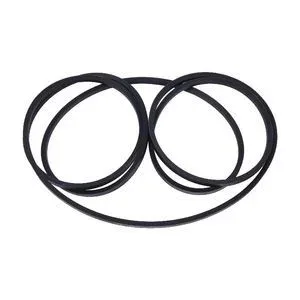
Matched Set Dispatch — This 139T rear drive belt ships alongside verified pulleys and tensioner hardware to keep the entire drivetrain rebuild on a single tolerance baseline.
Technical Specifications
| Parameter |
Value |
| Part Number |
40024-04 |
| Product Type |
Belt |
| Cross-Reference |
1204-0063, 58-439 (reference only) |
| Machine Fitment |
FLHR Road King 2004-2006, FLHT Electra Glide 2004-2005, FLHX Street Glide 2006 |
| Width |
28.5mm (1-1/8") |
| Tooth Count |
139T |
| Condition |
New Aftermarket |
| Warranty |
3-12 months against manufacturing defects |
| Manufacturing Standard |
ISO (facility certification) |
Application Suitability
| Engine System |
Related Components |
| Rear Drive Power Transfer |
Rear Pulley Assembly, Transmission Output Seal |
| Primary Drivetrain Loop |
Front Countershaft Pulley, Belt Guard Hardware |
| Final Drive Alignment |
Rear Wheel Spacers, Alignment Shims |
Systemic Faults Behind Rear Drive Belt Failure on Touring Models
Replacing the belt without addressing the root cause invites a second teardown within the same season.
A snapped or severely frayed rear drive belt often points to more than simple mileage accumulation. In touring applications, misaligned pulleys or a binding tensioner bearing places uneven lateral loads on the belt cords, accelerating edge wear long before the rubber compound itself degrades. When the 139-tooth profile is forced to track against a worn pulley groove, the resulting chatter transfers vibration directly into the transmission output shaft [NEED_CITE: drivetrain vibration analysis for belt-driven touring motorcycles]. Addressing the Rear Drive Belt replacement for Harley Touring engine rebuild requires tracing the failure backward through the entire power-transfer loop to ensure the new component does not inherit the same destructive geometry.

Drivetrain Component Interdependency
The rear drive belt operates as the final link in a system that begins at the transmission output flange. A Rear Drive Belt replacement for Harley Touring engine rebuild is rarely an isolated event; the front pulley spline condition, the rear wheel bearing preload, and the swingarm pivot bushings all influence how evenly the 28.5mm belt width loads across its tooth face. If the transmission output seal is weeping, fluid contamination on the belt surface compromises the rubber compound, making a matched supply approach essential to prevent the next failure from being misdiagnosed as a material defect.
Sizing and Rebuild History Verification
Unlike standard automotive belts, the 139T specification must be verified against the specific model year and engine build within the Touring platform. A 2004 FLHTC may share a base engine architecture with a 2006 FLHX, yet the final drive ratio and pulley offset can dictate subtle differences in belt tracking requirements. Cross-reference numbers like 40024-04, 1204-0063, and 58-439 (interchange reference) are verified against the engine serial prefix to ensure the correct variant is supplied, particularly when a previous rebuild may have introduced non-standard shims or altered the swingarm alignment datum [NEED_CITE: touring model drivetrain alignment procedures].
Engineering the 139-Tooth Interface
The 28.5mm (1-1/8") width of this belt is engineered to distribute torque loads across a broad contact patch, reducing the shear stress on individual teeth during high-load highway cruising. The 139-tooth count provides a specific pitch length that maintains proper tension without requiring excessive preload that would overload the transmission output bearing. The rubber compound is formulated to resist heat buildup generated by the continuous flexing inherent in long-distance touring, while the tensile cords are positioned to resist the stretching forces that would otherwise alter the pitch and cause the belt to ratchet on the pulley under sudden throttle application.
The Cost of Unverified System Matching
Fitting a belt that matches the part number but not the specific pulley groove profile of the machine results in immediate edge delamination. The hidden cost is not just the price of a second belt, but the labor of dropping the rear wheel and swingarm a second time, plus the risk of a roadside failure far from the workshop. When the root cause—such as a worn tensioner bearing or a bent swingarm—is ignored, the replacement belt inherits the same destructive forces, leading to a pattern of repeat failures that damages workshop credibility and inflates fleet maintenance budgets unpredictably [NEED_CITE: motorcycle fleet maintenance cost modeling].
Verified Supply for the Drivetrain Loop
Our technical team verifies the cross-reference numbers against your specific engine serial prefix, ensuring the 139T belt matches the exact pulley geometry of your Touring variant. We supply the belt alongside matched pulley bolts and alignment shims, eliminating the need to source hardware from separate vendors. Each batch is subject to dimensional checks confirming the 28.5mm width and tooth profile before dispatch. Our Guangzhou warehouse maintains stock for fast dispatch on these high-demand touring components, and we provide quality inspection records with every consignment.
Documentation & Verification
- Commercial invoice and packing list detailing the 139T belt and associated hardware SKUs.
- Cross-reference verification sheet confirming compatibility with 40024-04 and 1204-0063 for your specific model year.
- Dimensional inspection record confirming 28.5mm width and tooth profile compliance.
- Warranty terms covering manufacturing defects for the full 3-12 month period.
- Packing photographs showing the belt and matched components secured for transit.
Installation & Rebuild Sequence
- Verify transmission output shaft runout before fitting the new front pulley and belt.
- Inspect rear pulley groove for wear steps that would damage the new 28.5mm belt edges.
- Apply specified torque sequence to rear pulley bolts to maintain concentricity.
- Set belt deflection to specification with the rear suspension under load.
- Perform initial low-speed test ride to confirm tracking before highway use.
Requesting a Matched System Quote
To ensure the correct variant is supplied, provide the full engine serial number or VIN, along with the model year of the Touring machine. If the machine has undergone previous drivetrain modifications or swingarm adjustments, note those details so we can verify alignment requirements. Specify whether you require the belt only or a matched kit including tensioner bearings and hardware.
Frequently Asked Questions
Q: What other drivetrain components should be inspected or replaced when changing the drive belt?
A: A complete assessment must include the transmission output seal, front countershaft pulley splines, and rear pulley bearings. On high-mileage touring machines, the swingarm pivot bushings should also be checked for play, as any deviation in rear wheel alignment transfers directly into lateral belt loading and premature edge wear.
Q: How do I confirm which cross-reference number applies to my specific model year?
A: Provide the engine serial number or full VIN. Our technical team cross-references this against the OEM application charts (reference only) to verify whether your specific build requires the standard 139T configuration or a variant with different tracking offsets, particularly across the 2004-2006 model year transition.
Q: Are matched pulley and hardware kits available for a complete drivetrain overhaul?
A: Yes, we supply matched kits that include the rear drive belt alongside pulley bolts, alignment shims, and associated seals. Consolidating these components into a single consignment ensures all hardware meets the same tolerance baseline and eliminates the risk of partial rebuilds caused by delayed hardware deliveries.
Q: What system-level faults cause premature drive belt failure beyond normal wear?
A: Premature failure typically stems from pulley misalignment, a binding tensioner bearing, or transmission output shaft runout. Fluid contamination from a leaking output seal also degrades the belt compound. Addressing these root causes is essential; otherwise, the replacement belt will inherit the same destructive forces [NEED_CITE: motorcycle belt drive failure root cause analysis].