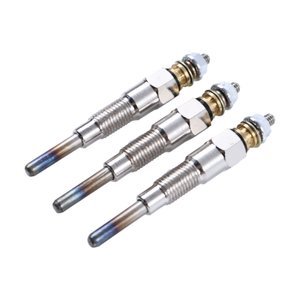
Overhaul Kit Completeness Verified — Each glow plug kit ships with matched resistance specs and a compatibility sheet covering Kubota D-series engine serial variants to prevent cold-start circuit mismatches.
Technical Specifications
| Parameter |
Value |
| Part Number |
16281-65510 |
| Product Type |
Glow Plug |
| Cross-Reference (reference only) |
16281-65510, 1628165510, 16241-52033, 1624152033, 16241-52032, 1624152032 |
| Machine Fitment |
Kubota B1700D, B1700E, B1700HSD, B1700HSE, B21, B2100D, B2100E, B2100HSD, B2100HSE, B2320DT, B2320DTN(-1), B2320DTWO, B2320HSD, B2320HSDN, B2400D, B2400E, B2400HSD, B2400HSE, B2410HSD, B2410HSDB, B2410HSE, B2620HSD, B2630HSD, B2710HSD, B2910HSD, B2920HSD, B3030HSD, B3030HSDC, B3030HSDCC, B3200HSD, B3200HSDWO, B7500D, B7500DTN, B7500HSD, B7510D, B7510DN, B7510HSD, B7510HSDTR, B7610HSD, B7800HSD, B2401DT, B2401DTN, B2401DTWO |
| Engine Model Fitment |
Kubota D905, D1005, D1105, D1305 |
| Condition |
New Aftermarket |
| Heating Element Material |
Nickel-chromium alloy |
| Resistance (at 20°C) |
1.2–1.4 Ω |
| Outer Sheath Material |
Stainless steel |
| Ceramic Insulator Standard |
IEC 60335-1 dielectric strength for 2500 V AC isolation |
| Dimensional Tolerance (thread pitch and seating surface) |
±0.05 mm |
| Thermal Response |
1000°C tip temperature within 8 seconds |
| MOQ |
1 kit (3 pcs) |
| Warranty |
6 months against manufacturing defects |
| Packaging |
3 pcs per kit, individually sealed with anti-static packaging and protective foam in branded retail box |
| Standards |
ISO 9001, IEC 60335-1 |
Application Suitability
| Engine System |
Related Components |
| Pre-heating and cold-start system on Kubota D905/D1005 |
Glow control relay, wiring harness connectors, cylinder head gasket set |
| Cold-start circuit on Kubota D1105/D1305 |
Injector nozzle assemblies, fuel lift pump, combustion chamber seals |
| Engine overhaul reassembly (B-series tractors) |
Valve stem seals, piston ring sets, main and conrod bearing shells |
| Seasonal maintenance for sub-10°C environments |
Coolant temperature sensor, engine block heater, battery terminals |
Why Cold-Start Failures Persist After a Glow Plug engine rebuild replacement
A single out-of-spec resistance value triggers ECU fault codes and repeated pre-heating cycle failures.
On job sites from Dubai to colder latitudes, I have watched crews replace glow plugs twice in one winter because the new set did not match the glow control module's expected resistance band. The D905 and D1305 share a physical form factor but differ in controller logic, and shipping by machine model alone ignores that split. When a rebuild kit omits verified glow plugs or substitutes a generic thermal profile, the downstream result is incomplete combustion, injector coking, and cylinder wall wash-down — problems that surface weeks later and get blamed on fuel quality [NEED_CITE: diesel cold-start combustion fault diagnosis and glow plug thermal profile matching].

The Pre-Heating Circuit Within the Kubota D-Series Family
This glow plug sits at the junction of the electrical pre-heating circuit and the combustion chamber. On D905, D1005, D1105, and D1305 engines, the glow control module monitors circuit resistance to determine pre-heat duration. A Glow Plug engine rebuild replacement that falls outside the 1.2–1.4 Ω range at ambient temperature forces the module into a fault state, cutting the heating cycle short or extending it until the element burns out. During a head reassembly after overhaul, this component must be treated as a calibrated electrical device, not a generic consumable.
Matching Resistance to the Glow Control Module
The control module on a D1105 expects a different steady-state current draw than the module on a D1305. Installing a plug with lower resistance overloads the relay contacts and accelerates wiring harness degradation at the connector pins [NEED_CITE: glow plug relay contact wear and circuit resistance diagnostic procedures]. Conversely, higher resistance reduces tip temperature below the threshold needed for reliable ignition in sub-10°C conditions. Verifying the engine serial number against the correct resistance band before ordering eliminates the most common cause of repeat cold-start complaints after an overhaul.
Dimensional Tolerance and Seating Integrity Explained
The ±0.05 mm tolerance on thread pitch and seating surface matters because the glow plug tip must protrude into the pre-combustion chamber at a precise depth. Even a fraction of a millimeter too short places the 1000°C heating zone above the fuel spray pattern, delaying ignition and increasing white smoke during the first cold cycles. The nickel-chromium alloy element, housed in a stainless steel sheath, must also survive repeated thermal cycling without sheath swelling that would make extraction impossible at the next service interval. The IEC 60335-1 ceramic insulator prevents dielectric breakdown across the 2500 V isolation threshold, a requirement that becomes critical when moisture ingress occurs around the cylinder head cover area.
What Happens When the Wrong Spec Goes Undetected
Installing a glow plug with mismatched thermal response rarely causes an immediate catastrophic failure. Instead, the cost accumulates: repeated cranking drains the battery, unburned fuel dilutes the engine oil, and injector tips coke faster than their normal service interval [NEED_CITE: effects of prolonged cold cranking on diesel engine oil dilution and injector deposits]. By the time the operator reports hard starting, the root cause has already damaged adjacent fuel system components. For a rebuild shop, this means a warranty claim on what should have been a straightforward head reassembly, plus the labor of extracting a seized or swollen sheath from the cylinder head.
Why Source This Component Through Our Engine System Supply
We carry own-production glow plug lines alongside sourced inventory under a single warranty account, so your overhaul order does not split across multiple vendors with mismatched lead times. Our technical team confirms resistance specs against your engine serial number before dispatch, catching variant differences between D905 and D1305 applications. Every kit ships from our Guangzhou warehouse with a cross-reference verification sheet covering superseded numbers such as 16241-52033 and 16241-52032. We accept orders from a single kit of three pieces, which matters when one cylinder bank needs immediate attention while the rest remain serviceable. Sample supply is available for fitment confirmation before you commit to bulk stocking for seasonal demand.
Documentation & Verification
- Commercial invoice listing glow plug resistance band and engine serial cross-reference
- Compatibility sheet marking OEM numbers 16281-65510 and 16241-52033 as reference only
- Batch-level quality inspection record showing resistance and thermal ramp validation
- Warranty terms covering manufacturing defects for six months from dispatch date
- Packing photographs showing anti-static sealed units with protective foam inserts
- HS code and customs documentation support for international engine parts shipments
Installation & Rebuild Sequence
- Clean pre-combustion chamber threads with a calibrated tap before installing the new 16281-65510 glow plug to prevent cross-threading
- Apply anti-seize compound to the stainless steel sheath threads only, avoiding the heating element tip
- Torque to manufacturer specification using a crowfoot adapter to avoid damaging the terminal stud
- Verify circuit continuity and resistance reading at the glow relay connector before reassembling the valve cover
- Run the pre-heating cycle three times without cranking to confirm the control module recognizes the new resistance value
- Inspect wiring harness connector pins for corrosion or heat damage that may indicate a prior relay fault
Request a System-Level Compatibility Check
Provide your engine model, serial number, and any previous rebuild history so we can confirm the correct resistance variant for your D-series application. If you are quoting a complete overhaul, share the full component list and we will verify that glow plugs, gasket sets, and bearing shells align with the same engine build specification.
Frequently Asked Questions
Q: What other engine system components should I inspect when replacing glow plugs?
A: Check the glow relay contacts for pitting, test wiring harness continuity from the relay to each cylinder, and inspect injector spray patterns. Repeated glow plug failure often traces to degraded wiring connections or a faulty relay rather than the plug itself. If the engine has high hours, consider replacing the glow plug harness connectors as a set during the overhaul.
Q: Does my D1105 engine need a different resistance spec than a D1305?
A: Yes, the glow control modules on D1105 and D1305 variants expect different circuit resistance profiles despite sharing similar physical dimensions. Confirming your engine serial number allows us to supply the correct 1.2–1.4 Ω variant matched to your specific controller, preventing fault codes and incomplete pre-heating cycles.
Q: My old plug carries a different part number — is it still compatible?
A: Numbers such as 16241-52033 and 16241-52032 are superseded cross-references (reference only) for the 16281-65510 designation. We verify each superseded number against current production specs and engine serial ranges to confirm thermal profile and dimensional compatibility before shipping.
Q: Should I replace all glow plugs as a matched set during overhaul?
A: Yes. Mixing old and new plugs creates uneven resistance across cylinders, causing the glow control module to cycle inconsistently. Installing a complete matched set ensures uniform pre-heating and balanced cold-start combustion, protecting injectors and reducing cylinder wall wash-down during the initial run-in period.
Q: How do I confirm the correct glow plug spec from my engine serial number?
A: Provide your full engine serial number and we cross-reference it against the Kubota D-series variant database to confirm resistance band, thread specification, and tip protrusion depth. This step is essential when the engine has been previously rebuilt or when the original nameplate is no longer legible.