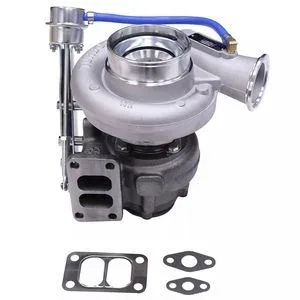
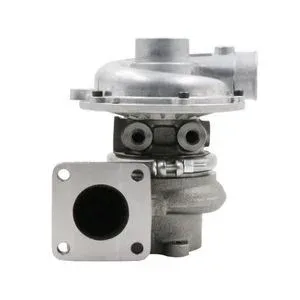
Matched System Supply — Turbocharger and mating seals verified against QSB6.7 engine serial to prevent mismatched rebuild sets.
Technical Specifications
| Parameter |
Value |
| Part Number |
4038597 |
| Product Type |
Turbocharger |
| Cross-Reference |
4955156, 4042667, 4038597R, 4038597RX, 4038209, 4044890, 4033681, 4044890H, 4629082, 495515600, 4955156NX, 4955156RX, 5452082, 5452082NX, 5452082RX, 3802879, 3802878 (reference only) |
| Machine Fitment |
Truck, Industrial with QSB Tier-3 Engine (2004-), Grader with QSB Tier-3 Engine (2004-) |
| Brand Compatibility |
Fits Cummins, Komatsu equipment |
| Turbo Model |
HX35W-A77J70GM/A70Q86FE14PB-W, HX35W |
| Compatible Engine |
Cummins QSB6.7, QSB Tier-3 |
| Condition |
New Aftermarket |
| Exhaust Gas Temperature Resistance |
Up to 900°C (source value — verify against manufacturer catalog) |
| Warranty |
3-12 months against manufacturing defects |
| Quality Standard |
ISO 9001 |
Application Suitability
| Engine System |
Related Components |
| Intake and forced induction |
Oil supply line, oil drain gasket, air filter element |
| Exhaust and emission control |
Exhaust manifold gasket, waste-gate actuator, exhaust clamp |
| Crankcase ventilation and lubrication |
Oil return line, bearing shells (confirm grade after prior rebuild) |
| Cooling tied to charge air |
Charge air cooler hoses, intercooler seals |
Why the Same Turbocharger HX35W 4038597 Engine Rebuild Fails Within Weeks of Fitting
Replacing the turbo without tracing the upstream fault that killed the last one guarantees a repeat failure.
In Chilean copper mine workshops, I watched crews bolt on a fresh HX35W only to see it fail again before the next service interval. The root cause was almost always upstream — carbon-coked oil lines starving the new bearing, a cracked exhaust manifold altering back-pressure, or a sticking waste-gate actuator left unaddressed. A turbocharger HX35W 4038597 engine rebuild only holds when the fault path is cleared and all mating seals go in at the same time. [NEED_CITE: common root causes of turbocharger bearing failure in Tier-3 diesel engines]

Intake, Exhaust, and the System This Turbocharger Lives Inside
The HX35W sits at the junction of three engine systems: intake air delivery, exhaust gas routing, and pressurized lubrication. On the QSB6.7, the turbo draws filtered air, compresses it into the charge air cooler, and receives exhaust energy from a manifold that also handles EGR flow on Tier-3 variants. When any one of these paths degrades — a split intercooler hose, a manifold crack near cylinder three, sludge in the oil feed line — the turbo absorbs the consequence. Treating the turbocharger HX35W 4038597 engine rebuild as a system-level job means inspecting each adjacent path before the new unit goes on.
Engine Serial Variants and Why Flange Patterns Shift Across Builds
The QSB6.7 family spans multiple Tier-3 sub-builds, and the HX35W was fitted with different compressor housing orientations and exhaust flange patterns depending on the engine serial range. An industrial unit built for a wheel loader may carry a different turbine housing clocking than a grader application, even though both share the same base engine block. Before ordering, confirm the engine serial number so the correct port orientation and waste-gate bracket location are matched. Installing a turbo with the wrong flange rotation forces the installer to twist oil lines into stressful bends, which then crack under vibration. [NEED_CITE: Cummins QSB6.7 Tier-3 engine serial variant identification procedures]
Decoding the Specs That Actually Matter on the Bench
The HX35W-A77J70GM/A70Q86FE14PB-W designation encodes compressor wheel trim, turbine A/R ratio, and waste-gate spring calibration — parameters that govern how much boost the engine sees at a given RPM. Changing any one of these values shifts the air-fuel balance the ECU was mapped for. Exhaust gas temperature resistance rated up to 900°C reflects the thermal margin available during sustained high-load operation, typical on haul roads at altitude where charge temperatures climb. The ISO 9001 production standard means dimensional checks and rotor balance verification are documented, so the bearing assembly sees even loading from first startup rather than a vibration-induced early failure.
The Hidden Cost of Skipping the Root-Cause Check
A workshop that fits a new turbo without replacing the oil supply gasket and inspecting the drain line is betting that the old failure was random. In practice, the oil that starved the previous bearing is still contaminated with carbon particles that will score the new journal surface within hours of operation. The machine returns to the site, runs for a shift, then comes back with the same low-boost symptom — except now the crew questions the replacement part instead of their process. Every repeat teardown costs the same labor hours as the first, plus the credibility loss with the fleet operator. [NEED_CITE: lubrication system contamination effects on turbocharger bearing life]
What This Supply Channel Delivers for an Engine Rebuild
Own production lines for selected turbo components and qualified sourced assemblies sit under one account with a single warranty, so there is no finger-pointing between suppliers if a claim arises. Eight product categories mean the turbocharger, manifold gasket set, oil feed line, and air filter element ship in one consignment — no waiting on a second delivery while the engine sits open on the bench. Minimum order from one piece covers the single emergency rebuild without forcing surplus stock. Part identification works from engine serial, a photograph of the old nameplate, or the existing part number with cross-reference verification covering superseded and alternate numbers. A sample unit can be dispatched for fitment confirmation before a fleet operator commits to bulk overhaul stock. The technical team confirms compressor and turbine specifications against the engine build variant so the correct unit goes out the first time.
Documentation & Verification
- Commercial invoice listing turbocharger 4038597 with HS code for customs clearance
- Cross-reference sheet mapping 4038597 to alternate numbers, marked reference only
- Quality inspection record covering rotor balance and housing dimensional checks
- Warranty terms covering manufacturing defects for 3-12 months post-installation
- Packing photographs showing turbo secured with protective covers on all ports
- Fitment verification against provided QSB6.7 engine serial number
Installation & Rebuild Sequence
- Clean oil feed and drain passages thoroughly before mating the HX35W to prevent bearing contamination
- Verify oil supply gasket and drain flange match the QSB6.7 block port pattern
- Torque exhaust manifold studs and turbo mounting nuts to engine manual sequence and values
- Pre-lube the turbo center bearing with clean engine oil before first cranking
- Run the engine at idle and inspect all joints for oil or exhaust leaks before loading
Getting the Right Turbo for Your Rebuild
Provide the QSB6.7 engine serial number, any prior rebuild history, and the existing turbocharger nameplate or part number so the correct HX35W variant and matching gasket set can be confirmed against your specific engine build.
Frequently Asked Questions
Q: What gaskets and seals must be replaced alongside this turbocharger?
A: The oil supply gasket, oil drain gasket, and exhaust-to-turbine flange gasket should all go in new when the turbo is fitted. Reusing old gaskets risks oil starvation to the fresh bearing assembly or exhaust leaks that alter back-pressure. A matched set ensures sealing integrity across the intake and exhaust interface.
Q: How do I confirm which HX35W variant fits my QSB6.7?
A: Supply the engine serial number and, if available, a photo of the existing turbo nameplate. The serial identifies the production build, which determines compressor housing orientation, turbine flange pattern, and waste-gate bracket location. Cross-reference verification confirms the correct variant before dispatch.
Q: What system-level faults commonly destroy this turbocharger?
A: Carbon buildup in the oil feed line, a cracked exhaust manifold, and a sticking waste-gate actuator are frequent root causes. If these faults remain after fitting a new turbo, the replacement unit inherits the same destructive conditions. Tracing and clearing the fault path is essential before installation.
Q: Can I order a matched overhaul kit with turbo and all mating seals?
A: Yes. The turbocharger can be bundled with the corresponding oil line gaskets, exhaust flange gasket, and air filter element under a single part list. Consolidated supply ensures all components arrive together so the rebuild proceeds without waiting on a second shipment.
Q: Does this turbocharger meet Tier-3 emission requirements?
A: The HX35W is specified for QSB Tier-3 engines and maintains the boost curve the engine ECU expects. Correct fitment preserves the air-fuel ratio the emission calibration was built around. Verify with local regulatory requirements for your operating region before putting the machine into service.