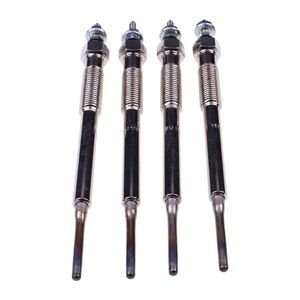
Engine Serial Variants Confirmed — Cold-start components are matched to the exact build variant of Isuzu 4JJ1 and 4HK1 engines, preventing tolerance mismatches during diesel rebuilds.
Technical Specifications
| Parameter |
Value |
| Part Number |
8-98290-755-0 |
| Product Type |
Glow Plug |
| Cross-Reference |
8-98290755-0, 8982907550, 8-97379-296-0, 8-97379296-0, 8973792960, 97379296, 98290755 (reference only) |
| Machine Fitment |
NPR, NPR-HD, NQR, NRR, FTR, FVR, W3500 Tiltmaster, W4500 Tiltmaster, W5500 Tiltmaster, W5500HD Tiltmaster, W3500 Forward, W4500 Forward, W5500 Forward, W5500HD Forward |
| Engine Fitment |
Isuzu 4JJ1, 4HK1, 4HK1-TCS, 4HK1-TCN |
| Condition |
New Aftermarket |
| Heating Element Type |
Dual-coil ceramic |
| Surface Temperature Rating |
1,100°C |
| Input Voltage Range |
11.5V–14.5V |
| Operating Temperature (Cold Start) |
-25°C |
| Thread Specification |
M10×1.25 |
| Seating Angle |
90° conical seat |
| Resistance at 20°C |
0.95 ± 0.05 Ω |
| Thermal Shock Test Cycles |
50,000 cycles (–30°C to +1,100°C) |
| Housing Material |
Stainless steel (AISI 304) |
| Preheat Time |
10-second |
| Warranty |
6 months against manufacturing defects |
Application Suitability
| Engine System |
Related Components |
| Diesel Cold-Start System |
Glow plug relay, ECU feedback wiring harness, cylinder head gasket set |
| Fuel Injection & Combustion |
Injector return line seals, fuel filter assembly, combustion chamber cleaning kit |
| Engine Rebuild Overhaul |
Piston ring sets, cylinder liner, connecting rod bearing shells |
System-Level Diagnosis Prevents Repeated Cold-Start Failures
Replacing the glow plug alone rarely solves a persistent cranking issue when the root cause lies in the feedback loop.
When a workshop swaps out a failed Isuzu 4JJ1 4HK1 glow plug rebuild unit only to see the same fault code return within a week, the real problem usually sits upstream. I have dismantled cylinder heads where the new plugs were perfectly functional, but the control relay was feeding inconsistent voltage, or the wiring harness insulation had degraded enough to cause resistance drift outside the ECU tolerance window. The glow plug engine system does not operate in isolation; it relies on precise electrical feedback to time the preheat cycle correctly [NEED_CITE: diesel engine cold-start system diagnostic procedures].

The Cold-Start Ecosystem in a Diesel Overhaul
A glow plug engine component is the final actuator in a sequence that begins with the ECU reading coolant temperature and battery voltage. During a complete 4HK1-TCS or 4HK1-TCN rebuild, the cold-start system should be addressed as a matched set. This means verifying that the control module output matches the 11.5V–14.5V input range and that the cylinder head seating surface is free of carbon deposits that could compromise the 90° conical seal. Neglecting these adjacent checks turns a straightforward Isuzu 4JJ1 4HK1 glow plug rebuild into a cycle of warranty claims and repeat visits.
Variant Differences Across 4HK1 Sub-Models
The 4HK1 family includes several variants—TCS and TCN among them—each with distinct turbo and ECU calibration profiles that affect preheat duration. A glow plug engine specification must account for these differences, because the thermal load profile changes with boost pressure and injection timing. I have encountered situations where a batch of plugs met the resistance spec but the thermal response curve did not align with the specific variant's ECU map, leading to rough idle during the first minute of operation [NEED_CITE: Isuzu 4HK1 engine variant calibration differences].
Reading the Specifications Beyond the Part Number
The dual-coil ceramic element in this Isuzu 4JJ1 4HK1 glow plug rebuild unit is designed to reach surface temperature rapidly while maintaining structural integrity through 50,000 thermal shock cycles. The M10×1.25 thread and 90° conical seat are not interchangeable with flat-seat designs; forcing a mismatch creates a compression leak path that erodes the cylinder head bore over time. The 0.95 ± 0.05 Ω resistance at 20°C is the value the ECU expects—any deviation triggers a fault code even if the plug still heats, because the closed-loop diagnostic interprets the drift as a circuit fault rather than a component failure.
The Cost of Skipping System Verification
Installing a new glow plug engine component without checking the relay contacts and harness continuity often results in early failure of the replacement part. The thermal stress from irregular voltage cycling cracks the ceramic element from the inside, and the workshop sees what looks like a defective part rather than a systemic electrical problem. This pattern accounts for a significant share of premature returns in cold-start components [NEED_CITE: electrical system fault propagation in diesel commercial vehicles].
Why Source Engine System Components Through One Account
Our production lines and qualified sourcing partners operate under a single warranty structure, so a glow plug engine order placed alongside injector seals and overhaul gaskets carries identical QC terms across every line item. We verify cross-reference numbers including superseded references like 8-97379-296-0 against current engine build records. Batch-level resistance testing is documented and available before dispatch. Samples can be supplied for fitment confirmation on a single cylinder before the full set ships, which matters when a rebuild shop is validating a new supplier for the first time.
Documentation & Verification
- Commercial invoice listing each glow plug engine line item with batch traceability codes.
- Cross-reference sheet confirming interchange with 8-98290-755-0 and 8-97379-296-0 (reference only).
- Resistance test records at 20°C for each production batch.
- Six-month warranty terms covering manufacturing defects in the ceramic element and housing.
- Packing photographs showing anti-static foam protection before carton sealing.
- HS code and customs documentation support for cross-border engine parts shipments.
Installation & Rebuild Sequence
- Clean cylinder head bores and verify 90° conical seat surface before installing the glow plug engine unit.
- Apply calibrated torque to M10×1.25 thread to prevent housing distortion or compression leakage.
- Test relay output voltage and harness continuity before connecting the new plugs to the ECU circuit.
- Clear stored fault codes and monitor live feedback resistance during the first cold-start cycle.
Inquiry Guidance for Engine Rebuild Buyers
Provide the engine serial number and variant designation—4JJ1, 4HK1, 4HK1-TCS, or 4HK1-TCN—along with any previous rebuild history and oversize records. This allows us to confirm whether the cold-start system specification matches the current engine build state and to flag any superseded part numbers that may apply to your serial range.
Frequently Asked Questions
Q: What other components should be inspected when replacing glow plugs on a 4JJ1?
A: Beyond the plug itself, check the glow plug relay contacts for pitting, verify wiring harness continuity and insulation condition, and scan for stored ECU fault codes related to the preheat circuit. A resistance reading outside the 0.95 ± 0.05 Ω window on the old plug often points to a circuit issue rather than component failure alone.
Q: Are glow plugs identical across all 4HK1 variants including TCS and TCN?
A: The physical thread and seat are the same, but the ECU preheat timing map differs between variants due to turbo and fuel calibration. Confirm the engine variant code on the nameplate so the thermal response curve of the replacement matches what the ECU expects during the cold-start sequence.
Q: Can 8-98290-755-0 and 8-97379-296-0 be used interchangeably?
A: These numbers are cross-referenced for identification purposes, but the substitution should be verified against the specific engine serial range. Some earlier builds used the 8-97379-296-0 reference before the supersession. We confirm the correct application before shipping.
Q: What happens if the resistance value deviates from specification?
A: The ECU monitors circuit resistance continuously. A deviation triggers a diagnostic trouble code even if the plug still generates heat, because the feedback loop interprets the drift as an open or short circuit. This can prevent the engine from entering normal operating mode on some control systems.
Q: Is it possible to get a sample before placing a bulk order?
A: Yes. We supply individual units for fitment and functional testing on a single cylinder. This lets a rebuild shop verify thread engagement, seat sealing, and ECU feedback compatibility before committing to a full fleet quantity.