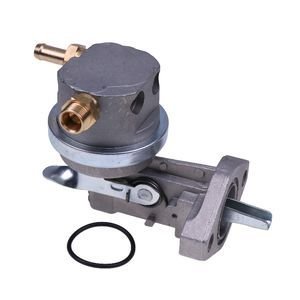
Engine Serial Variants Confirmed — Every RE68345 fuel pump order is cross-checked against the exact engine build code to prevent mismatched flow characteristics across the 3029/4039/4045/6068 families.
Technical Specifications
| Parameter |
Value |
| Part Number |
RE68345 |
| Product Type |
Fuel Pump |
| Cross-Reference |
RE68345 (reference only) |
| Machine Fitment |
5085M, 5095M, 5095MH, 5105M, 5105ML, 6400SP, 6403, 6603, 7210, 7405, 7410, 7500, 7510, 7610, 7710, 7810, 324H, 344H, 670C, 670CH, 672CH, L512, L514, L524, L534, 3200, 3215, 3400, 3415, 3800, 1165, 1175, 1175H, 1450, 1170, 2254, 2256, 2258, 1010D, 810D, 770D |
| Engine Compatibility |
John Deere 3029, 4039, 4045, 6068, 6068D, 6068H, 6400, CD3029, CD4039, CD4045, CD6068 |
| Condition |
New Aftermarket |
| Housing Material |
Aluminum alloy with integrated heat-dissipating fins |
| Internal Component Hardness |
HRC 58–62 |
| Seal Material |
Viton-based, compatible with ULSD and biodiesel blends up to B20 |
| Test Pressure |
≥350 bar |
| Flow Deviation |
±2% |
| Warranty |
12-month warranty against manufacturing defects |
| MOQ |
1 piece |
| Standards |
ISO 9001, SAE J1939-71, ISO 4024 |
Application Suitability
| Engine System |
Related Components |
| Primary fuel delivery on 6068H and 6068HF275 heavy-duty agricultural engines |
Fuel injectors, high-pressure lines, return hoses, primary and secondary filters |
| Fuel supply circuit on 4045TF150 and 4039TF008 industrial power units |
Lift pump, fuel water separator, injector leak-off lines |
| Transfer pump assembly on CD6068 and CD4045 marine and generator sets |
Fuel priming pump, tank breather, supply and return fittings |
| Feed system for 3029DF128 light-duty tractor applications |
Mechanical governor linkage, fuel shut-off solenoid, sediment bowl |
Why Replacing Only the Fuel Pump RE68345 Rarely Solves the Root Failure
A fuel pump that fails repeatedly is almost always a symptom of upstream contamination or downstream restriction, not a defective pump.
I have pulled apart fuel pump assemblies that were replaced two or three times within a single season. In nearly every case, the plunger and barrel showed scoring patterns consistent with particulate ingestion — meaning the primary filter had either bypassed or collapsed, sending abrasive debris straight into the pump housing. On one 6068-powered tractor, the previous mechanic swapped the pump without inspecting the injector return lines. A clogged return path was building back-pressure, starving the pump of its normal flow cycle and causing cavitation damage within weeks [NEED_CITE: diesel fuel system contamination and cavitation failure modes in agricultural equipment].
The Fuel Pump RE68345 engine replacement decision should never be made in isolation. Confirming injector condition, filter integrity, and line routing must happen before the new pump goes on the engine — otherwise you are simply resetting the clock on the same failure.

Fuel System Context: Where This Pump Sits in the Circuit
The fuel pump occupies a critical midpoint in the delivery chain. It draws from the tank through the primary filter, pressurizes the fuel, and feeds the injection pump or common rail depending on the engine variant. On the 6068 and 4045 families, this Fuel Pump RE68345 engine replacement unit serves as the transfer and lift stage — meaning any degradation in its output directly affects injection timing and spray pattern downstream.
When you order this pump, you are addressing one node in a system that includes at least six other serviceable components. The condition of each adjacent part determines whether the new pump operates within its design parameters or begins wearing from day one.
Engine Serial Variants and Why a Universal Fit Does Not Exist
The John Deere 3029, 4039, 4045, and 6068 engine families span over 120 designations, each with distinct fuel delivery requirements. A 6068HF275 running high-load field operations demands different flow characteristics than a 4045TF150 in a stationary power unit. The pump housing may appear identical across variants, but internal metering geometry and spring rates differ.
Sending a generic pump without confirming the engine build code leads to pressure instability at certain RPM bands. This is not a theoretical concern — it manifests as hard starting when cold, hesitation under load, or erratic idle. We verify the exact engine serial and cross-reference the fuel system specification sheet before releasing any Fuel Pump RE68345 engine replacement from stock [NEED_CITE: engine serial variant fuel system calibration differences in John Deere 4045 and 6068 families].
Reading the Specifications Against Real Operating Conditions
The Viton-based seal material is specified for compatibility with ultra-low sulfur diesel and biodiesel blends up to B20. This matters because biodiesel has different lubricity and solvent characteristics than standard diesel — seals designed only for petroleum diesel will swell or degrade when exposed to B20 blends, leading to external leaks and pressure loss.
The HRC 58–62 internal component hardness and ≤0.5 μm surface roughness on the plunger and barrel interface define the wear boundary. Fuel acts as the lubricant in this pump, and any particulate harder than the barrel surface will score it. The ≥350 bar test pressure confirms the assembly holds without internal bypass under peak operating conditions, while the ±2% flow deviation ensures balanced delivery across cylinders [NEED_CITE: diesel fuel pump plunger barrel surface finish and wear correlation standards].

The Hidden Cost of Skipping Root-Cause Diagnosis
Replacing the fuel pump without tracing the failure origin leads to predictable repeat visits. If the injectors are coking and dribbling fuel rather than atomizing it, cylinder wash-down contaminates the lube oil and accelerates ring wear — none of which the new pump can correct. If the fuel tank has accumulated sediment that bypassed a collapsed filter element, the replacement pump ingests the same abrasive slurry that destroyed the first one.
These cascading failures compound. A workshop that replaces only the pump sees the machine return within weeks with the same symptoms, eroding customer trust and consuming technician hours on warranty claims [NEED_CITE: repeat diesel fuel pump failure root cause analysis in fleet maintenance].
Why Procurement Through This Channel Works for System-Level Rebuilds
Our own production lines and qualified sourced supply operate under one account with one warranty, so whether the Fuel Pump RE68345 engine replacement comes from our facility or a partner, the QC terms are identical. Eight product categories sit under one roof, meaning the fuel pump, filters, seal kits, and injector components for a complete system overhaul ship as a single consignment.
Minimum order is one piece, so a workshop can order a sample for fitment confirmation before committing to fleet quantities. Our technical team verifies compatibility against engine serial numbers and cross-references superseded part numbers. Guangzhou warehouse stock enables fast dispatch on common variants, and we accept identification from part numbers, machine models, photographs, or nameplate images — removing the guesswork when the original tag is worn or painted over.
Documentation & Verification
- Commercial invoice listing RE68345 with engine serial variant noted per line item
- Cross-reference sheet confirming interchange numbers, marked reference only
- Quality inspection record covering flow deviation test and pressure stability at 350 bar
- Warranty terms specifying 12-month coverage scope for manufacturing defects
- Packing photographs showing pump housing condition and seal protection before crating
- HS code and customs documentation formatted for destination country requirements
Installation & Rebuild Sequence
- Flush all fuel lines and replace primary and secondary filters before pump installation
- Verify Viton seal compatibility with the biodiesel blend concentration in use at the site
- Torque mounting fasteners to engine manual specification to avoid housing distortion
- Prime the pump manually and bleed air from return lines before first cranking attempt
- Run engine at idle for initial warm-up cycle and monitor for pressure stability
- Inspect injector leak-off volume after one hour of operation to confirm balanced delivery
Inquiry Guidance for System-Matched Procurement
Provide the engine model designation, serial number, and build code from the nameplate so we can confirm which of the 120-plus variants your machine uses. If the nameplate is illegible, send a photograph of the existing pump and its mounting interface. Share any recent overhaul history or known fuel system issues — injector replacement, filter bypass incidents, or fuel contamination events — so we can scope the correct adjacent components for a complete system repair rather than an isolated swap.
Frequently Asked Questions
Q: What other fuel system components should be replaced alongside the pump?
A: Best practice is to replace primary and secondary fuel filters, inspect injector spray patterns, check return line flow, and examine supply hoses for internal collapse. On engines with high hours, the fuel water separator and sediment bowl gaskets should also be renewed. Treating the pump replacement as a system service prevents the new unit from inheriting the same contamination or restriction that destroyed the original.
Q: How do I confirm which engine serial variant my machine uses?
A: The engine serial number and build code are stamped on the nameplate, typically located on the valve cover or block side. If the plate is missing or illegible, a photograph of the existing pump mounting face and port arrangement usually allows us to narrow the variant. We cross-reference the serial against factory fuel system specifications before dispatch.
Q: Does this pump fit all 120-plus engine designations listed, or only specific builds?
A: The housing and mounting pattern are shared across many variants, but internal metering components and spring rates differ by engine build code. We confirm the exact variant against your serial number to ensure the correct internal configuration ships. A pump that fits physically but delivers the wrong flow profile will cause pressure instability.
Q: What causes repeat fuel pump failure after replacement?
A: The most common causes are upstream contamination from a bypassed or collapsed filter, downstream restriction from clogged injector return lines, and biodiesel blends exceeding the seal material rating. Less obvious causes include fuel tank sediment disturbed by machine vibration and water ingress through a damaged tank breather. Each of these must be ruled out during installation.