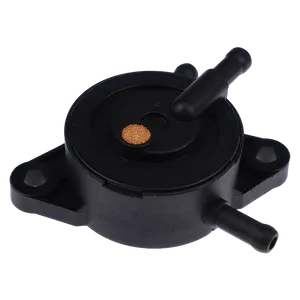
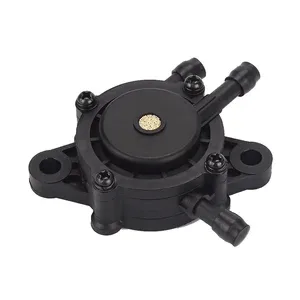
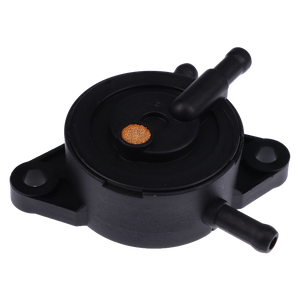
Matched Component Shipment — Every fuel pump assembly leaves our facility paired with verified system-level compatibility data to prevent mismatched rebuild kits.
Technical Specifications
| Parameter |
Value |
| Part Number |
2521307 |
| Product Type |
Fuel Pump |
| Cross-Reference |
2521307 (reference only), 2204852 (reference only) |
| Machine Fitment |
2015 Polaris Ranger 570 Crew Full-Size, 2015–2019 Polaris Ranger 570 Full-Size, 2014–2015 Polaris Ranger 900 Crew, 2014–2015 Polaris Ranger 900 Crew EPS, 2013–2015 Polaris Ranger 900 XP, 2016 Polaris Ranger Crew 900-5, 2016 Polaris Ranger Crew 900-5 EPS, 2016 Polaris Ranger Crew 900-6, 2016 Polaris Ranger Crew 900-6 EPS, 2017–2019 Polaris Ranger Crew XP 900, 2017–2019 Polaris Ranger Crew XP 900 EPS, 2016–2019 Polaris Ranger XP 900, 2019 Polaris Ranger XP 900 EPS |
| Condition |
New Aftermarket |
| Output Pressure |
45–60 psi |
| Operating Temperature |
-20°C to +85°C |
| Housing Material |
Reinforced polyamide composite |
| Diaphragm Material |
Nitrile rubber (NBR) |
| Diaphragm Cycle Rating |
10,000+ cycles at 60 psi |
| Inlet Filtration |
Dual-stage, 40 microns |
| Electrical Terminals |
Gold-plated contacts |
| Supply Voltage |
12V DC |
| Dimensional Tolerance |
±0.15 mm |
| Quality Standard |
ISO 9001 |
| Warranty |
6-month warranty against manufacturing defects |
| MOQ |
1 piece |
Application Suitability
| Engine System |
Related Components |
| Primary Fuel Delivery |
Fuel filter, fuel lines, pressure regulator |
| Cold Start Support |
Battery terminals, relay, wiring harness connectors |
| Injector Feed Protection |
Inline filter, fuel rail seals, injector O-rings |
| Tank-to-Pump Circuit |
Tank strainer, pickup tube, vent valve |
| Emissions Compliance Path |
Vapor canister, purge valve, fuel cap seal |
Why a New Fuel Pump Assembly Fails Weeks After Installation
The replacement part was not the root cause — contaminated fuel or worn injectors destroyed it from the inside.
I have seen this pattern repeatedly in the Yangtze River Delta parts network. A workshop replaces a failed fuel pump, the machine runs fine for a few weeks, then the same symptom returns. The teardown reveals the new unit scored by particulate or starved by a collapsing pickup line. Polaris Ranger 570 and 900 engines are particularly sensitive to fuel delivery inconsistency because the injector mapping assumes stable pressure within the 45–60 psi band [NEED_CITE: fuel system contamination impact on small-displacement engine injectors]. When upstream filtration is degraded, the pump diaphragm absorbs the damage.
A complete Fuel Pump Assembly engine rebuild approach means opening the entire fuel circuit before installing the new unit. Skipping that step turns a planned repair into a recurring cost.

The Fuel Circuit as an Integrated System
This fuel pump sits at the center of a closed delivery loop that begins at the tank strainer and ends at the injector tip. Every component in between either protects the pump or depends on its output. When planning a Fuel Pump Assembly engine rebuild, the logical sequence starts with verifying tank cleanliness, then moves through line integrity, filter condition, and finally injector flow balance. The dual-stage 40-micron inlet filtration built into this unit provides secondary defense, but it cannot compensate for a saturated primary filter or degraded fuel hose shedding liner material into the stream.
Pressure Stability and Injector Demand
Modern small-bore engines require tight pressure tolerance to maintain correct air-fuel ratio across load changes. This assembly delivers 45–60 psi across its operating temperature range, which matches the injector calibration for the listed Polaris Ranger models. If pressure drops below that band, the ECU compensates with longer injector pulse width, which floods the cylinder and washes oil from the bore walls [NEED_CITE: fuel enrichment effects on cylinder wall lubrication in utility engines]. Gold-plated electrical terminals on this unit maintain voltage consistency during cold cranking, reducing the chance of intermittent low-pressure delivery at startup when wear is most likely to accelerate.
Reading the Specs That Matter for Rebuild Planning
The NBR diaphragm rated for over 10,000 cycles at 60 psi defines the service interval ceiling. In practice, thermal cycling between -20°C and +85°C causes the elastomer to stiffen over time, reducing stroke efficiency before any visible cracking appears. The reinforced polyamide composite housing resists fuel-induced swelling that deforms cheaper thermoplastic bodies, keeping the dimensional tolerance within ±0.15 mm throughout its service life. That tolerance matters because even slight housing distortion shifts the diaphragm rest position, altering output pressure at the injector rail. The 12V DC supply specification means this unit is compatible with standard utility vehicle electrical architecture without relay modification.
What Happens When the Root Cause Goes Unchecked
Installing a fresh pump into a contaminated fuel system does not reset the clock — it starts a second countdown. Particulate that bypassed a failed tank strainer is already lodged in the injector bodies and fuel rail. The new pump pushes that debris through at full pressure, scoring injector seats and accelerating its own diaphragm wear [NEED_CITE: particulate ingestion damage mechanisms in diaphragm fuel pumps]. Shops that skip the upstream inspection typically see the replacement unit back on the bench within a short operating window, and the customer blames the part rather than the process.
Sourcing That Accounts for System-Level Reality
Our own production lines and qualified sourced supply operate under a single warranty and a single quality standard, so every fuel pump in this category carries the same inspection protocol. Eight product categories under one account mean the filters, seals, and line clamps for a complete fuel system overhaul ship in the same consignment as the pump itself. One-piece minimum order allows a single replacement unit for emergency repairs without forced bulk commitment. Guangzhou warehouse inventory enables rapid dispatch on common configurations. Our technical team confirms engine serial variant compatibility before the order ships, catching production-run differences that generic cross-reference tables miss.
Documentation & Verification
- Commercial invoice referencing fuel pump assembly part number and applicable HS code for customs clearance
- Cross-reference sheet listing 2521307 and 2204852 as interchange reference only against service manual numbers
- Dimensional inspection record confirming housing tolerance within ±0.15 mm and terminal continuity
- Pressure hold and flow rate test certificate documenting output within the 45–60 psi specification band
- Packing photographs showing protective wrapping around diaphragm housing and electrical connector pins
Installation & Rebuild Sequence
- Flush tank and inspect pickup strainer before connecting the new fuel pump assembly inlet port
- Verify gold-plated terminal orientation matches harness connector polarity to prevent reverse-current damage
- Replace inline fuel filter simultaneously to protect the dual-stage 40-micron inlet screen from fresh contamination
- Torque mounting hardware to specification and confirm housing dimensional tolerance is not distorted by uneven clamping
- Prime system and check fuel rail pressure within the 45–60 psi band before reconnecting injector harness
- Run initial break-in cycle and recheck all fuel line connections for weeping at operating temperature
Request a System-Matched Quote
Provide the Polaris Ranger model year, engine serial number, and any prior fuel system repair history so we can confirm whether this fuel pump assembly matches your production variant. Include injector and filter condition notes if available — that context helps us recommend the correct scope of matched components for your overhaul.
Frequently Asked Questions
Q: What else in the fuel system should be inspected or replaced when changing this pump?
A: The tank strainer, inline filter, fuel line condition, and injector flow balance should all be verified. Contamination that destroyed the original pump may still be present in these components. Replacing the pump without addressing upstream and downstream condition typically results in early repeat failure and wasted labor.
Q: How do I confirm which fuel pump variant fits my specific Ranger engine serial?
A: Production runs across 2013 through 2019 introduced fuel system differences that generic listings do not capture. Share the full machine model designation and engine serial number with our technical team. We verify fitment against the cross-reference numbers 2521307 and 2204852 as interchange reference only, then confirm variant compatibility before dispatch.
Q: What diagnostic steps confirm the pump — not injectors or filters — is the actual failure point?
A: Measure fuel rail pressure under load and compare it against the 45–60 psi specification. If pressure is low but the pump draws normal current, suspect a clogged filter or restricted pickup. If current draw is abnormal with clean filters, the pump diaphragm or motor is the likely failure point.
Q: Can I request a sample unit for bench testing before committing to a bulk order?
A: Yes. Single-piece sample supply is available for fitment and performance confirmation. Test the unit on your bench to verify pressure output, terminal configuration, and physical mounting alignment before placing a larger order for fleet overhaul stock.