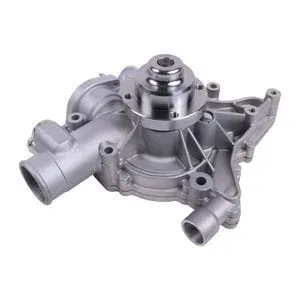
Matched Kit Shipped — Thermostat, gasket, and bushing verified against Cummins 4B/6B serial ranges before dispatch.
Technical Specifications
| Parameter |
Value |
| Part Number |
3917324 |
| Cross-Reference |
3920336, 3923331 (reference only) |
| Product Type |
Thermostat |
| Machine Fitment |
4B3.9, 4BT3.9, 4BTA3.9, 6B5.9, 6BT5.9, 6BTA5.9 |
| Brand Compatibility |
Cummins |
| Opening Temperature |
82°C ±2°C |
| Full Flow Temperature |
90°C |
| Gasket Material |
High-temperature nitrile rubber (150°C continuous service) |
| Bushing Material |
Machined brass (0.02 mm radial clearance) |
| Assembly State |
Thermostat with Gasket & Bushing |
| Certification |
ISO 9001, SAE J1927 |
| Warranty |
6-month standard warranty against manufacturing defects |
| MOQ |
1 piece |
Application Suitability
| Engine System |
Related Components |
| Coolant Regulation |
Thermostat housing, water pump assembly, radiator cap |
| Overhaul Support |
Cylinder head gasket, upper/lower engine gasket sets |
| Thermal Management |
Coolant temperature sensor, fan clutch assembly |
| Sealing Integrity |
Housing O-rings, heater core hoses, bypass tubes |
Systemic Overheating and the Rebuild Sequence
A Cummins Thermostat Kit engine rebuild requires addressing the root cause of thermal failure, not just the failed component.
When a B-series engine arrives*ad gaskets, the thermostat is often the victim, not the culprit. I have seen countless 6BT5.9 units return to the bay weeks after a "quick swap" because the underlying coolant degradation or water pump cavitation went undiagnosed. Replacing the valve without inspecting the entire cooling circuit leads to repeat failures that damage the reputation of the repair facility [NEED_CITE: cooling system cavitation and erosion-corrosion mechanisms in heavy-duty diesel engines].
The Cummins Thermostat Kit engine rebuild Within the Cooling Loop
This component sits at the intersection of the block and the radiator circuit. Its primary role is to maintain the thermal floor necessary for efficient combustion and oil film stability. When planning a Cummins Thermostat Kit engine rebuild, the focus must remain on the complete thermal loop, including the condition of the radiator tubes and the tension of the drive belts.
Serial Variants and Machining Tolerances
Cummins 4B and 6B engines have undergone numerous revisions over decades of production. The internal depth of the thermostat housing can vary between early mechanical and later electronic lift pump configurations. A Cummins Thermostat Kit engine rebuild must account for these housing variations to ensure the brass bushing seats correctly, preventing the bypass leakage that causes erratic gauge readings on the dash [NEED_CITE: thermostat housing variations across Cummins B-series production runs].
Thermal Actuation and Material Response
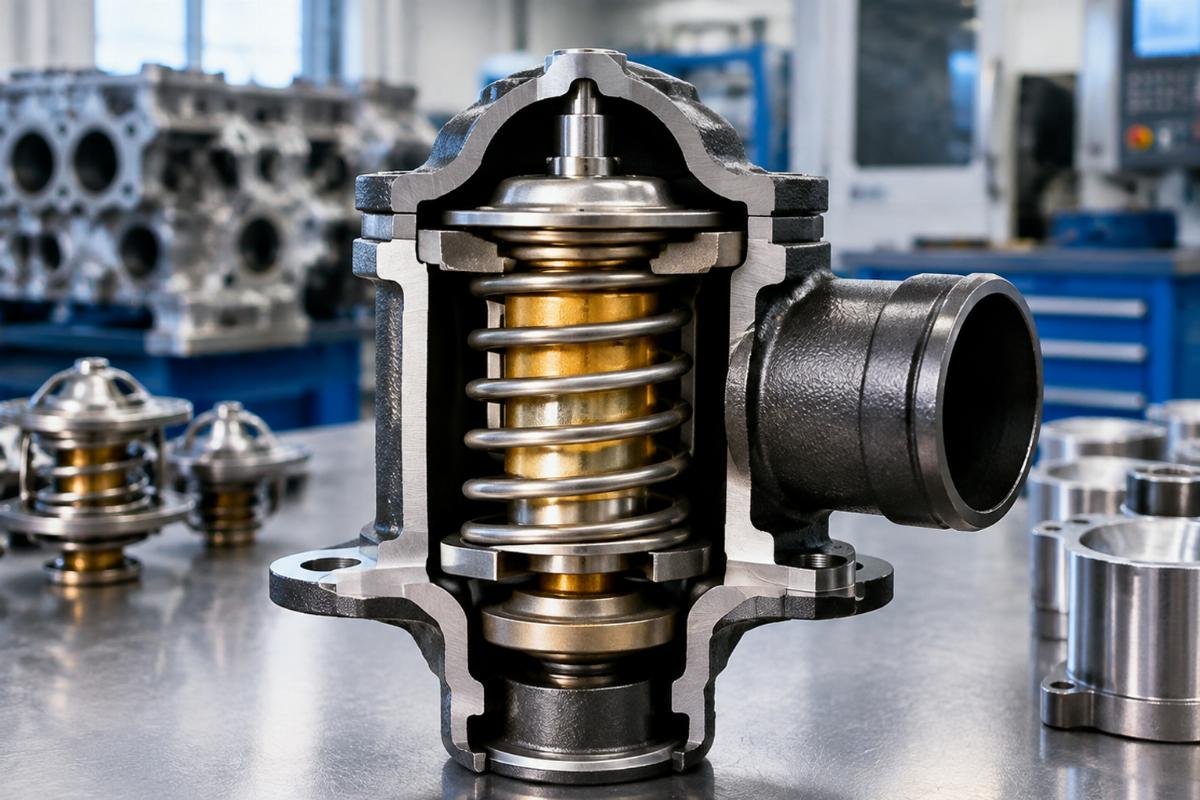
The wax element is calibrated to begin lifting at 82°C and reach full flow at 90°C. This specific curve prevents thermal shock when a loader or excavator transitions from idle to peak torque demand. The nitrile rubber gasket is formulated to resist modern OAT (Organic Acid Technology) coolants, maintaining its compression set resistance even after thousands of thermal cycles. If the material were too rigid, the housing would crack under vibration; if too soft, it would extrude under system pressure.

The Hidden Cost of Mismatched Components
Sourcing the valve, gasket, and bushing from different suppliers introduces tolerance stacking. If the bushing outer diameter is even marginally out of spec, the valve will chatter inside the housing. This vibration not only creates noise but accelerates wear on the housing bore, eventually*mins Thermostat Kit engine rebuild often results in the machine returning to the shop with "ghost" overheating issues that are difficult to diagnose on a standard test bench [NEED_CITE: effects of tolerance stacking in engine cooling system assemblies].
Sourcing Strategy for Rebuild Facilities
We maintain production and sourcing lines that ensure the gasket and bushing are matched to the valve's specific height and flow characteristics. Because we handle eight core categories, a facility can order the overhaul kit, the filtration, and the sealing components under a single account with unified warranty terms. Our technical team verifies compatibility against the engine serial number to ensure the correct variant is shipped, and we provide sample units for fitment confirmation before bulk commitments are finalized.
Documentation & Verification
- Commercial invoice detailing the matched set contents and HS codes for customs clearance.
- Cross-reference sheet linking 3917324, 3920336, and 3923331 for workshop identification (reference only).
- Batch-specific thermal cycling validation records confirming the 82°C to 90°C opening range.
- Warranty documentation covering the wax element calibration and gasket compression set integrity.
- Packing photographs showing the brass bushing and nitrile gasket protected from environmental damage.
Installation & Rebuild Sequence
- Clean the housing bore thoroughly to remove old gasket material and corrosion before installing the new brass bushing.
- Verify the thermostat orientation; the wax element must face into the engine block coolant passage.
- Inspect the housing mating surface for warping or pitting that could bypass the new nitrile rubber gasket.
- Torque housing bolts in a crisscross pattern to ensure even compression of the gasket material.
- Bleed the cooling system to remove air pockets that can cause localized hot spots and erratic valve operation.
Requesting Fitment Verification
To ensure the correct kit is supplied for your specific application, please provide the engine serial number and model designation (e.g., 4BTA3.9 vs. 4BT3.9). Including a photograph of the existing nameplate and the current thermostat housing helps our technical team identify any mid-production running changes or aftermarket modifications to the cooling circuit.
Frequently Asked Questions
Q: What is included in this kit and why are all three components necessary?
A: The kit contains the thermostat valve, a high-temperature nitrile gasket, and a machined brass bushing. Using all three ensures the radial clearance and sealing integrity are matched. Mixing components from different sources often leads to vibration-induced leaks and housing wear that compromise the entire rebuild.
Q: Do different Cummins 4B/6B engines use different variants?
A: Yes. Variations exist in housing depth and bypass port configurations across different serial ranges and applications. Providing the engine serial number is critical to ensure the brass bushing outer diameter and valve lift height match the specific casting on your machine.
Q: What other cooling system parts should be checked during replacement?
A: Technicians should inspect the water pump impeller for cavitation, the radiator core for internal scaling, and the pressure cap for proper holding force. Degraded coolant or air pockets in the system can cause a new thermostat to fail prematurely or respond erratically to load changes.
Q: Can I request a sample before ordering in bulk?
A: We supply sample units for fitment confirmation and functional testing. This allows rebuild shops to verify the brass bushing fit and gasket compression against their specific housing inventory before committing to a larger fleet maintenance order.
Q: How do I identify the correct part if the nameplate is missing?
A: If the serial plate is worn, provide clear photographs of the thermostat housing and the existing valve dimensions. Our team can often identify the correct engine variant by cross-referencing the housing casting numbers and the port arrangement on the block.