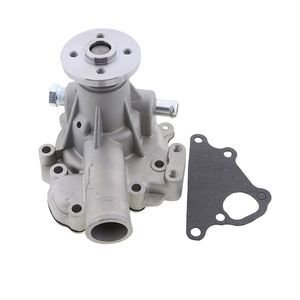
Matched Cooling Kits — Every Double V-Belt Sea Water Pump Pulley order verified against engine serial variants and shipped with matched belt profiles and seal kits for a complete seawater cooling loop overhaul.
Technical Specifications
| Parameter |
Value |
| Part Number |
21214596, 3858229, 3862487, 3812697 |
| Product Type |
Belt Pulley |
| Cross-Reference (reference only) |
21214596 / 3858229 / 3862487 / 3812697 |
| Machine Fitment |
4.3GIJWTR, 4.3GiPEFS, 4.3GIPWTC, 4.3GIPWTR, 4.3GL-A/B/C/D, 4.3GLPEFS, 4.3GLPWTC, 4.3GLPWTR, 4.3GSJWTR, 4.3GSPWTC, 4.3GSPWTR, 5.0GiPEFS, 5.0GiPWTR, 5.0GL-A/B/C/D/E, 5.0GLPEFS, 5.0GLPWTR, 5.7GL-A/B/C/D/E, 5.7GSIPEFS, 5.7GSIPWTR, 5.7GSiPWTRCE, 5.7GSPEFS, 5.7GSPWTR |
| Material |
High-strength cast iron with precision-machined groove surfaces |
| Surface Treatment |
Phosphate + oil anti-corrosion finish |
| V-Groove Included Angle |
34° |
| Runout Tolerance |
≤0.05 mm |
| Surface Hardness |
220–240 HB |
| Max Operating Speed |
up to 4,200 RPM |
| Sustained Torque Load |
120 Nm |
| Salt Spray Resistance |
96-hour neutral salt spray (NSS) per ASTM B117 |
| Condition |
New Aftermarket |
| Warranty |
6-month manufacturer defect warranty |
| MOQ |
1 piece |
Application Suitability
| Engine System |
Related Components |
| Seawater raw water cooling loop |
Raw water pump impeller, pump shaft seal, housing wear plate |
| Belt drive circuit |
Matched double V-belt, tensioner assembly, crankshaft pulley |
| Heat exchanger circuit |
Thermostat, heat exchanger gaskets, coolant hoses |
| Engine block cooling |
Circulation pump, temperature sender, bypass thermostat housing |
System Failures That Return Engines to the Bench Within Weeks
The pulley rarely fails alone — the belt, tensioner, and pump shaft seal all share the same degradation timeline.
In my years moving from parts catalog lookup into field technical support across African mining camps and coastal vessel fleets, the most frustrating call-backs involve seawater cooling components. A mechanic replaces a corroded or grooved Double V-Belt Sea Water Pump Pulley, the engine goes back in service, and weeks later the raw water flow drops again because the belt was mismatched, the tensioner spring was fatigued, or the pump shaft seal was weeping saltwater past the bearing. The entire seawater loop operates under continuous saltwater exposure and thermal cycling, so every component ages on a similar schedule. [NEED_CITE: marine engine seawater cooling system maintenance intervals]
Addressing the system rather than the single visible fault is what separates a lasting repair from a repeat teardown. When we identify a pulley order, we cross-check the engine serial and variant to confirm groove configuration, then advise on the matched belt profile, tensioner specification, and pump seal kit that belong in the same overhaul cycle.

Where This Pulley Sits Inside the Seawater Cooling Loop
The Double V-Belt Sea Water Pump Pulley transfers crankshaft torque to the raw water pump, which draws seawater through the heat exchanger to absorb engine block heat. If groove geometry drifts from the 34° specification or runout exceeds tolerance, the belt tracks poorly, slips under load, and the pump output drops — leading to elevated coolant temperatures that may not trigger an alarm until the engine is under sustained load. This pulley sits at the entry point of the entire cooling chain, so its condition directly governs every downstream component's thermal margin.
Matching Belt Profile, Tensioner Load, and Shaft Seal Condition
Replacing the pulley without verifying the double V-belt cross-section and the tensioner spring rate risks installing a geometrically correct part into a system that still slips. Equally, a pump shaft seal that has been weeping saltwater into the bearing cavity will destroy the new pulley's shaft interface within a short operating period. We recommend pulling the pump, inspecting the wear plate and impeller clearance, and replacing the seal alongside the pulley so the entire drive and pump assembly returns to baseline. [NEED_CITE: seawater pump shaft seal inspection criteria for marine diesel engines]
Decoding the Material and Geometry Specifications
The high-strength cast iron body is stress-relieved before machining, which prevents residual casting stresses from warping the pulley under sustained thermal cycling in an engine bay. The 34° V-groove included angle matches the original belt drive geometry so the belt seats fully without riding on the groove bottom or wearing at the edges. Runout held to ≤0.05 mm prevents the cyclic lateral loading that accelerates bearing fatigue at up to 4,200 RPM. Surface hardness of 220–240 HB resists groove deformation under 120 Nm sustained torque, which is typical when the raw water pump is moving full volume against heat exchanger backpressure. The phosphate and oil finish, tested to 96-hour NSS per ASTM B117, provides the baseline corrosion barrier that bare cast iron cannot survive in a saltwater-saturated environment.

What Happens When Groove Angle or Runout Is Wrong
A pulley machined to the wrong included angle — even a few degrees off — causes the belt to contact only at the groove edges, concentrating wear and generating heat that degrades the belt compound. Runout beyond tolerance introduces a rhythmic lateral force on every revolution, which fatigues the pump shaft bearing and accelerates seal failure. In a marine engine room where the raw water pump is often buried behind other components, these symptoms show up as a gradual temperature climb rather than a sudden alarm, and by the time the mechanic pulls the covers, both the new belt and the pump bearing are already damaged. The repair cost multiplies because a single unchecked parameter cascades through the entire seawater cooling circuit. [NEED_CITE: belt drive alignment and runout effects on marine auxiliary equipment]
Why Engine Rebuild Shops Source the Full System Here
We produce selected part lines in our own facility and source the remainder from qualified ISO-certified manufacturing partners, so both self-produced and sourced supply carry identical QC and warranty terms. Eight core categories mean the seawater pump pulley, matched V-belts, tensioner springs, impeller kits, and shaft seals all move under one account and one warranty. Minimum order from one piece supports the single-engine emergency teardown as well as the fleet-level overhaul program. Our technical team verifies cross-reference numbers 21214596 / 3858229 / 3862487 / 3812697 (reference only) against your engine serial and variant designation to confirm groove configuration before dispatch. Sample supply is available for fitment confirmation on first-time orders before you commit to a bulk cooling system kit. Guangzhou warehouse stock enables fast dispatch on the most common Volvo Penta marine variants.
Documentation & Verification
- Commercial invoice listing pulley part numbers and matched cooling components on a single document
- Cross-reference sheet confirming 21214596 / 3858229 / 3862487 / 3812697 against your engine serial (reference only)
- Dimensional inspection record covering groove angle, runout, and bore tolerance
- Six-month warranty terms covering manufacturing defects on both self-produced and sourced lines
- Packing photographs showing EPE foam protection inside individual corrugated boxes
- HS code and customs documentation support for marine parts import clearance
Installation & Rebuild Sequence
- Clean the pump shaft and inspect for scoring before pressing the new Double V-Belt Sea Water Pump Pulley onto the taper or keyway
- Verify pulley runout with a dial indicator after installation to confirm no distortion occurred during pressing
- Install matched double V-belt and set tensioner to specification, then rotate by hand to check tracking before first start
- Replace pump shaft seal and impeller wear plate in the same teardown to prevent saltwater ingress from negating the new pulley
- Run the engine at idle and verify raw water flow at the exhaust outlet before loading the vessel
Requesting a System-Matched Quote
Send your engine model designation (for example 5.7GSPWTR), the engine serial number from the identification plate, and any previous overhaul records noting oversize or replacement components already installed. If the nameplate is worn or painted over, a clear photograph of the existing pulley alongside a ruler or caliper allows our technical team to confirm groove count and diameter. We will return a consolidated quote covering the pulley, matched belt, tensioner, and pump seal kit so the entire seawater cooling loop ships as one verified package.
Frequently Asked Questions
Q: What other seawater cooling components should I replace alongside this pulley?
A: We recommend replacing the double V-belt, tensioner spring, pump shaft seal, and impeller wear plate in the same teardown. These components share the same saltwater exposure and operating hours, so replacing only the pulley leaves aged parts that will fail within the same service window. Provide your engine serial so we can assemble a matched kit with correct belt profile and seal dimensions.
Q: How do I confirm which cross-reference number applies to my engine variant?
A: The numbers 21214596, 3858229, 3862487, and 3812697 (reference only) map to different production runs and engine variant designations across the 4.3L, 5.0L, and 5.7L families. Share your full engine model code and serial number, and we cross-check against service manual records to confirm which pulley groove configuration and bore size your specific engine requires.
Q: What causes premature groove wear on seawater pump pulleys in marine service?
A: Saltwater mist accelerates corrosion on untreated surfaces, and a misaligned or fatigued tensioner causes the belt to track unevenly across the groove. Both mechanisms degrade the pulley faster than normal operating wear. The phosphate and oil finish on this pulley, verified to 96-hour NSS per ASTM B117, addresses the corrosion side, while replacing the tensioner alongside addresses the tracking side.
Q: Can I order a single pulley for an emergency repair, or is there a minimum batch?
A: Minimum order is one piece, which supports the emergency single-engine teardown where the vessel cannot wait for a full fleet overhaul cycle. For scheduled maintenance programs covering multiple engines, consolidating pulleys, belts, and seal kits into one shipment reduces freight cost per unit and ensures all components arrive together for the planned service window.