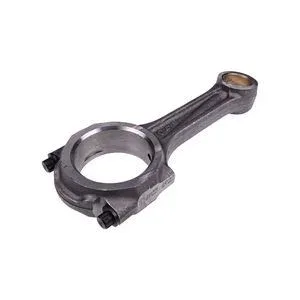
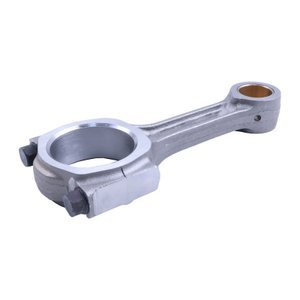
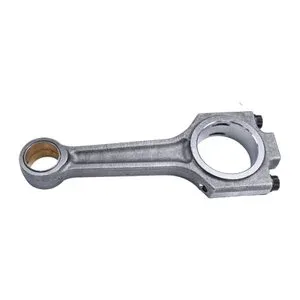
Matched Assembly Dispatch — connecting rod 4956017 paired with graded bearings and piston sets based on engine serial history, preventing tolerance stack-up during B3.3 rebuilds.
Technical Specifications
| Parameter |
Value |
| Part Number |
4956017 |
| Product Type |
Connecting Rod |
| Cross-Reference |
4956017 (reference only) |
| Machine Fitment |
Cummins B3.3, QSB3.3 |
| Compatible Engine Brand |
Cummins |
| Condition |
New Aftermarket |
| Warranty |
3-12 months against manufacturing defects |
| Minimum Order Quantity |
1 piece |
| Production Standard |
ISO Certified |
| Application Sector |
Compact excavators, skid steer loaders, agricultural machinery, mining equipment |
Application Suitability
| Engine System |
Related Components |
| Rotating Assembly |
Piston, piston pin, and circlip set matched to rod weight class |
| Bottom End Rebuild |
Con rod bearing shells sized for standard or reground crankshaft journals |
| Cylinder Block |
Main bearings and thrust washers aligned with rod bore tolerances |
| Lubrication Circuit |
Oil pump relief valve and nozzle checks to prevent repeat starvation failure |
Overhaul Kits Miss the Specific Grade Your Engine Build Actually Requires
The replacement connecting rod must match the crankshaft journal condition and prior rebore history of your specific B3.3 or QSB3.3 engine.
An overhaul kit labeled complete often ships with standard-grade bearing shells, yet the crankshaft sitting on your bench has already been reground to an undersize during the last rebuild cycle. I have opened crates where the rod was correct but the shells were two grades out, forcing an emergency re-order while the block sat disassembled on the stand. This mismatch is the most common cause of repeat teardowns in compact engine overhauls [NEED_CITE: engine bearing clearance selection standards for reground crankshafts]. The Connecting Rod overhaul sequence demands that the rod, bearing shell grade, and piston assembly are verified as a dimensional set, not sourced from separate checklists.

The Rotating Assembly as a Dimensional Set
The Connecting Rod engine rebuild process does not treat the rod as an isolated line item. The big-end bore of the rod must accept a bearing shell that yields the specified oil film clearance on the crankshaft journal it will ride on. When a QSB3.3 has seen a previous regrind, that journal is no longer standard diameter, and the rod must be paired with undersize shells to compensate. Sourcing the rod without confirming journal condition means the assembly will either run too tight and overheat or too loose and hammer.
Prior Rebuild History Dictates Component Grade
If the engine has been overhauled before, the connecting rod big-end bore may have been honed or the cap replaced at some point in its service life. A rod ordered to standard dimensions will not achieve correct crush height with a shell that is supposed to compensate for a bore that has already been altered. We cross-check the engine serial number and any recorded rebuild history to confirm whether the rod variant required is the original specification or a service-grade alternative that accounts for accumulated machining history [NEED_CITE: Cummins B3.3 connecting rod variant differences by serial range].
Root Cause Analysis Before Reassembly
A rod that failed in service rarely failed alone. Bearing spin on a B3.3 is frequently preceded by lubrication starvation from a clogged oil passage or a worn oil pump that was not addressed during the last service interval. Dropping in a new Connecting Rod without resolving the oil supply deficit means the replacement will experience the same failure mode within a similar operating window. The rebuild must address the system fault, not merely swap the component that showed the symptom.
Dimensional Parameters That Determine Fit
The center distance between the big-end and small-end bores defines the piston position at top dead center and therefore the compression ratio and valve-to-piston clearance. A rod that deviates from the specified center distance will alter combustion geometry and can cause interference in tight-clearance compact engines like the B3.3. The small-end bore must accept the piston pin with the correct interference or clearance fit depending on whether the pin is full-floating or press-fit in that particular engine variant. Big-end bore diameter and out-of-round tolerances determine bearing crush and oil clearance simultaneously [NEED_CITE: connecting rod dimensional inspection criteria for diesel engines].
What Happens When the Grade Is Wrong
A standard shell pressed into a rod that is mating with a reground journal will have excessive clearance from the first startup. The oil pressure will bleed off at that bearing before reaching downstream main bearings, causing a low-pressure fault and accelerated wear across the entire bottom end. Conversely, an undersize shell in a standard bore will crush too hard, restricting oil flow and generating localized heat that leads to rapid shell wiping. Both scenarios result in a teardown that could have been avoided by confirming grade at the ordering stage rather than at the assembly bench.
Sourcing as a Verified System
We supply the connecting rod as part of a matched set that includes the correctly graded bearing shells, piston pin, and small-end bushing for your specific engine serial. Our technical team verifies the variant required by cross-referencing your engine number against known production splits within the B3.3 and QSB3.3 families where rod bolt specifications and big-end diameters differ between early and late builds. Single-piece orders are fulfilled from stock for emergency single-cylinder repairs, while full four-rod sets are prepared with matched weight class for balanced reassembly. Quality inspection records covering big-end bore, small-end bore, and center distance ship with every consignment. Sample supply is available so you can confirm fitment on your bench before committing to a full overhaul kit order.
Documentation & Verification
- Commercial invoice listing rod variant and matched bearing shell grade for customs clearance.
- Cross-reference sheet marking OEM interchange numbers as reference only, with verified superseded part coverage.
- Dimensional inspection record showing big-end bore, small-end bore, and center distance measurements.
- Warranty certificate specifying coverage terms against manufacturing defects for 3 to 12 months.
- Pre-shipment packing photographs confirming part identity and protective wrapping.
Installation & Rebuild Sequence
- Clean rod and cap separately; verify matching scribed numbers before bearing installation.
- Plastigauge oil clearance with correct-grade shells installed and cap torqued to specification.
- Confirm side play on crankshaft journal after all rods are installed and before oil pan closure.
- Prime lubrication system before first cranking to prevent dry-start bearing damage.
Confirm Your Engine Build Before Ordering
Provide the engine serial number from the dataplate and note whether the crankshaft has been reground, so we can confirm the correct connecting rod variant and bearing shell grade for your specific B3.3 or QSB3.3 rebuild.
Frequently Asked Questions
Q: What other components should be replaced together with the connecting rod during a rebuild?
A: The connecting rod should be installed as part of a matched rotating assembly. This includes graded con rod bearing shells sized to the actual crankshaft journal diameter, a piston set with rings appropriate for the cylinder bore condition, piston pin and circlips, and small-end bushings if the rod uses a press-fit pin. Replacing the rod alone while reusing fatigued bearings or out-of-spec pistons invites early repeat failure [NEED_CITE: diesel engine overhaul matched component replacement standards].
Q: My crankshaft has been reground — how do I select the correct bearing shell grade for this rod?
A: The bearing shell grade is determined by the finished diameter of the reground journal, not by the rod itself. Measure the journal with a micrometer to confirm whether it is at standard, 0.25 mm, or 0.50 mm undersize. The connecting rod big-end bore is standard; the undersize compensation happens entirely within the shell thickness. Order shells that match the measured journal, and we will pair them with the correct rod variant.
Q: Do all B3.3 and QSB3.3 engines use the same connecting rod, or are there serial-range variants?
A: There are variant differences within the B3.3 and QSB3.3 family that affect rod bolt specification and big-end bore diameter across different production periods. An early-build engine may require a different rod bolt torque specification than a later serial range. Providing the full engine serial number allows us to verify the exact variant required and prevent fitment issues during assembly.
Q: What caused the original rod to fail, and how do I prevent repeat failure after rebuild?
A: Connecting rod failure in these engines commonly traces to lubrication starvation from clogged oil galleries, overloading from sustained high-rpm operation, or bearing spin initiated by incorrect clearance in a prior rebuild. Prevent repeat failure by verifying oil pump output and gallery cleanliness during the overhaul, confirming bearing clearance with Plastigauge rather than assumption, and addressing any root cause identified during disassembly.
Q: Can I get a sample rod to verify fitment before committing to a full overhaul set?
A: Yes. We supply a single connecting rod as a fitment sample so you can verify big-end bore compatibility, small-end pin fit, and bearing shell crush on your actual engine before ordering the complete set of four. This is standard practice for rebuild shops encountering an engine with uncertain rebuild history or non-standard machining from a prior overhaul cycle.