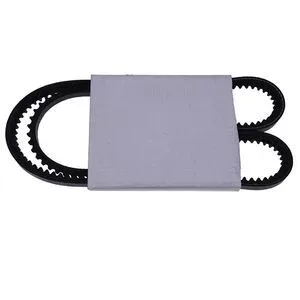
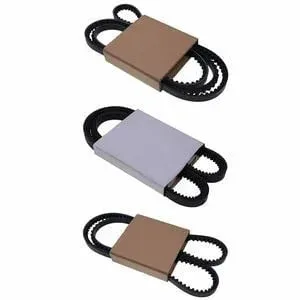
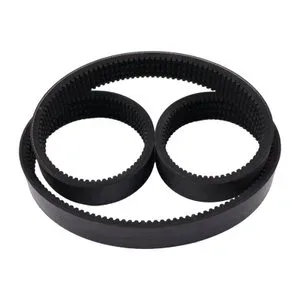
Engine Sequence Variants Confirmed — every Cooling Fan Belt 6669034 (cross-reference only) ships after engine serial verification to prevent length or routing mismatch across Bobcat skid steer builds.
Technical Specifications
| Parameter |
Value |
| Part Number |
6669034 |
| Product Type |
Cooling Fan Belt |
| Cross-Reference |
6669034 (reference only) |
| Machine Fitment |
Bobcat 751, 753, 763, 773, S130 Skid Steer Loader |
| Belt Section |
11×1055LA |
| Width |
11mm |
| Thickness |
8mm |
| Inner Circumference |
1005mm |
| Outer Circumference |
1005mm |
| Cord Material |
Internal polyester cords |
| Body Material |
Heat and oil resistant rubber |
| Condition |
New Aftermarket |
| Warranty |
3–12 months against manufacturing defects |
| Production Standard |
ISO |
Application Suitability
| Engine System |
Related Components |
| Cooling fan drive circuit |
Fan tensioner assembly, idler pulley, fan hub bearing |
| Engine front-end accessory drive |
Crankshaft pulley, water pump pulley, alternator bracket alignment |
| Thermal management overhaul |
Thermostat housing gasket, coolant hoses, fan shroud fasteners |
| Scheduled cooling system service |
Belt guard hardware, pulley cleaning solvent, tension gauge |
Why the Cooling Fan Belt Fails Before Its Time
A Cooling Fan Belt engine replacement rarely fails from age alone — the root cause usually sits in the adjacent hardware.
Replacing the belt without inspecting the tensioner spring force and pulley runout leaves the original fault active, so the new belt absorbs the same misalignment and heat cycling that destroyed its predecessor. In the workshop I worked in outside Jakarta, we saw skid steer loaders return within weeks of a belt swap because nobody checked whether the fan hub bearing had developed axial play. The belt was blamed; the bearing was the culprit. [NEED_CITE: engine front-end accessory drive alignment verification procedures]
Verify the tensioner, pulley, and fan hub before the new belt goes on — the belt is the symptom, not the system fault.

The Cooling Circuit This Belt Actually Drives
The fan belt sits at the front of the engine accessory drive and transfers crankshaft rotation to the cooling fan, which pulls air through the radiator core during heavy cycle work. On Bobcat 751 and 753 skid steer loaders operating in high-ambient conditions, the fan runs under continuous load whenever the engine is above idle. A Cooling Fan Belt engine replacement must match the original routing path and groove profile so the fan reaches design speed at rated RPM — any slip reduces airflow and raises coolant temperature under load. Pairing the belt with a verified tensioner and true-running pulley keeps the entire thermal management circuit operating within the engine's design envelope.
Engine Serial Variants That Change the Belt You Need
Bobcat skid steer loaders across the 751 through 773 and S130 range were built with different engine platforms over successive production years. The same machine model badge can carry an engine that uses a different belt length or a different number of grooves on the crankshaft pulley. Confirming the engine serial number — not just the machine model — rules out these variant differences before the order ships. [NEED_CITE: engine serial identification methods for skid steer loader powerplants] An engine that went through a previous rebuild may also have a replacement crankshaft pulley with a slightly different outer diameter, which shifts the effective belt circumference required. We cross-check engine serial and rebuild history against the belt specification so the part that arrives matches the engine on the bench, not just the model on the data plate.
Reading the Specifications That Matter in the Engine Bay
The 11mm width and 8mm thickness define how the belt seats in the pulley groove — too narrow and it rides low, losing grip and generating excess heat; too thick and it sits proud, wearing on the groove edges. The 1005mm circumference must align with the tensioner's adjustment range: a belt outside that range either over-stretches the tensioner spring or cannot be installed without forcing the fan hub. Heat and oil resistant rubber compound handles the sustained engine bay temperature and occasional oil mist from crankcase breather discharge. Internal polyester cords resist elongation under continuous load — without cord reinforcement, a rubber-only belt would stretch past the tensioner's compensation range within a few hundred operating hours. Together, these four parameters determine whether the belt survives the first hot shift in a tropical yard or fails before the next scheduled service.
What Happens When the Wrong Belt Goes On
A belt that is one groove-width off in length will install but run at the wrong tension — too loose causes slip and glazing on the pulley faces, too tight loads the fan hub bearing and accelerates its failure. We have seen machines leave the shop with a fresh belt only to return with a seized fan bearing because overtensioning was never corrected. [NEED_CITE: belt tension effects on front-end accessory bearing life] A belt with the wrong compound may appear identical on the shelf but softens and cracks within weeks when exposed to sustained engine bay heat and oil vapor. These failures look like bad luck; they are specification errors that only surface after the machine returns to work.
What We Bring to This Specific Part
Our own production lines and qualified sourced supply both carry the same QC protocol and warranty terms, so a Cooling Fan Belt engine replacement from either channel meets identical inspection standards. Eight product categories under one account mean the tensioner, pulley, thermostat gasket, and coolant hoses ship in the same consignment as the belt — one invoice, one tracking number. Minimum order is one piece, which matters when a single machine is down and the workshop needs exactly one belt plus the adjacent hardware. Part identification works from the part number, the machine model, a photograph of the old belt, or an image of the nameplate. Our cross-reference verification covers superseded numbers and alternate references so variant engines are caught before dispatch. A sample can ship ahead of a bulk order so the workshop confirms fitment on the actual engine before committing to fleet quantity.
Documentation & Verification
- Commercial invoice and packing list referencing engine serial and belt specification
- Compatibility and cross-reference sheet marked reference only for OEM interchange numbers
- Dimensional inspection record covering width, thickness, and circumference tolerance
- Warranty terms document stating coverage period and manufacturing defect scope
- Packing photographs showing belt condition and labeling before crate closure
- HS code and customs documentation for engine drive belt import classification
Installation & Rebuild Sequence
- Verify crankshaft and fan pulley runout with a dial indicator before fitting the new Cooling Fan Belt engine replacement
- Clean all pulley grooves of rubber residue and oil film to restore full belt-to-groove contact
- Route the belt per the engine diagram, confirming it seats fully in every pulley groove without twisting
- Set tensioner to the midpoint of its adjustment range, then rotate the engine two full cycles by hand
- Run the engine to operating temperature, recheck tension, and inspect for lateral walking on the pulleys
Requesting a Quotation for Your Engine Build
Send the engine serial number and any known rebuild history so we can confirm the correct belt circumference and routing for your specific engine variant. If the nameplate is unreadable, a photograph of the old belt with any remaining markings and a shot of the pulley layout is enough for our technical team to verify compatibility. Include the machine model and approximate operating hours so we can flag related cooling system components that typically need attention at the same service interval.
Frequently Asked Questions
Q: What other engine cooling components should be replaced together with the fan belt?
A: The tensioner assembly and idler pulley should be inspected for spring force and bearing play during every belt change. Fan hub bearings, coolant hoses, and thermostat housing gaskets often reach replacement condition at the same service interval. Supplying these as a matched set with the Cooling Fan Belt engine replacement avoids a second teardown and keeps the entire cooling circuit rebuilt to a consistent standard.
Q: How do I confirm the correct belt for my specific engine serial number?
A: Provide the engine serial number stamped on the block — not just the machine model — so we can cross-reference the belt routing and circumference against the correct engine build. If the plate is worn, a photograph of the old belt and the pulley arrangement allows our technical team to verify the specification before the order ships.
Q: My previous rebuild changed the pulley — does the same belt still fit?
A: A replacement crankshaft or fan pulley from a prior rebuild may have a different outer diameter or groove profile that changes the effective belt length required. Send a photograph and measurement of the current pulley along with the engine serial so we can confirm whether the original belt specification still applies or a variant length is needed.
Q: What system-level faults cause premature fan belt failure beyond normal wear?
A: Pulley misalignment, worn fan hub bearings with axial play, and a fatigued tensioner spring all transfer abnormal loads to the belt. Oil mist from a leaking crankcase breather degrades the rubber compound. Identifying and correcting these root causes during the Cooling Fan Belt engine replacement prevents the new belt from repeating the same early failure cycle.
Q: Can you supply a matched set including tensioner and pulley for the same engine build?
A: Yes. We supply the tensioner assembly, idler pulley, and any adjacent drive components matched to your engine serial under the same QC protocol and warranty terms. Shipping them together with the belt in one consignment eliminates split deliveries and ensures every component in the front-end accessory drive is verified for the same engine variant.