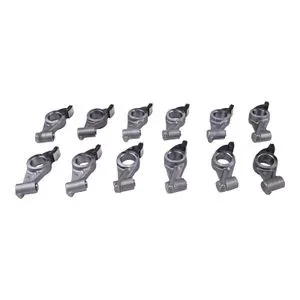
Matched Tolerance Set — Crankshaft journal condition and bearing grade verified against this Connecting Rod 8980139624 before dispatch, ensuring closed-loop clearances for Isuzu 4JG1 and 4JG2 overhauls.
Technical Specifications
| Parameter |
Value |
| Part Number |
8980139624 |
| Product Type |
Connecting Rod |
| Cross-Reference |
8-98013-962-4, 8972892630, 8972892631, 8980139620, 8980139621, 8980139623, IZ-8980139624, IZ-8972892630, IZ-8972892631, IZ-8980139620, IZ-8980139621, IZ-8980139623, 8-97289263-0, 8-97289263-1, 8-98013962-0, 8-98013962-1, 8-98013962-3 (reference only) |
| Machine Fitment |
John Deere 75C, John Deere 80C |
| Engine Compatibility |
Isuzu 4JG1, Isuzu 4JG2 |
| Material |
Forged steel |
| Surface Treatment |
Heat treated, anti-rust oil coating |
| Bore Tolerance |
±0.005 mm (big-end and small-end bores) |
| Certification |
ISO 9001, SAE J431 G102 |
| Condition |
New Aftermarket |
| Warranty |
3–12 months against manufacturing defects |
| MOQ |
1 piece |
Application Suitability
| Engine System |
Related Components |
| Bottom-end rotating assembly |
Con rod bearings, main bearings, crankshaft |
| Piston-to-rod assembly |
Pistons, piston pins, circlips, wrist pin bushings |
| Lubrication circuit |
Oil pump, oil filter, oil cooler, gallery jets |
| Sealing and gasket system |
Head gasket, sump gasket, crankshaft seals, overhaul gasket set |
| Cooling system interface |
Cylinder liner cooling passages, thermostat housing |
Why a New Connecting Rod Fails Before the Next Oil Change
A replacement Connecting Rod 8980139624 fails prematurely when the underlying cause of the original failure goes unaddressed.
In Nigerian mining sites and Kenyan quarry operations, I have pulled apart Isuzu 4JG1 and 4JG2 engines where the connecting rod was swapped during a rebuild, only for the engine to knock again within a few hundred hours. The rod itself was rarely the root cause. More often, the crankshaft journals had been ground during a prior overhaul and undersize bearings were never fitted, or contaminated oil starved the big-end bearing until it spun and damaged the rod bore. Replacing the connecting rod without tracing the fault back through the lubrication and bearing systems invites the same failure pattern [NEED_CITE: common root causes of connecting rod bearing failure in medium-duty diesel engines]. The cost of a second teardown far exceeds the time spent on proper diagnosis before the rebuild begins.

The Cranktrain System This Connecting Rod Belongs To
The Connecting Rod 8980139624 sits at the centre of the cranktrain, transferring combustion force from the piston assembly through to the crankshaft. Its big-end bore must maintain precise roundness and diameter to support the con rod bearing shell, while the small-end bore aligns with the piston pin bushing. When any adjacent component — the bearing shell, the piston, the crankshaft journal — is out of specification, the connecting rod absorbs the mismatch as uneven loading. This is why sourcing this rod as part of a matched set, with correctly graded bearings and verified piston assemblies, matters more than the rod alone.
How Previous Rebuilds Change What You Need Today
An Isuzu 4JG2 engine arriving for its second or third overhaul may have crankshaft journals that were ground to an undersize dimension during a prior rebuild. If the previous shop installed standard-size bearing shells on a ground journal, the oil clearance was too large, leading to oil pressure loss and eventual bearing failure. When you order a replacement connecting rod, you must confirm whether the crankshaft is at standard, 0.25 mm undersize, or further — and match the bearing grade accordingly [NEED_CITE: crankshaft journal undersize grading standards for Isuzu 4JG series engines]. Engine serial numbers across the 4JG1 and 4JG2 production runs also shift internal specifications, so confirming the exact build variant prevents receiving a rod with the wrong big-end bore diameter.
Reading the Specifications That Matter on the Shop Floor
The ±0.005 mm bore tolerance on both the big-end and small-end directly governs oil film thickness and piston pin fit. A big-end bore that drifts outside this band will either crush the bearing shell too tightly, blocking oil feed holes, or leave excessive clearance that drops oil pressure at operating temperature. The forged steel construction and heat treatment provide the tensile strength needed to withstand peak cylinder pressures in continuous digging and trenching applications. The anti-rust oil coating protects the machined surfaces during storage and transit — a practical concern when parts ship to humid or coastal job sites and may sit in a container for weeks before installation. These specifications are verified under ISO 9001 and SAE J431 G102 standards, covering material grade and dimensional consistency across production batches.
What Happens When the Bearing Grade Does Not Match
Installing a standard-grade bearing shell on a crankshaft that has already been ground to undersize produces excessive oil clearance from the first startup. The oil film cannot sustain hydrodynamic pressure, metal-to-metal contact begins within hours, and the bearing material transfers onto the journal surface. The connecting rod big-end bore then deforms under impact loading, making the new rod unusable. On a John Deere 75C or 80C excavator working in a remote quarry, this means another full engine teardown, another set of gaskets and seals, and another week of machine downtime [NEED_CITE: economic impact of repeat engine overhauls due to incorrect bearing selection]. Checking crankshaft journal dimensions with a micrometer before ordering the connecting rod and bearings eliminates this failure mode entirely.
What This Supply Arrangement Covers
Selected connecting rod lines are produced in our own Guangzhou facility, with the remainder sourced from ISO-certified manufacturing partners — both carry identical quality control and warranty terms. Eight product categories, from engine internals to seal kits and hydraulic components, ship under one account so a complete overhaul list dispatches as a single consignment. Orders start from one piece, which matters when a single cylinder needs a rod replacement rather than a full engine rebuild. Part identification works from the part number, machine model, a photograph of the old component, or a nameplate image — useful when the original stamping is worn or painted over. Cross-reference verification covers superseded numbers such as 8972892630 and 8972892631, and sample units are available for fitment confirmation before bulk commitment. A technical team reviews bearing grade and compatibility questions before dispatch [NEED_CITE: aftermarket connecting rod quality control and dimensional inspection procedures].
Documentation & Verification
- Commercial invoice listing each connecting rod with bore grade and quantity
- Cross-reference sheet mapping superseded Isuzu numbers for identification purposes
- Dimensional inspection record covering big-end and small-end bore roundness
- Warranty terms covering manufacturing defects for 3 to 12 months
- Packing photographs confirming anti-rust coating and protective packaging condition
- HS code and customs documentation support for cross-border shipment
Installation & Rebuild Sequence
- Verify crankshaft journal dimensions with a micrometer before fitting new bearing shells to this connecting rod
- Clean all oil passages in the rod and block to prevent contamination reaching the big-end bearing
- Torque connecting rod bolts to specification in stages, then check big-end bore roundness after tightening
- Confirm piston-to-rod assembly weight grouping matches across all cylinders for balance
- Run initial break-in at moderate load and monitor oil pressure for the first operating hours
Send Your Engine Details for a Matched Overhaul Quote
Provide the Isuzu engine model, serial number, and any known rebuild history — including whether the crankshaft has been ground — so we can confirm the correct connecting rod variant and bearing grade. If the nameplate is illegible, a photograph of the old rod stamping or the cylinder block casting number works for identification. We will return a matched component list covering rods, bearings, pistons, and gaskets as a single overhaul package.
Frequently Asked Questions
Q: What else should I replace when installing a new connecting rod?
A: At minimum, replace the con rod bearing shells and rod bolts. If the engine is fully dismantled, include main bearings, piston rings, the full gasket set, and crankshaft seals. Sourcing these as a matched overhaul kit ensures all components align with the same tolerance grade and engine serial variant, reducing the risk of a mismatch that causes early re-failure.
Q: How do I know if my crankshaft needs undersize bearings after a previous rebuild?
A: Measure each crankshaft journal with a micrometer and compare the readings to the Isuzu 4JG1 or 4JG2 service manual specifications. If any journal reads below the standard minimum diameter, the crankshaft was ground during a prior overhaul and requires undersize bearing shells. We can confirm the correct grade once you share the measurements.
Q: Are the connecting rods for Isuzu 4JG1 and 4JG2 interchangeable?
A: They share the same base engine architecture, but internal specifications shifted across production runs and serial number ranges. Big-end bore diameter, rod length, and weight grouping may differ between variants. Confirming your engine serial number before ordering ensures you receive the correct connecting rod rather than a visually similar but dimensionally incompatible part.
Q: What caused the original connecting rod to fail and how do I prevent it?
A: Common causes include oil starvation from a blocked gallery or failed oil pump, contaminated lubricant damaging the bearing surface, or overloading beyond the engine's rated duty cycle. Replacing the rod without addressing the root cause leads to repeat failure. Inspect the lubrication system, check oil filter condition, and verify the oil cooler for internal leaks before reassembly.
Q: Can I get a complete overhaul kit including this rod, bearings, pistons, and gaskets?
A: Yes. We supply matched overhaul kits containing connecting rods, graded bearing shells, piston assemblies, and full gasket sets configured for your specific engine serial number. This approach ensures all internal clearances are compatible and the entire bottom-end assembly is renewed together, which is critical for engines entering their second or third rebuild cycle.


![10437 → 数字之和:1+0+4+3+7 = 15 句式结构:15 % 6 = 3 → [品牌/机型]-Compatible [品类词] – [站点修饰词] 目标站 xunpomachineryparts.com 措辞池:Engine Grade / Rebuild Kit / Matched Set / Overhaul Component / Powertrain / System-Matched (6个) 修饰词选取:15 % 6 = 3 → Overhaul Component Kubota-Compatible Connecting Rod Bolt 16851-22140 – Overhaul Component](https://xunpomachineryparts.com/wp-content/uploads/2026/09/10437-e28692-e695b0e5ad97e4b98be5928cefbc9a10437-15-e58fa5e5bc8fe7bb93e69e84efbc9a15-6-3-e28692-e59381e7898c-e69cbae59e8b-compatible-caf57e.webp)