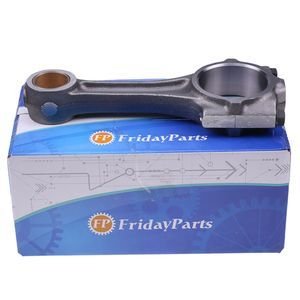
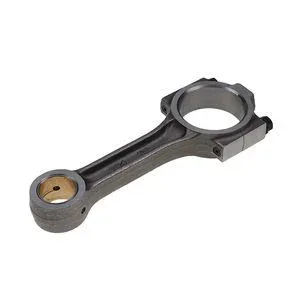
Matched Rebuild Sets — connecting rod shipped with grade-matched bearings and piston pins to prevent dimensional mismatch during Kubota V-series overhauls.
Technical Specifications
| Parameter |
Value |
| Product Type |
Connecting Rod |
| Part Number |
17311-22010 |
| Cross-Reference |
17311-22012, 17331-22010, 17311-22013 (for identification purposes) |
| Engine Compatibility |
Kubota V1500, V1702DI, V1902DI, V2003-T |
| Machine Fitment |
Kubota KX121-2, KX121-3, KX161-3, KX91-3, U35, U45S, R420, R510, R520, L2250DT through L5450DT, M4030 through M5700HD, MX5000 series |
| Material |
High-strength forged steel |
| Surface Treatment |
Phosphate coating |
| Big-End Bore Tolerance |
±0.01 mm |
| Pin-Hole Concentricity Tolerance |
±0.005 mm |
| Bearing Surface Finish |
Ra ≤ 0.4 μm |
| Condition |
New Aftermarket |
| Warranty |
3–12 months against manufacturing defects |
| Standards |
ISO 9001, ISO 683-4:2018, SAE J1995 |
Application Suitability
| Engine System |
Related Components |
| Bottom-end assembly overhaul |
Matched con rod bearing shells in STD, 0.25, and 0.50 oversize grades |
| Single-cylinder rod or bearing replacement |
Piston pin, circlips, and small-end bushing matched to engine serial variant |
| Crankshaft journal regrind coordination |
Oversize bearings selected to match reground journal diameter |
| Full V-series engine rebuild |
Piston rings, main bearings, thrust washers, and complete gasket set |
| Lubrication system fault investigation |
Oil pump, gallery plugs, and crankcase breather components |
Why the Same Connecting Rod Number Ships in Multiple Variants
The correct connecting rod depends on engine serial variant, crankshaft journal condition, and prior rebuild history — not the part number alone.
I have handled V1500 overhauls where a standard connecting rod sat on the bench while the crankshaft had already been ground to 0.25 undersize at a previous shop. The bearings did not match, the clearances were wrong, and the engine came back apart before the paint dried [NEED_CITE: engine rebuild dimensional matching standards]. A connecting rod is not a standalone purchase. It belongs inside a system of tolerances — the big-end bore, the crankshaft journal, the piston pin diameter, and the bearing shell grade all have to agree before the first bolt is torqued.
Kubota V-series engines across the V1500, V1702DI, V1902DI, and V2003-T platforms share a common connecting rod lineage, but pin bore diameters and big-end bore sizing vary across engine serial ranges. Ordering by part number without checking the engine build sheet is how rebuild shops end up with rods that physically fit but dimensionally drift outside acceptable clearance after a few hundred operating hours.

Bottom-End Assembly: Where This Connecting Rod Lives
The connecting rod sits at the center of the Kubota V-series bottom-end assembly, transferring combustion force from the piston to the crankshaft journal. When one rod fails, the question is never just about replacing that single rod. The adjacent bearings, the condition of the crankshaft journal surface, and the small-end bushing all participated in the same operating environment. An engine system rebuild approach treats the connecting rod as one node in a matched set — paired with bearing shells in the correct oversize grade and piston pins verified against the specific engine serial variant.
Prior Rebuild History Determines What You Actually Need
A connecting rod ordered at STD grade will not work if the crankshaft was already ground to 0.25 or 0.50 undersize during a previous overhaul [NEED_CITE: crankshaft regrind and bearing oversize grade selection procedures]. Many Kubota V-series engines in excavators and tractors have been through at least one rebuild cycle by the time they reach a shop for the second time. Before ordering, the crankshaft journal diameter must be measured and the correct oversize grade confirmed. This connecting rod is available for pairing with STD, 0.25, and 0.50 oversize bearing shells. Engine serial variants across the V1500, V1702DI, V1902DI, and V2003-T platforms introduce differences in pin bore diameter and big-end bore sizing that affect which variant of this connecting rod is dimensionally correct for a given engine.
Dimensional Tolerances and What They Mean in Practice
The big-end bore tolerance of ±0.01 mm and pin-hole concentricity tolerance of ±0.005 mm define how precisely this connecting rod maintains alignment between the crankshaft journal and the piston pin under cyclic loading. The bearing surface finish at Ra ≤ 0.4 μm supports hydrodynamic oil film formation at the big end, which is the primary defense against metal-to-metal contact during high-load operation [NEED_CITE: bearing surface finish and oil film integrity in diesel engine connecting rods]. High-strength forged steel provides the fatigue resistance needed for the tensile and compressive reversal cycles that a connecting rod endures in a Kubota V-series diesel. Phosphate coating on the rod body aids initial break-in by providing a sacrificial surface layer that reduces friction during the first operating hours before full hydrodynamic lubrication is established.
The Cost of Skipping System-Level Verification
When a connecting rod is ordered without confirming the crankshaft journal condition or the engine serial variant, the mismatch does not announce itself at assembly. It shows up later — as premature bearing wear, as knocking that develops under load, or as rod bolt failure after a few hundred hours of operation [NEED_CITE: connecting rod failure modes related to dimensional mismatch]. Shops that skip the system-level check end up pulling the engine back out, splitting the block again, and replacing not just the rod but the bearings, possibly the crankshaft, and whatever collateral damage the misalignment caused. The rebuild labor cost multiplies while the machine sits idle a second time.
Why Source the Complete Rebuild Set Here
This connecting rod ships alongside matched bearing shells, piston pins, rings, gasket sets, and thrust washers under one account and one warranty — whether the rod comes from our own production line or a qualified manufacturing partner. Eight product categories mean a complete V-series overhaul list consolidates into one consignment, avoiding the situation where bearings arrive from one supplier and the gasket set from another on different schedules. Part identification works from the part number, the machine model, or a photograph of a worn nameplate. Cross-reference verification covers superseded numbers like 17311-22012, 17331-22010, and 17311-22013 to confirm dimensional equivalence before anything ships. Samples are available for fitment confirmation before bulk commitment, and our technical team confirms oversize grade and engine serial variant compatibility before the order is finalized.
Documentation & Verification
- Commercial invoice and packing list referencing engine serial and oversize grade
- Part compatibility and cross-reference sheet for 17311-22010 variants marked reference only
- Dimensional inspection record covering big-end bore and pin-hole concentricity
- Warranty terms covering manufacturing defects for 3–12 months
- Packing photographs taken before crate closure
- HS code and customs documentation support for cross-border shipments
Installation & Rebuild Sequence
- Clean all oil galleries and crankshaft journals before connecting rod assembly to prevent contamination scoring
- Verify crankshaft journal diameter and select matching STD, 0.25, or 0.50 oversize bearing shells
- Confirm pin-hole concentricity and big-end bore dimensions against the engine build sheet
- Torque rod bolts to Kubota specification in staged increments, checking big-end bore distortion after final torque
- Prime the lubrication system before initial start-up to establish oil film at the big-end bearing surface
Request a System-Matched Quote
Provide the engine model, serial number, and any known prior rebuild history so the correct connecting rod variant and bearing grade can be confirmed. If the crankshaft has been reground, share the measured journal diameter so the matching oversize grade is selected. For a complete overhaul kit, share the full engine build sheet or the machine model so all associated components — rings, bearings, gaskets, and thrust washers — are verified against the specific engine configuration before shipping.
Frequently Asked Questions
Q: What oversize grade bearings should I pair with this connecting rod after a crankshaft regrind?
A: The correct grade depends on the measured crankshaft journal diameter after regrinding. Connecting rod 17311-22010 pairs with STD, 0.25, and 0.50 oversize bearing shells. Provide the journal measurement or the machinist's regrind record so the matching bearing set ships with the rod. Guessing the grade without measurement risks incorrect oil clearance and early bearing failure.
Q: Are connecting rods interchangeable between the Kubota V1500 and V1702DI engines?
A: While these engines share a common connecting rod lineage, differences in pin bore diameter and big-end bore sizing exist across engine serial ranges and production revisions. Provide the full engine serial number so the correct variant is identified. Installing a rod from a neighboring variant may result in clearance drift that causes knocking or accelerated wear under load.
Q: Does a complete overhaul kit include every gasket and component my engine build requires?
A: Overhaul kits are verified against the specific engine build sheet before shipping. Contents typically include piston rings, main bearings, con rod bearings, thrust washers, and a full gasket set. However, certain engine revisions use unique seals or alternate fastener specifications. Share the engine serial number so the kit contents are cross-checked against your exact build configuration.
Q: My last connecting rod failed prematurely — what else in the engine system should I investigate?
A: Connecting rod failure often traces to oil film breakdown caused by a faulty oil pump, a clogged lubrication gallery, or incorrect oil viscosity for the operating environment. Before installing the replacement rod, inspect the oil pump output, flush all gallery passages, and verify the crankcase breather is functioning. Addressing the root cause prevents the new rod from failing the same way.
Q: How do I confirm the exact engine serial to order the correct variant?
A: The engine serial number is typically stamped on the block near the injection pump mounting face or on the manufacturer's data plate. If the plate is worn or painted over, a clear photograph of the stamping area allows our technical team to identify the serial range. The correct connecting rod variant, bearing grade, and associated components are then matched to that specific engine build.