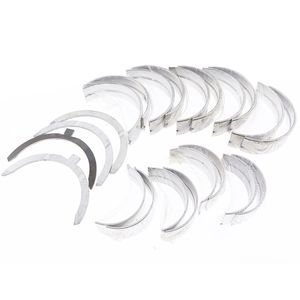
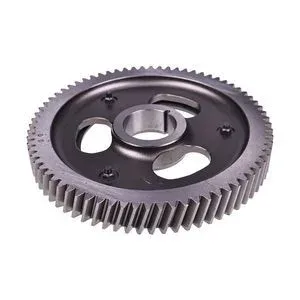
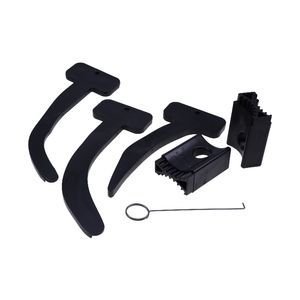
System-Matched Supply — Connecting rod paired with verified bearing grades and piston sets based on crankshaft regrind history.
Technical Specifications
| Parameter |
Value |
| Part Number |
119E10-23001 |
| Product Type |
Connecting Rod |
| Cross-Reference |
119E1023001, 119E10-23000, 119E1023000 (reference only) |
| Machine Fitment |
Yanmar 3TNV88, 3TNV80, 3TNV80F-NGGEHR, 3TNV80F-NGPGE, 3TNV80F-NXDGZ, 3TNV80F-NXDKTF, 3TNV80F-NXDLST, 3TNV80F-NXDTR, 3TNV80F-SDWB, 3TNV80F-SNLY, 3TNV80F-SNSY, 3TNV80F-SPSPT, 3TNV80F-SPTB, 3TNV80F-SSLY, 3TNV80F-SSYU, 3TNV80FT-ZMTE, 3TNV80FT-ZMWM2, 3TNV80F-SPANM, 3TNV80F-SPSY2, 3TNV80F-ZXKLST |
| Brand Compatibility |
Yanmar |
| Condition |
New Aftermarket |
| Oversize Grade |
STD |
| Warranty |
6 months against manufacturing defects |
| Quality Standard |
ISO 9001 |
Application Suitability
| Engine System |
Related Components |
| Block & Internal Rotating Assembly |
Con rod bearings, main bearings, crankshaft |
| Piston & Cylinder Group |
Piston sets, piston rings, cylinder liners |
| Lubrication Circuit |
Oil pump, oil filter, oil cooler seals |
| Overhaul Gasket System |
Full gasket kit, rear main seal, valve stem seals |
| Fuel & Emission |
Fuel injectors, head gasket, exhaust manifold gasket |
Why Rebuilds Fail When the Connecting Rod Is Correct but the Rest Is Not
The connecting rod is only as reliable as the bearing shells and piston set it works with.
A crankshaft ground to a specific undersize demands bearing shells in the matching oversize grade. Miss that alignment and the connecting rod itself is fine while the engine tears itself apart from oil starvation at the big end. In the Yangtze Delta workshop belt, I have watched rebuilds collapse not because of one bad component, but because the rotating assembly was sourced piecemeal with mismatched dimensional grades [NEED_CITE: engine rebuild dimensional grade matching standards]. The same connecting rod for Yanmar 3TNV88 and 3TNV80 engines can end up in an assembly where the piston-to-liner clearance is off by a grade, simply because nobody checked the crankshaft journal condition against the bearing order.

Rotating Assembly Context for 3TNV80 and 3TNV88 Engines
This connecting rod sits inside the Yanmar 3TNV80 and 3TNV88 block as part of the lower rotating assembly. It transfers combustion force from the piston to the crankshaft, and its big-end bore must match the reground journal diameter precisely. When sourcing this connecting rod for an engine rebuild, the con rod bearing shells, main bearings, and piston sets all need to be specified against the same crankshaft condition record. A rebuild that ignores this chain of dimensional dependencies introduces a weak point that will surface within the first few hundred operating hours.
Oversize Grades, Rebuild History, and Serial Variants
The 3TNV80 and 3TNV88 engine families span multiple serial variants, and connecting rod dimensions or bolt specifications can shift between production runs. Before ordering, confirm the engine serial number against the variant list to rule out rod bolt thread differences or cap alignment changes [NEED_CITE: Yanmar 3TNV80 and 3TNV88 serial variant identification]. Equally important is the crankshaft regrind history. If a previous rebuild already took the journals to 0.25 mm undersize, the bearing shells must match — sending standard-grade shells with a reground crankshaft is a mistake I have seen turn a full overhaul into scrap metal. The connecting rod itself may still be STD, but the bearings it carries must reflect the actual journal diameter on the bench.
Bore Geometry, Bolt Torque, and Material Behaviour Under Load
The big-end bore on this connecting rod must maintain roundness within tight tolerances to hold a stable oil film across the bearing shell. During assembly, the cap-to-rod alignment and bolt torque directly affect this bore geometry — under-torqued bolts allow cap walk, while over-torqued bolts distort the bore and pinch the bearing. The rod material must withstand the alternating tensile and compressive loads of the 3TNV88 firing cycle without fatigue cracking at the I-beam section. Surface finish on the split face between rod and cap matters because any misalignment transfers directly into uneven bearing wear. These parameters together determine whether the connecting rod and its bearing set survive the break-in period and reach full service life [NEED_CITE: connecting rod bearing oil film stability in small diesel engines].
The Cost of Grade Mismatch and Missed Root Causes
Ordering a connecting rod without checking whether the previous rebuild changed the crankshaft journal size leads to bearing shells that are either too loose or too tight. Loose shells spin and score the journal. Tight shells overheat and wipe the babbitt surface. Either outcome means pulling the engine apart again — the labour alone on a second teardown eclipses the cost of getting the grades right the first time. Beyond dimensional mismatch, repeat connecting rod failure often traces back to a lubrication fault such as a blocked oil gallery or a failing oil pump that was never diagnosed [NEED_CITE: root cause analysis for connecting rod bearing failure in compact diesel engines]. Swapping the rod without addressing the upstream cause simply sets the clock on the next failure.
Why Rebuild Shops Source This Rotating Assembly Here
Own production lines and qualified sourced supply share a single warranty, so whether this connecting rod ships from our facility or a partner plant, the quality terms are identical. Eight product categories mean the bearing shells, piston sets, overhaul gasket kit, and seal kits all move under one account and one consignment — no split freight, no mismatched arrival dates. Orders start from one piece, supporting single-cylinder repairs without forcing a minimum batch. The Guangzhou warehouse holds stock on fast-moving 3TNV88 and 3TNV80 components for quick dispatch. Part identification is available from a part number, engine model, photograph, or nameplate image, and cross-reference verification covers superseded and alternate numbers. Sample units ship for fitment confirmation before any bulk commitment.
Documentation & Verification
- Commercial invoice and packing list with connecting rod part number and oversize grade noted
- Compatibility and cross-reference sheet marking 119E1023001 and 119E10-23000 as reference only
- Dimensional inspection record covering big-end bore, small-end bush bore, and centre distance
- Six-month warranty terms against manufacturing defects included with shipment
- Packing photographs showing anti-rust oil application and individual protective packaging
- HS code and customs documentation support for international engine parts shipments
Installation & Rebuild Sequence
- Clean the connecting rod, cap, and bolt threads thoroughly before assembly to prevent bore distortion from trapped debris
- Verify bearing shell grade against the measured crankshaft journal diameter, not the previous rebuild record alone
- Torque the rod bolts to the specification for the specific 3TNV80 or 3TNV88 variant using a calibrated wrench
- Check cap-to-rod alignment and big-end bore roundness after torquing before fitting the piston
- Run a controlled break-in cycle at moderate load to seat the bearing shells to the journal surface
Request a System-Matched Quote
Provide the engine model, serial number, and any crankshaft regrind history so the correct oversize grade can be confirmed for the connecting rod, bearings, and piston set together. If the engine nameplate is still legible, a photograph speeds up identification across the 3TNV80 variant range.
Frequently Asked Questions
Q: What bearings and piston sets match this connecting rod for a complete rebuild?
A: The correct con rod bearing shells and piston sets depend on the crankshaft journal condition and engine serial variant. Provide the engine model and any regrind history so the matching oversize grade can be confirmed across the entire rotating assembly, not just the connecting rod.
Q: How do I confirm the correct oversize grade if the crankshaft has been reground?
A: Measure the crankshaft journal diameter directly rather than relying on paperwork from a previous rebuild. The connecting rod bore stays standard, but the bearing shells must match the actual reground dimension to maintain proper oil clearance.
Q: Do different 3TNV80 serial variants use different connecting rod dimensions?
A: Certain 3TNV80 variants differ in rod bolt thread specification and cap alignment features. Confirm the full engine serial number so the correct variant is identified before the connecting rod and associated fasteners are shipped.
Q: What system-level fault should I check to prevent repeat connecting rod failure?
A: Blocked oil galleries, a worn oil pump, or incorrect oil viscosity can starve the big-end bearing and cause rod failure. Diagnose the lubrication circuit before fitting the replacement connecting rod to avoid repeating the same failure mode.