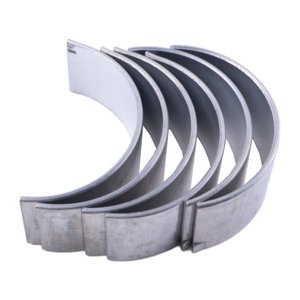
System-Matched Overhaul Supply — Rod weight classification, bearing grade, and small-end bushing verified against your specific 3TNV88 or 3TNV80 build variant before dispatch.
Technical Specifications
| Parameter |
Value |
| Part Number |
119E10-23001 |
| Product Type |
Connecting Rod |
| Cross-Reference |
119E10-23001, 119E1023001, 119E10-23000, 119E1023000 (reference only) |
| Machine Fitment |
Yanmar 3TNV88, 3TNV80, 3TNV80F-NGGEHR, 3TNV80F-NGPGE, 3TNV80F-NXDGZ, 3TNV80F-NXDKTF, 3TNV80F-NXDLST, 3TNV80F-NXDTR, 3TNV80F-SDWB, 3TNV80F-SNLY, 3TNV80F-SNSY, 3TNV80F-SPANM, 3TNV80F-SPSPT, 3TNV80F-SPSY2, 3TNV80F-SPTB, 3TNV80F-SSLY, 3TNV80F-SSYU, 3TNV80FT-ZMTE, 3TNV80FT-ZMWM2, 3TNV80F-ZXKLST |
| Brand Compatibility |
Designed to replace components in Yanmar engines |
| Condition |
New Aftermarket |
| Warranty |
3-12 months against manufacturing defects |
| Manufacturing Standard |
ISO-certified production |
Application Suitability
| Engine System |
Related Components |
| Bottom-end rotating assembly |
Main bearings, rod bearing shells (STD / 0.25 / 0.50), crankshaft thrust washers |
| Piston and cylinder group |
Pistons, piston pins, small-end bushings, cylinder liners |
| Lubrication circuit |
Oil pump, oil cooler, piston cooling jets, oil pressure relief valve |
| Sealing and gasket set |
Full overhaul gasket kit, rear main seal, front crank seal, O-rings |
Why the Same Connecting Rod Number Ships in Different Configurations
The part number alone does not guarantee a drop-in fit across every 3TNV80F sub-variant.
When a workshop orders a Connecting Rod for Yanmar 3TNV88 3TNV80 engine rebuild based solely on the base identifier, the rod may arrive with a big-end bore or bolt specification that does not match the crankshaft journal currently in the block. I have seen this happen in Shandong rebuild bays more times than I care to count — the engine is already torn down, the crankshaft has been reground to an oversize dimension from a prior repair, and the new rod bearing shells in the box are standard grade. The machine sits while the correct shells are sourced, and the customer pays for the downtime [NEED_CITE: engine rebuild downtime cost factors in construction equipment]. Internal revisions across 3TNV80F production batches mean that rod bolt thread pitch and bearing shell locating tang position can differ even when the casting number looks identical. Confirming the engine serial number and any prior regrind history before the rod leaves the warehouse prevents this mismatch entirely.

The Rotating Assembly as a Matched System
A connecting rod does not fail in isolation. When one rod in a 3TNV88 shows bearing shell cavitation or big-end elongation, the adjacent rods have endured the same oil pressure history and thermal cycling. Supplying the Connecting Rod for Yanmar 3TNV88 3TNV80 engine rebuild as part of a matched rotating assembly — rods weight-classified together, bearing shells selected to the same oversize grade, small-end bushings reamed to the piston pin diameter — keeps the bottom end balanced and avoids the situation where one cylinder runs tighter clearance than the rest.
Oversize Grade Coordination and Rebuild History
Every crankshaft regrind changes the bearing shell requirement. If the previous overhaul took the journals to 0.25 mm undersize, the replacement Connecting Rod for Yanmar 3TNV88 3TNV80 engine rebuild must ship with 0.25 oversize shells, not standard. Miss this step and the shells will be loose in the bore, oil pressure drops at operating temperature, and the rod knocks within the first fifty hours [NEED_CITE: crankshaft journal oversize grading standards for diesel engines]. I always ask for the crankshaft measurement report or the stamp marks on the old shells before finalizing the rod order, because the rebuild history is rarely written on the engine nameplate.
Reading the Specs That Matter in the Workshop
The big-end bore diameter determines which bearing shell set seats correctly, and even a few thousandths of deviation means shells that spin or crush unevenly under load. Rod weight classification affects reciprocating mass balance across cylinders — mismatched rods create vibration that accelerates main bearing wear. The small-end bushing inner diameter must match the piston pin within the clearance range the 3TNV88 and 3TNV80 service manual specifies, typically a few hundredths of a millimeter. These are not theoretical tolerances; they are the difference between an engine that runs clean through its next overhaul interval and one that comes back with scored journals.
The Cost of Mismatched Grades and Missed Root Causes
Shipping a standard-grade rod bearing shell into a block that was previously rebuilt with 0.50 undersize journals guarantees an early return. The shell will not crush-fit, oil film thickness collapses, and the rod bearing overheats — often taking the crankshaft journal with it. Beyond the parts cost, the crankshaft may need another regrind or replacement, and the entire bottom end comes apart again. Equally damaging is replacing the rod without investigating why the original failed: oil starvation from a worn pump, a blocked piston cooling jet, or a head gasket breach that washed oil off the cylinder wall all produce rod bearing damage that will recur if only the rod is swapped [NEED_CITE: common root causes of connecting rod bearing failure in industrial diesel engines].
Why Procurement Through XUNPO Works for Rebuild Shops
Own production on selected lines and qualified sourced supply sit under a single account with one warranty, so the rod, bearings, and gasket set all carry the same coverage terms. Eight product categories mean a complete 3TNV88 overhaul list ships as one consignment rather than three separate deliveries on different schedules. Orders start from one piece, which matters when a single rod has failed ahead of a planned rebuild. The technical team confirms engine serial variant and oversize grade before dispatch. Cross-reference verification covers superseded numbers like 119E10-23000 alongside the current 119E10-23001 identifier, and sample supply is available for fitment confirmation before a fleet-level bulk commitment.
Documentation & Verification
- Commercial invoice listing rod part number, oversize grade, and matched bearing shell sizes
- Cross-reference sheet mapping 119E10-23001 and superseded 119E10-23000 (reference only)
- Dimensional inspection record covering big-end bore, small-end bushing ID, and rod weight class
- Warranty terms covering manufacturing defects for 3 to 12 months
- Packing photographs showing rod protection and bearing shell segregation by cylinder
- HS code and customs documentation prepared for international engine parts shipments
Installation & Rebuild Sequence
- Verify big-end bore and crankshaft journal diameter before selecting bearing shell grade
- Install new small-end bushings and ream to piston pin clearance specified for 3TNV88 or 3TNV80
- Torque rod bolts to the engine manual specification in the correct two-stage sequence
- Check side clearance between rod big-end and crankshaft journal with feeler gauge after assembly
- Prime lubrication system before first start to ensure oil reaches rod bearings immediately
- Run initial break-in at moderate load and re-torque rod bolts per overhaul procedure
Requesting the Right Configuration
Provide your engine model, full serial number, and any records of prior crankshaft regrind so the correct oversize grade and rod variant can be confirmed. If the nameplate is worn or painted over, a photograph of the block casting number and the old rod bearing shells is enough to identify the build variant and match the Connecting Rod for Yanmar 3TNV88 3TNV80 engine rebuild to your engine.
Frequently Asked Questions
Q: What else belongs in a 3TNV88 or 3TNV80 bottom-end overhaul kit besides the connecting rod?
A: A complete bottom-end kit typically includes rod bearing shells matched to the crankshaft journal grade, main bearing shells, thrust washers, rod bolts if not reused, small-end bushings, and a full gasket set. Supplying these together ensures every clearance in the rotating assembly is consistent and nothing is left on back-order mid-rebuild.
Q: The crankshaft was reground last time — which oversize grade of rod bearing shells do I need?
A: The regrind stamp on the crankshaft or the thickness marking on the old shells tells you the grade — typically STD, 0.25, or 0.50 mm undersize. Send a photo of the stamp or the old shell markings so the correct oversize shells ship with the rod, avoiding a loose-fit failure on first start.
Q: Do all 3TNV80F sub-variants share the same connecting rod, or are there internal revisions?
A: Internal revisions exist across 3TNV80F production batches. Bolt specification, bearing shell locating tang position, and rod weight class can differ between sub-variants. Providing the full engine serial number allows verification of the exact build configuration before the rod is dispatched.
Q: What system faults should be investigated to prevent repeat connecting rod failure?
A: Oil starvation from a worn pump, blocked piston cooling jets, head gasket breaches contaminating oil, and incorrect injection timing all contribute to rod bearing damage. Addressing the root cause during the same overhaul prevents the new rod from failing under the same conditions that destroyed the original.
Q: How do I confirm my exact engine build variant when the nameplate is partially worn?
A: Photograph the block casting number, the old connecting rod stamping, and any visible crankshaft regrind marks. These identifiers together are sufficient to pinpoint the engine variant and cross-reference the correct connecting rod configuration even without a readable nameplate.