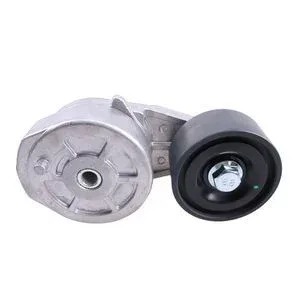
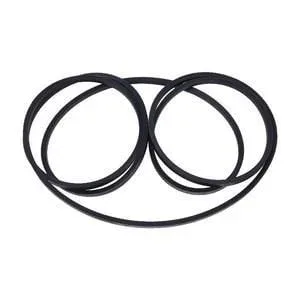
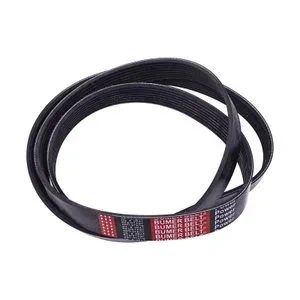
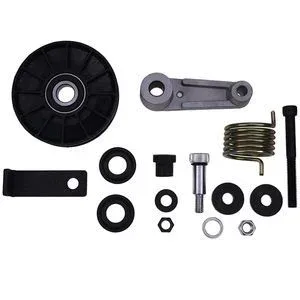
Engine System Matched — Belt Tensioner 504315786 verified against F4DFE/F4HFE engine sequence variants, shipped with cross-reference sheet for rebuild shops and repair centres managing complete belt drive overhauls.
Technical Specifications
| Parameter |
Value |
| Part Number |
504315786 |
| Product Type |
Belt Tensioner |
| Cross-Reference (reference only) |
504028028, 87803067, 2856945, 4892866, 504315781, 534026610, 2855622, 2852161 |
| Machine Fitment |
New Holland T6080, T6090, T7.170, T7.185, T7.200, T7.210, TS6.110, TS6.120, TS6.125, TS6.140, TS100A, TS115A, TS135A, T1804B, T6010-T6070, TS6020, TS6030, LB75.B, LB90.B, LB110.B, LB115.B 4WS, B90B, B95, B95B, B95BLR, B95BTC, B95LR, B95TC, B100B, B100BLR, B100BTC, B110, B110 TIER 3, B110B, B110BTC, B115, B115 TIER 3, B115B, C190, L190, LS190.B, LT190.B, HW305, HW305S, HW325 |
| Material (Housing) |
High-strength ductile iron (ASTM A536 Grade 65-45-12) |
| Material (Internal Spring) |
Cold-wound SAE 9260 steel, heat-treated HRC 48–52 |
| Material (Pivot Bushings) |
Sintered bronze with PTFE impregnation (ASTM B438 Type I, Class 1) |
| Mounting Surface Tolerance |
CNC-machined ±0.05 mm |
| Surface Treatment |
Zinc-nickel electroplating (ISO 2081, 15 μm) |
| Spring Deflection Test Spec |
12.8–13.4 N·m at 15° |
| Radial Runout Test Spec |
<0.12 mm |
| Condition |
New Aftermarket |
| Warranty |
6-month manufacturer warranty against defects in materials and workmanship |
| MOQ |
1 piece |
Application Suitability
| Engine System |
Related Components |
| Front-end accessory drive |
Multi-ribbed serpentine belt, idler pulley, harmonic balancer |
| Cooling and charging circuit |
Fan drive pulley, alternator mounting bracket, water pump drive |
| Auxiliary hydraulic drive |
Compressor clutch pulley, AC belt, power steering pump interface |
| Complete engine overhaul kit |
Timing cover gasket set, tensioner mounting bolts, pulley retaining fasteners |
Diagnosing Belt Drive Failures Before Replacing the Belt Tensioner for New Holland Tractor Engines
Replacing the tensioner without tracing the root cause of belt wear leads to repeated teardowns within weeks.
In workshop environments across African mining and construction sites, it is common to see a Belt Tensioner engine rebuild replacement for New Holland installed while the underlying misalignment or adjacent pulley bearing failure goes unaddressed. The new unit absorbs the vibration until its pivot bushings degrade prematurely, sending the machine back to the bench. Systematic diagnosis of the entire belt drive system, including checking the fan drive pulley and alternator bracket alignment, prevents this cycle [NEED_CITE: belt drive system alignment verification procedures for heavy-duty diesel engines].

The Belt Tensioner Within the F4DFE and F4HFE Engine Families
This tensioner sits at a critical junction in the front-end accessory drive of the FPT (Fiat Powertrain Technologies) F4DFE6132 and F4HFE613B engine series that powers these New Holland machines. It maintains precise belt tension across the alternator, water pump, and air conditioning compressor circuits. When sourcing a Belt Tensioner for this engine family, matching the exact engine serial variant is necessary, as mounting bracket configurations shifted across emission tier updates.
Engine Sequence Variants and Prior Rebuild History
Engines that have undergone previous rebuilds often have altered mounting surface profiles or substitute fasteners installed. A Belt Tensioner engine rebuild replacement for New Holland must match the current block configuration, not merely the original factory build sheet. Checking the pivot boss diameter and the mounting bolt thread pitch against the actual engine block prevents fitment conflicts when the machine has service history from multiple workshops [NEED_CITE: engine rebuild dimensional verification and mating surface inspection standards].
Reading the Specification Sheet Against Field Conditions
The ductile iron housing (ASTM A536 Grade 65-45-12) provides the structural rigidity needed to resist the cyclic loading from continuous PTO engagement in agricultural and loader applications. The cold-wound SAE 9260 spring, heat-treated to HRC 48–52, delivers the 12.8–13.4 N·m deflection force at 15° of arm travel required to keep the serpentine belt seated under variable accessory loads. The sintered bronze pivot bushings with PTFE impregnation reduce friction at the oscillation point, which is the primary wear zone in dusty environments. The zinc-nickel electroplating to ISO 2081 standard with 720-hour salt-spray resistance addresses the corrosion that attacks unpainted cast surfaces in tropical humidity. Radial runout held below 0.12 mm ensures the pulley tracks true, preventing the belt edge wear that signals a failing tensioner bearing.
The Cost of Skipping System-Level Diagnosis
Installing a new tensioner while a worn idler pulley bearing continues to introduce lateral belt wander guarantees early failure of the replacement unit. Similarly, a harmonic balancer that has separated internally will generate torsional vibration spikes that exceed the tensioner spring's damping capacity. These secondary faults destroy the new component and add another complete teardown to the job cost [NEED_CITE: vibration analysis and accessory drive component interaction in diesel engine systems].
Why Source the Complete Belt Drive Match From Here
Our own production lines and qualified sourced supply operate under a single warranty and a single account, meaning the tensioner, matching belt, and associated idler pulleys arrive as one verified consignment. Cross-reference verification covers superseded numbers like 504028028 and 87803067 so the correct variant ships. Identification works from a part number, a machine model, a photograph of the worn nameplate, or the engine serial plate image. Sample supply is available for fitment confirmation on the bench before committing to fleet-quantity orders. The technical team confirms engine sequence variant compatibility and mounting surface grade requirements against your specific rebuild history.
Documentation & Verification
- Commercial invoice and packing list itemizing tensioner and matched belt quantities
- Cross-reference sheet listing 504315786 against superseded interchange numbers (reference only)
- Dimensional inspection record covering mounting surface tolerance and radial runout
- Six-month warranty terms covering material and workmanship defects
- Packing photographs showing individual tensioner protection before crate closure
- HS code and customs documentation support for agricultural and construction parts import
Installation & Rebuild Sequence
- Verify mounting boss thread condition on the block before installing the tensioner pivot bolt
- Inspect the serpentine belt contact surfaces on all driven pulleys for glazing or edge damage
- Apply specified torque to the tensioner mounting fasteners in the sequence outlined by the engine service manual
- Check belt deflection at the longest unsupported span after initial tensioner engagement
- Run the engine at idle and observe belt tracking across the tensioner pulley face for lateral wander
- Recheck tensioner arm position after the first heat cycle to confirm spring settling is within specification
Requesting a Matched Quote
Provide the engine model designation, the engine serial number from the block identification plate, and any prior rebuild documentation you have on file. This allows confirmation of the correct tensioner variant and the matching belt part number for a consolidated dispatch.
Frequently Asked Questions
Q: What other belt drive components should be inspected when replacing this tensioner?
A: The entire serpentine belt path must be evaluated. Check the idler pulley bearing for lateral play, the harmonic balancer for rubber separation, the alternator and water pump pulleys for alignment, and the belt itself for glazing or rib cracking. Replacing the tensioner alone while a worn adjacent component introduces vibration will shorten the new unit's service life.
Q: Are tensioners interchangeable across different engine serial variants of the same machine model?
A: No. Mounting bracket configurations and pivot boss dimensions can vary between engine builds within the same machine model range, particularly across emission tier changes. Confirming the engine serial number and cross-referencing against the build variant ensures the correct tensioner is supplied.
Q: What causes a belt tensioner to fail repeatedly after replacement?
A: Repeated failure typically points to an unaddressed system fault. Common root causes include a separated harmonic balancer generating excessive torsional vibration, a misaligned accessory bracket causing lateral belt tracking forces, or a worn idler pulley bearing introducing oscillation that exceeds the tensioner spring's damping capacity.
Q: Is the tensioner included in a complete engine overhaul kit?
A: Overhaul kits typically focus on internal engine components like pistons, bearings, and gaskets. The belt tensioner is part of the front-end accessory drive and is usually specified separately. Confirm the kit contents against your rebuild scope and order the tensioner and matching belt as part of the external drive system supply.
Q: How do I confirm the correct tensioner variant when the nameplate is illegible?
A: Provide a clear photograph of the engine serial plate, the machine data plate, or the existing tensioner showing any cast or stamped markings. Cross-reference verification against the machine model, engine family designation, and visible part number remnants allows accurate identification.