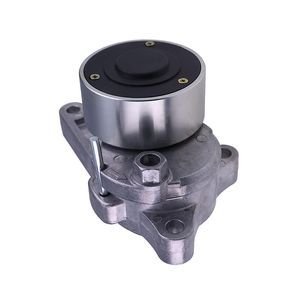
Engine Series Verified — Cross-reference 6735884 6662997 mapped to Bobcat loader engine families before dispatch, ensuring tensioner arm geometry and pulley groove profile match the specific serial variant.
Technical Specifications
| Parameter |
Value |
| Part Number |
6735884 6662997 |
| Cross-Reference |
6735884 (reference only), 6662997 (reference only) |
| Product Type |
Belt Tensioner & Fan Pulley |
| Machine Fitment |
653, 751, 753, 763, 773, 7753, S130, S150, S160, S175, S185, S205, T140, T180, T190 |
| Brand Compatibility |
Bobcat |
| Kit Contents |
Drive Belt Tensioner, Cooling Fan Pulley |
| Condition |
New Aftermarket |
| Warranty |
3–12 month warranty against manufacturing defects |
| MOQ |
1 piece |
| Manufacturing Standard |
ISO-certified partners |
Application Suitability
| Engine System |
Related Components |
| Belt Drive Subsystem |
Drive belt, belt guard hardware, mounting bolts |
| Cooling Airflow Circuit |
Fan blade assembly, radiator shroud, coolant hoses |
| Front-End Accessory Drive |
Idler pulleys, alternator mounting bracket, water pump pulley |
| Engine Overhaul Refresh |
Complete gasket set, front crankshaft seal, timing cover seal |
Why Belt Failures Return Weeks After a Tensioner Swap
Replacing the tensioner alone while retaining a worn fan pulley leaves the root cause unresolved.
In workshop environments, a recurring pattern emerges: the drive belt is replaced, the tensioner is swapped, and the machine returns to service. Within a short operational window, the new belt begins to chirp, glaze, or jump tracks entirely. The failure is rarely the belt itself. A fatigued tensioner bearing or a pulley with worn groove profiles creates misalignment that destroys any new belt installed against it. This Belt Tensioner & Fan Pulley Kit engine rebuild replacement addresses the subsystem as a matched pair, eliminating the dimensional mismatch that drives repeat failures [NEED_CITE: belt drive misalignment failure modes in diesel engine auxiliary systems].

The Belt Drive Subsystem Within the Engine Architecture
The belt drive system sits at the front of the engine, transferring crankshaft rotation to the cooling fan and often the alternator or hydraulic pump drive. The tensioner maintains consistent belt loading across variable engine speeds, while the fan pulley translates that rotation into the airflow required for thermal management. When either component drifts outside its dimensional tolerance, the entire subsystem is compromised. This Belt Tensioner & Fan Pulley Kit engine rebuild replacement treats both as an interdependent pair rather than isolated wear items.
Engine Serial Variants and the Fitment Gap
Bobcat loaders in the S-series and T-series range were produced across multiple engine families over successive model years. An S130 built in one production window may carry a different engine block than an S130 built later, affecting pulley groove count, tensioner arm pivot geometry, and mounting bolt patterns. Confirming the engine serial number — not just the machine model — is essential before committing to a specific Belt Tensioner & Fan Pulley Kit engine rebuild replacement configuration. Shipping a variant that physically bolts on but misaligns the belt path by even a small margin accelerates wear across the entire front-end accessory drive [NEED_CITE: engine serial variant identification for skid-steer loader powertrains].
What the Specifications Mean in Service
The kit pairs a spring-loaded tensioner arm with a matched cooling fan pulley, both manufactured to ISO-certified tolerances. The tensioner's internal bearing must sustain continuous radial loading at elevated under-hood temperatures without developing play that translates into belt flutter. The pulley groove profile is machined to match the belt cross-section specified for these engine families — a V-groove or multi-rib profile depending on the engine variant. When the tensioner arm geometry and pulley diameter are engineered as a set, belt tracking remains stable through cold-start high-load conditions and sustained full-throttle operation. The new aftermarket condition means both components arrive at zero wear, establishing a fresh baseline for the entire belt drive subsystem rather than pairing a new part against a fatigued mate.
The Cost of Treating Symptoms Instead of Systems
When a tensioner fails and only the tensioner is replaced, the worn pulley continues to run the new belt against a degraded groove surface. The belt wears prematurely, generating debris that contaminates adjacent seals and bearings. The machine returns to the shop, this time requiring belt replacement plus diagnostic time to trace the recurring fault. In a fleet environment, this cycle repeats across multiple units, accumulating unplanned downtime that eclipses the cost of a matched kit installed the first time. System-level diagnosis — checking pulley runout, bearing play, and belt alignment before reassembly — prevents the repeat visit that erodes workshop credibility and operator trust [NEED_CITE: repeat failure cost analysis in mobile equipment maintenance operations].
Sourcing From a Single Account With Verified Cross-References
Production on selected lines and qualified sourced supply operate under one warranty and one quality standard, so whether a component originates from our own facility or a certified partner, the inspection protocol is identical. Eight product categories mean a complete engine refresh — tensioner, pulley, gaskets, seals, filters — consolidates into a single consignment rather than fragmented orders from multiple vendors. The minimum order starts at one piece, supporting emergency single-unit repairs without forcing bulk commitments. Part identification proceeds from the OEM reference number, the machine model, a photograph of the nameplate, or an image of the removed component. Cross-reference verification covers superseded and alternate part numbers, catching the production-run variants that copied tables miss. A sample kit is available for fitment confirmation before any bulk stocking commitment, and the technical team remains accessible for compatibility and grade verification against specific engine serial ranges.
Documentation & Verification
- Commercial invoice and packing list itemizing kit contents with part cross-references marked reference only
- Compatibility sheet mapping tensioner and pulley variants to specific Bobcat engine serial ranges
- Dimensional inspection record covering pulley groove profile and tensioner arm pivot tolerances
- Warranty terms document covering manufacturing defects for 3 to 12 months from delivery
- Packing photographs showing kit components secured and labeled before crate closure
- HS code classification and customs documentation support for cross-border shipment
Installation & Rebuild Sequence
- Inspect the front cover and timing seal for leakage before mounting the new tensioner assembly
- Verify pulley groove profile matches the drive belt specification for the confirmed engine serial variant
- Torque tensioner mounting hardware to the engine manufacturer specification using a calibrated wrench
- Check fan blade integrity and balance before attaching the blade assembly to the new pulley
- Run the engine at idle and observe belt tracking for lateral drift or flutter before applying load
- Re-inspect belt tension and alignment after the first operational heat cycle to confirm seating
Confirm Fitment Before You Commit
Provide the engine model, engine serial number, and any previous rebuild history to verify which tensioner arm geometry and pulley groove variant your specific loader requires. Photographs of the existing components or the machine nameplate accelerate identification when reference numbers are worn or painted over. Request the kit contents list and compatibility confirmation sheet before approving the order, ensuring all required hardware is included for your engine configuration.
Frequently Asked Questions
Q: What other belt drive components should be replaced at the same time as the tensioner and pulley?
A: The drive belt itself should always be replaced alongside the tensioner and pulley to avoid running a new component against a worn mating surface. Inspect the idler pulleys, belt guard hardware, and front crankshaft seal during the same service event. Replacing these adjacent items during the same teardown eliminates a second disassembly if they fail shortly after reassembly.
Q: How do I confirm which engine variant my Bobcat loader has to ensure fitment?
A: Locate the engine serial number on the block identification plate, which is distinct from the machine serial number on the chassis. Provide this engine serial along with the machine model for cross-reference verification. Production-year changes within the same loader model can involve different engine families with incompatible pulley and tensioner configurations.
Q: Does the kit include all hardware needed for a complete belt drive refresh?
A: The kit contains the drive belt tensioner and the cooling fan pulley as a matched pair. Mounting bolts, the drive belt, and any associated idler components are ordered separately based on the confirmed engine variant. Request the detailed kit contents list during the inquiry stage to plan any supplementary items required for your specific engine build.
Q: What system-level faults can cause repeated belt or tensioner failures?
A: Premature belt wear often originates from a seized tensioner bearing, a misaligned fan pulley, or a failing water pump that introduces lateral load into the belt path. Overheating symptoms may trace back to insufficient fan speed caused by belt slip on a worn pulley groove. Diagnosing the entire front-end accessory drive, rather than swapping only the visibly failed component, addresses the root cause.
Q: Can I get a sample kit to verify fitment before committing to bulk stock?
A: A single sample kit can be supplied for physical fitment verification on your target machine before any volume commitment is placed. This allows your workshop to confirm mounting geometry, pulley alignment, and belt routing against the actual engine build. Sample lead time and dispatch terms are confirmed at the point of inquiry.