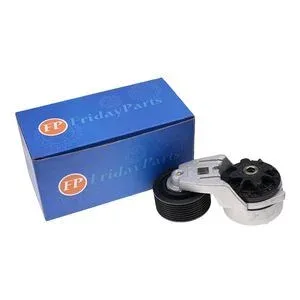
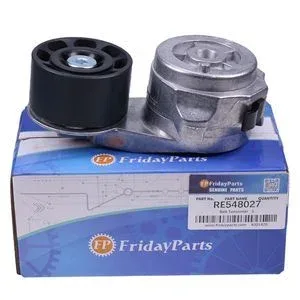
Engine Serial Variants Confirmed — every belt tensioner assembly is matched to the exact Cummins engine family and serial prefix before dispatch.
Technical Specifications
| Parameter |
Value |
| Part Number |
3936213, 5259022, 3976831 |
| Cross-Reference (reference only) |
3936213, 5259022, 3976831 |
| Product Type |
Belt Tensioner |
| Machine Fitment |
6C, ISB, QSB, 4B3.9, B4.5, 6B5.9, B6.7, 4B, 6B, ISC, QSC, ISL, QSL |
| Brand Compatibility |
Cummins |
| Condition |
New Aftermarket |
| Housing Material |
Die-cast aluminum alloy (A380) |
| Pivot Shaft Hardness |
58–62 HRC |
| Pivot Shaft Tolerance |
±0.01 mm |
| Damping Mechanism |
Automatic hydraulic damping with ISO VG 46 mineral oil |
| Seal Type |
Double-lip nitrile rubber seal (NBR) |
| Seal Pressure Rating |
150 psi |
| Mounting Pattern |
Cummins SAE J1922 flange |
| Spring Force Verification |
±2 N·m |
| Pivot Rotation Torque |
≤0.8 N·m |
| Dynamic Vibration Resistance |
3,500 rpm |
| Operating Temperature Range |
–20°C to +110°C |
| Warranty |
3–12 months against manufacturing defects |
| Standards |
ISO 9001, SAE J1922 |
Application Suitability
| Engine System |
Related Components |
| Front-End Accessory Drive |
Drive belt, idler pulleys, crankshaft damper |
| Engine Overhaul |
Complete belt drive kit, front crankshaft seal |
| Scheduled Maintenance |
Belt, tensioner, and idler pulley assembly |
| Rebuild Sequencing |
Water pump pulley, alternator pulley, fan hub |
Why the Root Cause Often Outlives the Belt Tensioner Replacement
A failed belt tensioner is rarely the only fault in the drive circuit.
In our Guangzhou workshop intake, we repeatedly see ISB and QSB engines return with a second belt failure within weeks of a tensioner swap. The mechanic replaced the tensioner, but the worn idler pulley bearing or a degraded crankshaft damper continued to introduce harmonic vibration into the system. The new tensioner absorbed that vibration until its internal hydraulic seal gave out. Identifying the full system fault during the first teardown avoids the repeat visit [NEED_CITE: belt drive system diagnostic procedures for medium-duty diesel engines]. A belt tensioner engine replacement rebuild must therefore account for every rotating component on the front of the block, not just the tensioner itself.

The Belt Drive Circuit as a Single System
The belt drive system on Cummins 6C, ISB, QSB, and related families routes through the water pump, alternator, fan, and often an AC compressor. The belt tensioner sits at the pivot point where spring force and hydraulic damping must compensate for load changes across every driven accessory. During an engine overhaul, all of these components are accessible and should be evaluated together. Replacing the belt tensioner engine replacement rebuild unit in isolation leaves the idler pulleys, crankshaft damper, and accessory bearings unchecked — components that directly affect the tension and vibration profile the new tensioner must manage.
Serial Prefix Variants and Rebuild History
Cummins engine families such as ISC, QSC, ISL, and QSL share architecture but differ in belt routing and accessory bracket geometry across serial ranges. A previous rebuild may have swapped pulley diameters or altered the belt path, changing the effective tension the system requires. When ordering a belt tensioner for these families, the engine serial prefix and any known rebuild history matter. We cross-check the serial prefix against the build configuration to confirm the tensioner arm length and spring rate match the current accessory layout [NEED_CITE: Cummins engine serial prefix variant identification for belt drive components]. A mismatch here shows up as premature belt wear or a tensioner arm that does not reach its designed operating position.
Specification Interpretation for Rebuild Context
The die-cast A380 aluminum housing provides dimensional stability under the thermal cycling that rebuilt engines experience during break-in. The pivot shaft is hardened to 58–62 HRC with a ±0.01 mm tolerance, which keeps the arm rotation smooth and prevents the uneven belt loading that accelerates wear on adjacent pulleys. Hydraulic damping uses ISO VG 46 mineral oil behind a double-lip NBR seal rated at 150 psi — this seal design resists diesel and coolant exposure, both of which are common contaminants on engines that have seen previous gasket failures. Spring force held to ±2 N·m ensures the belt tensioner engine replacement rebuild delivers consistent tension from idle through 3,500 rpm, which is the verified dynamic vibration resistance ceiling for this assembly.
The Cost of Replacing Only What Broke
When a teardown focuses solely on the failed tensioner without inspecting the idler pulley bearings and crankshaft damper, the engine often returns to the bench with a belt-related complaint within a short operating window. The second teardown doubles the labor cost and erodes customer confidence. We have logged cases where the root cause was a worn idler bearing introducing axial play that no tensioner — new or otherwise — could absorb [NEED_CITE: accessory drive bearing wear contribution to belt tensioner failure]. Treating the belt tensioner as one node in a system, rather than as the sole repair target, eliminates this repeat failure pattern.
System-Satched Supply from One Account
Our production and sourcing lines operate under a single QC protocol and warranty, so a belt tensioner ordered alongside idler pulleys, belts, and front seals carries the same inspection standard across every line item. The eight-category inventory means a complete front-end drive overhaul list ships as one consignment from our Guangzhou warehouse, avoiding split deliveries. We identify parts from engine serial numbers, machine models, photographs, or nameplate images — whichever the buyer has on hand. Cross-reference verification covers the superseded numbers (3936213, 5259022, 3976831) against the specific engine build sheet. Samples are available for fitment confirmation before bulk commitment.
Documentation & Verification
- Commercial invoice listing each belt drive component by engine family and serial prefix
- Cross-reference sheet for 3936213, 5259022, 3976831 marked reference only
- Dimensional inspection record covering pivot shaft tolerance and spring force
- Warranty terms matched to component category and operating conditions
- Packing photographs showing protective foam cushioning before carton seal
Installation & Rebuild Sequence
- Verify idler pulley bearing play and crankshaft damper condition before tensioner installation
- Clean the SAE J1922 mounting flange surface to ensure flush housing contact
- Torque mounting fasteners to engine manufacturer specification for the specific Cummins family
- Confirm belt routing matches the engine build sheet, not the previous teardown arrangement
- Run the engine at idle for initial break-in and re-check tensioner arm position under load
Send Your Engine Details for a Matched Quote
Provide the Cummins engine family (6C, ISB, QSB, ISC, QSC, ISL, or QSL), serial prefix, and any known rebuild history. If the nameplate is unreadable, send a photograph of the existing tensioner and adjacent pulley layout. We will confirm the correct tensioner variant and advise on companion components for the drive circuit.
Frequently Asked Questions
Q: What other belt drive components should be replaced alongside the tensioner during an engine rebuild?
A: The belt, idler pulleys, and front crankshaft seal should all be evaluated and typically replaced during the same teardown. The crankshaft damper should be checked for degraded rubber or separated inertia ring. Replacing these together ensures the new belt tensioner engine replacement rebuild operates in a balanced drive circuit without inherited vibration faults.
Q: Are the three OEM reference numbers interchangeable across all listed Cummins engine families?
A: No. Numbers 3936213, 5259022, and 3976831 serve as cross-reference identifiers and do not map one-to-one across every engine variant. The correct number depends on the engine family, serial prefix, and accessory bracket configuration. We verify the match against the engine build sheet before confirming supply.
Q: How does a previous engine rebuild affect tensioner selection?
A: A prior rebuild may have changed pulley diameters, belt routing, or accessory bracket configuration, altering the tension geometry. We need the current engine configuration — not just the original build data — to confirm the tensioner arm length and spring force match what the system now requires.
Q: Can the tensioner be supplied as part of a matched front-end drive overhaul kit?
A: Yes. We consolidate the belt tensioner, belt, idler pulleys, front seal, and any associated fasteners into a single shipment under one warranty. This approach eliminates second orders and ensures every component in the drive circuit is replaced on the same schedule.