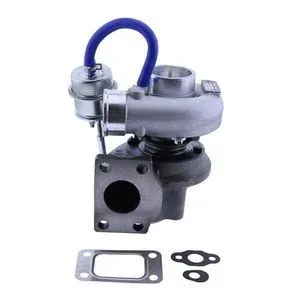
System-Matched Assembly — Every turbocharger kit ships with verified cross-reference data for Cummins N14 engine serial variants, ensuring the HT60 unit aligns with your specific rebuild scope and adjacent sealing requirements.
Technical Specifications
| Parameter |
Value |
| Part Number |
3804566 |
| Product Type |
Turbocharger |
| Cross-Reference |
3536804, 4033556, 4033556H, 3536012, 380456600, 3804566NX, 3804566RX, CU3804566 (reference only) |
| Machine Fitment |
Komatsu PC600-6, PC600LC-6, PC650-6, PC650LC-6, PC600LC-6KJ, PC600-6KJ |
| Turbo Model |
HT60-N0881A/H32K1, HT60 |
| Compatible Engine |
Cummins N14 |
| Condition |
New Aftermarket |
| Warranty |
3-12 months against manufacturing defects |
| Production Standard |
ISO 9001 certified facility |
Application Suitability
| Engine System |
Related Components |
| Intake and forced induction |
Intake manifold gaskets, air filter elements, boost pressure hoses |
| Lubrication feed to turbo |
Oil supply line, oil drain gasket, bearing shell oil clearance check |
| Exhaust back-pressure path |
Exhaust manifold studs and nuts, manifold-to-turbo gasket, flex pipe |
| Emission and thermal management |
Heat shields, clamp bands, wastegate actuator linkage |
When a New Turbocharger Fails Before the Oil Is Even Warm
A Cummins N14 turbocharger rebuild that ignores the root cause of the previous failure will simply repeat it.
I have watched rebuild benches sit idle for days because a replacement turbocharger engine unit arrived, but the oil feed restriction or the contaminated intake tract that killed the last one was never addressed. Shops quote the turbo line item, swap it, and watch the shaft play develop again within a few hundred hours. The Cummins N14 turbocharger overhaul then becomes a second teardown, doubled labor, and a customer who questions every part you source [NEED_CITE: common root causes of repeated turbocharger failure in heavy-duty diesel engines].
This aftermarket turbocharger 3804566 is specified for Komatsu PC600-6 and PC650-6 class machines running the Cummins N14 platform. The HT60-N0881A/H32K1 turbine and compressor geometry must match the engine's volumetric demand at rated RPM, and that match only holds when the surrounding systems — oil, air, exhaust — are within tolerance before the new unit is bolted on.

The Intake-to-Exhaust System This Turbocharger Lives Inside
The turbocharger engine sits at the intersection of three fluid systems: pressurized intake air, metered lubricating oil, and high-temperature exhaust gas. Each interface carries its own sealing and contamination risk. A Cummins N14 turbocharger rebuild that reuses hardened oil drain gaskets or cracked boost hoses invites the next failure before the first hour of operation is logged. Sourcing the turbocharger overhaul as a system-level package — matched gaskets, new clamp bands, verified oil feed orifice diameter — keeps the rebuild coherent and the warranty defensible.
Serial Variants and the Fitment Trap That Stalls a Rebuild
Different production runs of the Cummins N14 carry different turbo mounting configurations and oil port orientations. An engine serial number that looks correct on paper may still ship with a turbocharger whose oil drain flange pattern does not align with the block casting. This is not a cataloging error — it is a consequence of mid-production revisions that changed fastener count and gasket profile without superseding the base engine designation. When I confirm an order, I pull the engine serial plate data and cross-check it against the HT60 variant list before releasing the unit, because a mismatch at this stage means the engine stays on the stand while a replacement ships [NEED_CITE: Cummins N14 engine serial variant differences in turbo mounting configuration].
Reading the Spec Sheet Against Actual Operating Conditions
The HT60 turbine wheel diameter and A/R ratio determine how quickly boost builds at low RPM and how much exhaust back-pressure the engine sees at full load. In continuous-duty mining applications — the kind Komatsu PC600LC-6 machines face daily — thermal cycling drives turbine housing growth and contraction, which gradually shifts nozzle geometry. The compressor map must still cover the engine's air demand after the housing has experienced thousands of heat cycles, and that coverage depends on starting with a unit whose casting tolerances fall within the design envelope rather than at the edge of it.
What a Mismatched Turbocharger Costs Beyond the Part Itself
A turbocharger engine unit that bolts on but delivers incorrect boost pressure forces the fuel system to compensate, altering combustion temperatures and accelerating cylinder wear. Shops that skip the pre-installation oil pressure check and intake leak-down test often find the new unit performing outside specification within the first shift. The second teardown then involves not just the turbocharger overhaul labor again, but inspection of pistons, rings, and valve seats that were never part of the original scope. Every repeat failure compounds the credibility cost with the machine owner [NEED_CITE: diesel engine turbocharger installation verification procedures before commissioning].
How This Supply Chain Supports Engine Rebuild Shops
Production on selected turbocharger lines happens in our own Guangzhou facility, with remaining units sourced from ISO 9001 certified partners — both channels carry identical QC and warranty terms. Eight product categories sit under one account, so a complete Cummins N14 rebuild order consolidates engine gaskets, seal kits, filters, and this turbocharger into a single dispatch. Orders start from one piece for emergency rebuilds. Part identification works from the engine serial plate photograph when the nameplate is painted over or corroded. Cross-reference verification covers all listed alternates including superseded numbers. Samples ship for fitment confirmation before any bulk commitment, and the technical team confirms turbocharger engine compatibility and grade against your engine serial range.
Documentation & Verification
- Commercial invoice listing turbocharger 3804566 with HT60 variant suffix and engine serial reference
- Cross-reference sheet mapping 3536804, 4033556, 3804566NX, and superseded numbers for identification purposes
- Dimensional inspection record covering compressor housing bore, turbine shaft runout, and flange flatness
- Warranty terms specifying coverage period and manufacturing defect scope for aftermarket turbocharger units
- Packing photographs showing turbine inlet protection and oil port sealing before crate closure
- HS code classification and customs documentation support for international engine parts shipments
Installation & Rebuild Sequence
- Verify oil feed orifice diameter and clean supply line before connecting HT60 bearing housing inlet
- Match exhaust manifold gasket profile to turbocharger turbine inlet flange casting — do not reuse crush gaskets
- Torque turbine housing V-band or bolted clamp to specification after confirming wastegate actuator travel
- Pre-lube bearing housing through oil inlet port and crank engine without fuel to establish oil pressure before first start
- Monitor boost pressure and exhaust back-pressure during initial run-in against Cummins N14 baseline values
Before You Send the Inquiry
Provide the Cummins N14 engine serial number, the Komatsu machine model and serial range, and any prior rebuild history including bearing shell oversize grades used. If the existing turbocharger nameplate is legible, a photograph of the data tag accelerates variant confirmation. This information lets us return a turbocharger overhaul recommendation that accounts for your specific engine build, not just the base engine family.
Frequently Asked Questions
Q: Does the Cummins N14 overhaul kit include the turbocharger mounting gaskets and oil line seals?
A: Standard overhaul kits cover internal engine seals. Turbocharger mounting gaskets, oil feed line seals, and drain flange gaskets are separate line items. We supply matched sealing sets that align with your specific HT60 variant and engine serial number, so confirm your kit contents against our compatibility sheet before ordering.
Q: Why do turbochargers on the same engine model fail at different rates across machines?
A: Failure rate differences trace back to air filtration condition, oil change intervals, and exhaust back-pressure from downstream components. A Cummins N14 turbocharger rebuild that addresses only the turbo without checking these upstream and downstream systems will see repeat failures. We help identify which adjacent components to include in the corrective scope.
Q: Are all 3804566 turbochargers interchangeable across every Cummins N14 production year?
A: No. The base designation covers multiple HT60 variants with different oil port orientations and flange configurations tied to engine serial ranges. Supplying your engine serial number allows us to confirm the correct variant rather than relying on the base number alone, which would risk a fitment mismatch on the bench.
Q: Can we order a sample turbocharger to confirm fitment before committing to a fleet quantity?
A: Yes. Sample units ship under the same QC and warranty terms as bulk orders. Install the sample on your bench or machine, verify mounting geometry, oil port alignment, and boost delivery, then confirm the bulk order once fitment is validated. This approach eliminates fleet-wide mismatches.
Q: What should we inspect on the engine before installing a replacement turbocharger?
A: Check oil supply pressure at the turbo feed port, verify air filter housing integrity and intake piping for leaks, and measure exhaust back-pressure downstream of the turbine outlet. Confirming these three systems are within specification before the Cummins N14 turbocharger overhaul protects the new unit from the same failure mode that destroyed the previous one.