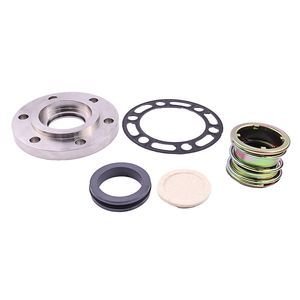
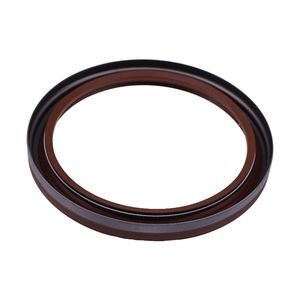
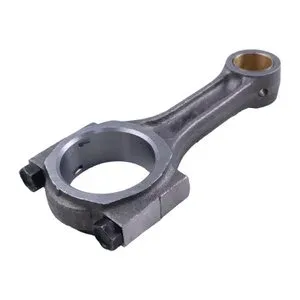
Matched Set Dispatch — Every 05G shaft seal kit ships with dimensional test data matching your compressor's crankshaft journal state, not just the base part number.
Technical Specifications
| Parameter |
Value |
| Part Number |
17-44145-00 |
| Product Type |
Crankshaft Seal Kit |
| Cross-Reference |
17-44145-00, 17-44130-00, 17-44003-00, 17-44003-01, 17-57027-00 (for identification purposes) |
| Machine Fitment |
Carrier Optima, Supra 950MT, Supra 950, Supra 922, Supra 944, X4 7500, Ultima XTC, Ultra XL XTC, Ultra XT, Ultra, X2 2100A, X2 2100R, X2 2500A, X2 2500R, Phoenix Ultra, Advantage, Eagle, Extra, Thunderbird |
| Compressor Type |
05G |
| Shaft Diameter |
38 mm |
| Dimensional Tolerance (Shaft Interface) |
±0.015 mm |
| Primary Seal Material |
NBR (nitrile butadiene rubber) |
| Seal Hardness |
70±5 Shore A |
| Seal Housing Material |
AISI 304 stainless steel |
| Surface Finish (Lip Contact Zone) |
Ra ≤0.2 μm |
| Operating Temperature Range |
–20°C to +120°C |
| Differential Pressure Rating |
exceeding 1.8 MPa |
| Dynamic Pressure Test (Pre-shipment) |
2.0 MPa |
| Max Operating Speed |
3,600 RPM |
| Refrigerant Compatibility |
R-134a, R-410A |
| Condition |
New Aftermarket |
| Warranty |
6 months against manufacturing defects |
| Standards |
ISO 9001, ISO 6164, SAE J1927 |
Application Suitability
| Engine System |
Related Components |
| Rotating Shaft Sealing System |
Crankcase gaskets, main bearings, O-ring sets |
| Lubricant Retention Circuit |
Oil pump seals, bearing shells, crankshaft journal surfaces |
| Refrigerant Containment |
Suction and discharge valve plates, piston ring sets |
| Compressor Overhaul Sequence |
Complete master rebuild kits, thrust washers, connecting rod assemblies |
Preventing Repeat Teardowns After a Missed Seal Grade
A 05G Crankshaft Seal Kit engine overhaul rebuild ordered without confirming the shaft journal condition or compressor serial variant leads to oil migration discovered only after the unit is recharged — forcing a complete teardown repeat.
Verify the shaft diameter and previous rebuild history before selecting the seal grade.
When a compressor crankcase is opened, the shaft seal is the single component bridging the high-pressure refrigerant circuit and the lubricated crankcase. Sending a standard-dimension seal to a unit whose crankshaft has already been ground or polished during a prior rebuild is a pattern I have traced through multiple warranty returns. The seal physically fits, but the lip contact pressure is insufficient to hold differential pressure, and oil migrates into the condenser within the first operational cycle [NEED_CITE: compressor shaft seal failure modes and oil migration diagnostics]. The result is a low-oil-shutoff event that looks like a new seal defect but is actually a dimensional mismatch.

Where This Seal Sits in the Compressor Rebuild Sequence
The shaft seal occupies the output end of the crankshaft, directly behind the coupling or clutch hub. During a full 05G Crankshaft Seal Kit engine overhaul rebuild, it is replaced alongside the crankcase gasket set, main bearing shells, and any O-rings sealing the oil pickup passage. Installing the shaft seal without renewing the adjacent gaskets leaves older, compression-set elastomers as the weak link in the same sealed boundary.
Matching Seal Dimensions to Crankshaft Rebuild History
Compressor crankshafts that have been reground during a prior overhaul may have journal diameters below the nominal 38 mm specification. If the shaft was polished to remove scoring but the material removal was not documented, a standard-tolerance seal will sit loose on the journal [NEED_CITE: crankshaft journal measurement procedures for compressor rebuilds]. Always request the prior rebuild record or measure the shaft with a micrometer before confirming the seal variant. Some Carrier serial prefixes correspond to factory undersize configurations that require specific seal kit contents.
Interpreting the Critical Tolerances
The ±0.015 mm dimensional tolerance on the 38 mm shaft interface ensures the NBR seal lip maintains consistent radial pressure across the contact band. The Ra ≤0.2 μm surface finish requirement on the lip contact zone prevents micro-channeling of refrigerant oil past the dynamic seal face. AISI 304 stainless steel housing resists corrosion from ester-based refrigerant oils that degrade carbon steel housings over extended service intervals. The 70±5 Shore A hardness balances lip flexibility for startup sealing against extrusion resistance at the 1.8 MPa differential pressure rating.
The Hidden Cost of Skipping Journal Measurement
Replacing the shaft seal without addressing crankshaft runout, bearing wear, or incorrect oil charge means the root cause remains active. A worn main bearing allows the shaft to orbit, creating a dynamic gap that no static seal can close. I have processed claims where the seal was blamed for leakage, but post-teardown inspection revealed bearing clearances far outside specification [NEED_CITE: relationship between main bearing wear and shaft seal leakage in reciprocating compressors]. The new seal failed because the system condition that destroyed the original seal was never corrected.
Verified Supply for Compressor Overhaul Programs
Own production on selected seal kit lines and qualified sourced supply share identical QC protocols and the same 6-month warranty, managed under one account. Eight component categories — from shaft seals to complete overhaul gasket sets — ship as a single consignment, eliminating split freight. Minimum order from one piece supports emergency single-unit repairs or sample fitment before bulk commitment. Cross-reference verification covers superseded part numbers across Carrier compressor generations, catching interchange errors before dispatch. Technical support confirms seal variant compatibility against compressor serial number and journal measurement data.
Documentation & Verification
- Commercial invoice listing each seal kit by verified cross-reference number (reference only)
- Dimensional inspection record showing shaft interface tolerance and dynamic pressure test result
- Compatibility sheet mapping kit contents to specific Carrier compressor serial prefixes
- Warranty terms covering manufacturing defects for the stated 6-month period
- Packing photographs confirming sealed box condition and anti-rust oil application before crate closure
Installation & Rebuild Sequence
- Clean the crankshaft journal to bare metal and verify 38 mm diameter with a micrometer before unboxing the NBR seal
- Inspect main bearing clearance and shaft runout; replace bearings if orbit exceeds specification to protect the new seal lip
- Lubricate the seal lip with the same ester oil specified for the refrigerant circuit before sliding it onto the journal
- Torque the seal housing fasteners in the manufacturer's star pattern to avoid distorting the AISI 304 retainer
- Run the compressor unloaded for the initial cycle and check the seal face for refrigerant weep before charging the full circuit
Requesting the Correct Kit for Your Compressor
Provide the compressor model, serial number prefix, and any available crankshaft journal measurement data to confirm the correct 05G Crankshaft Seal Kit engine overhaul rebuild variant. If the unit has been rebuilt previously, share the overhaul record or photographs of the existing seal markings so the cross-reference can be verified against superseded numbers before shipment.
Frequently Asked Questions
Q: What components are included in the 05G crankshaft seal kit — does it cover every seal at the shaft end?
A: The kit contains the primary NBR dynamic seal, the AISI 304 housing, and the O-rings required for the standard 05G compressor configuration. Some Carrier serial variants require additional spacers or alternate O-ring sizes. Confirm your compressor serial prefix so the kit contents list is matched to your specific build before dispatch.
Q: My compressor was rebuilt before — how do I confirm the shaft diameter and seal grade still match?
A: Measure the crankshaft journal with a micrometer at the seal contact zone and compare the reading against the nominal 38 mm specification. If the shaft was reground during a prior overhaul, the diameter may be below standard, requiring a variant seal kit. Share the measurement data or prior rebuild records so the correct grade can be confirmed.
Q: Different Carrier units share the same base model number but use different seal variants — how is the right one identified?
A: Carrier assigned different seal configurations across production runs based on compressor serial prefixes and refrigerant circuit revisions. Cross-reference numbers alone do not always capture these differences. Providing the full serial number from the compressor nameplate allows the kit contents to be verified against the specific variant your unit requires.
Q: What other compressor components should be inspected when the crankcase is opened for a seal replacement?
A: Main bearing shells, crankshaft journal surfaces, and the oil pump pickup screen should all be evaluated. Worn bearings allow shaft orbit that destroys the new seal prematurely. Scoring on the journal surface prevents the seal lip from forming a consistent contact band. Address these system-level conditions during the same teardown to prevent repeat failure.
Q: How do I confirm my Carrier Optima or Supra compressor serial is compatible with this kit?
A: Supply the compressor serial number from the unit nameplate along with any existing seal markings or cross-reference numbers visible on the old component. The technical team cross-checks these against the verified fitment table for Optima, Supra, Ultima, and other Carrier platforms to confirm the kit contents match your exact serial variant.