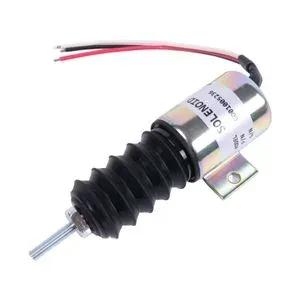
Matched Sets Shipped Together — Every 12V stop solenoid P610-B1V12 we dispatch includes a cross-reference sheet confirming stroke length, pull-in voltage, and mounting pattern against the specific engine serial variant you provide.
Technical Specifications
| Parameter |
Value |
| Part Number |
P610-B1V12 |
| Product Type |
Stop Solenoid |
| Cross-Reference |
P610-B1V12 (reference only), P610B1V12 (reference only) |
| Machine Fitment |
Various excavator, loader, bulldozer, tractor and harvester models using Trombetta-style pull solenoid for engine fuel shutoff — fits CAT, Komatsu, Hitachi, Volvo, Hyundai, Doosan, Kobelco, Sany, XCMG, Liebherr, JCB, Case equipment |
| Voltage |
12V DC |
| Solenoid Type |
Pull type |
| Operating Voltage Tolerance |
±10% |
| Plunger Material |
Hardened steel |
| Housing |
Precision-machined, surface-treated for corrosion resistance |
| Return System |
Dual-spring |
| Cycle Life |
100,000+ cycles |
| Dimensional Tolerance |
±0.05 mm |
| Internal Contacts |
Sealed against oxidation and moisture ingress |
| Condition |
New Aftermarket |
| Warranty |
3–12 months against manufacturing defects |
| MOQ |
1 piece |
| Standard |
ISO 9001 |
Application Suitability
| Engine System |
Related Components |
| Fuel shutoff circuit |
Fuel rack linkage, pivot bushings, return springs |
| Engine auxiliary shutdown |
Ignition switch wiring, relay, fuse block |
| ECU-triggered cut-off |
Engine control module signal path, harness connectors |
| Emergency stop sequence |
Dashboard switch, safety relay, wiring loom |
Why a New Solenoid Burns Out Within Weeks of an Engine Rebuild
The 12V stop solenoid P610-B1V12 engine rebuild failure pattern almost always traces back to a charging system fault or wiring short left undiagnosed during the overhaul. I learned this the hard way managing a loader fleet in Kazakhstan: we replaced a failed solenoid, watched the new unit burn out on the same machine within days, and only then discovered a frayed harness was feeding voltage spikes into the coil circuit. [NEED_CITE: diesel engine electrical system fault diagnosis standards for mobile equipment]
A solenoid that fails prematurely rarely failed on its own. The coil draws current continuously during the pull-in phase, and any resistance in the supply circuit — corroded terminals, undersized wire, a weak alternator — forces the unit to operate outside its ±10% voltage tolerance. When a rebuild shop replaces the solenoid without checking the entire shutdown circuit, the new component inherits the same electrical abuse that destroyed its predecessor. This 12V stop solenoid P610-B1V12 engine rebuild sequence demands that the fuel rack travel, linkage geometry, and return spring tension are all verified at the bench before the unit goes back on the engine.

The Fuel Shutoff Subsystem and What Surrounds This Solenoid
This stop solenoid sits at the end of the fuel cutoff subsystem, where an electrical signal translates into mechanical movement that closes the fuel rack. When planning a 12V stop solenoid P610-B1V12 engine rebuild, treat the entire subsystem as a single repair scope: the solenoid, the mechanical linkage connecting plunger to fuel rack, the pivot points that guide that linkage, and the dual-spring return mechanism that retracts the plunger when power is removed.
Worn pivot bushings or binding linkage will place lateral load on the plunger, accelerating wear inside the housing even when the electrical side functions correctly. The same applies to a fatigued return spring — if spring tension drops below the threshold needed to fully retract the plunger, the engine may not shut down cleanly, or may restart with difficulty because the fuel rack never reaches its full open position. [NEED_CITE: diesel fuel rack linkage inspection procedures during engine overhaul]
Engine Serial Variants and Why the Same Reference Ships Differently
Across excavator, loader, and bulldozer platforms, the same base solenoid reference can cover engines with different stroke requirements or mounting configurations. An engine that was previously rebuilt may have had its fuel pump or governor adjusted, changing the linkage geometry the solenoid must work against. Confirming the engine serial number — and whether the block has been through a prior overhaul — is essential before committing to a specific stroke length.
Dimensional tolerance of ±0.05 mm ensures the housing and mounting pattern align with the original Trombetta footprint, but port position and linkage attachment geometry must be verified against the engine service manual for your specific serial range. Request a sample for physical fitment confirmation on the actual engine build before ordering for a full fleet rebuild. [NEED_CITE: engine serial variant identification for fuel system components]
What the Specifications Mean in Practice
The 12V DC rating with ±10% tolerance means this solenoid expects between 10.8V and 13.2V at the coil terminals during operation. A machine with a weak alternator or corroded battery cables may deliver voltage outside this window under load, causing the coil to overheat or the plunger to pull in incompletely. Diagnosing the charging circuit with a multimeter at the solenoid connector — not just at the battery — should happen before installation.
Hardened steel plunger material resists deformation under the repeated impact of pull-in cycles, maintaining stroke consistency across the rated 100,000+ cycle life. The dual-spring return system provides redundant retraction force; if one spring fatigues, the second maintains enough force to close the fuel rack, though the unit should be replaced at that point rather than run to failure.
Sealed internal contacts prevent moisture and oxidation from increasing electrical resistance inside the coil circuit — a common failure mode in machines operating in humid or washdown environments where unsealed units corrode from the inside out.
The Cost of Replacing the Solenoid Without Finding the Root Cause
An engine rebuild that swaps the stop solenoid without auditing the wiring harness, relay, and charging system often sees the replacement fail within the same operating season. The cost is not just the second solenoid — it is the machine downtime, the labor to pull and re-fit, and the loss of confidence in the repair. [NEED_CITE: repeated component failure root cause analysis in heavy equipment maintenance]
When a 12V stop solenoid P610-B1V12 engine rebuild goes wrong, the symptom usually appears as a coil that reads open circuit on a multimeter, or a plunger that pulls in but will not release. Both point back to electrical abuse or mechanical binding that the rebuild did not address. Checking the entire shutdown circuit takes time on the bench, but it prevents the far more expensive cycle of repeat failures in the field.
Why Rebuild Shops Source This Component Through Us
Selected solenoid lines are produced in our own Guangzhou facility, with the remainder sourced from ISO 9001 qualified manufacturing partners — both channels carry identical QC protocols and warranty terms, so there is no quality gap between self-produced and sourced supply.
Part identification works from a part number, machine model, photograph of the old unit, or nameplate image — useful when the original label is worn or painted over and only the machine model remains as a starting point. Cross-reference verification covers superseded and alternate numbers, catching errors that copied reference tables carry forward between sellers.
Minimum order is one piece, so a rebuild shop can order a single sample for fitment confirmation before committing to bulk for a fleet overhaul. The technical team is available to confirm compatibility, stroke length, and voltage grade against your specific engine serial number. Eight product categories under one account mean the solenoid ships alongside filters, gaskets, seal kits, and engine internal parts in a single consignment. [NEED_CITE: aftermarket construction machinery parts sourcing and quality verification standards]
Documentation & Verification
- Commercial invoice and packing list matching solenoid part number and quantity to purchase order
- Compatibility and cross-reference sheet confirming P610-B1V12 (reference only) against your engine serial number
- Quality inspection record covering pull-in voltage, hold current, and mechanical stroke measurement
- Warranty terms document specifying coverage period against manufacturing defects
- Packing photographs showing solenoid condition and labeling before dispatch
- HS code and customs documentation support for international shipment
Installation & Rebuild Sequence
- Verify fuel rack travel and linkage pivot wear before mounting the solenoid to ensure full stroke engagement
- Clean all electrical terminals and check supply voltage at the solenoid connector with engine running to confirm it falls within 10.8V–13.2V
- Torque mounting fasteners to specification and confirm plunger alignment with linkage attachment point before energizing
- Test shutdown sequence with engine at idle and under load, verifying complete fuel rack closure and clean restart
- Inspect return spring tension by manually retracting the plunger and confirming smooth, binding-free travel through full stroke
Confirm Your Engine Details Before Ordering
Provide your engine model, serial number, and any prior rebuild history so we can confirm the correct stroke length and mounting variant for your specific application. If the original solenoid label is unreadable, send a photograph of the unit and the engine nameplate — we will verify the cross-reference and dimensional compatibility before shipping.
Frequently Asked Questions
Q: What else in the fuel shutoff circuit should I inspect when replacing this solenoid?
A: Check the entire shutdown circuit: wiring harness for shorts or corrosion, relay contacts for pitting, fuse rating against the solenoid's hold current, and the charging system output at the solenoid connector. On the mechanical side, inspect fuel rack linkage pivot bushings for wear, return spring tension, and any binding that would place lateral load on the plunger during operation.
Q: How do I confirm the correct stroke length and mounting variant for my engine serial number?
A: Provide the engine serial number and any overhaul history. The same base reference may cover different stroke lengths across engine generations, and a prior rebuild may have altered linkage geometry. We verify dimensional compatibility against your specific serial range and can supply a sample for physical fitment confirmation before you commit to a bulk order.
Q: The previous solenoid failed early — what root causes in the engine system should I check?
A: Premature failure usually traces to voltage outside the ±10% tolerance at the coil terminals, mechanical binding in the linkage, or a wiring short that feeds spikes into the coil. Test supply voltage at the connector with the engine running, inspect the harness for damaged insulation, and verify that the fuel rack moves freely without placing side load on the plunger.
Q: Can I get a sample to verify fitment before ordering for the full rebuild?
A: Yes. Minimum order is one piece. Order a single unit, install it on the specific engine build, and confirm stroke length, mounting alignment, and shutdown function before ordering the remainder for your fleet overhaul. This eliminates the risk of a dimensional mismatch discovered only after the full batch arrives.
Q: Does the same P610-B1V12 reference fit all engine variants in my machine series?
A: Not necessarily. The same base reference can cover engines with different stroke requirements, port positions, or mounting configurations depending on the engine serial range and whether the unit has been previously rebuilt. Always verify against your specific engine serial number rather than assuming interchangeability across a model series.