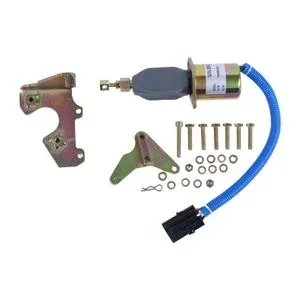
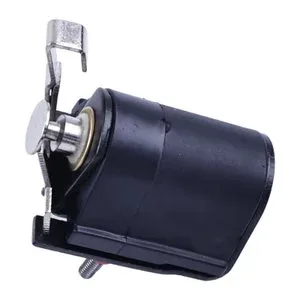
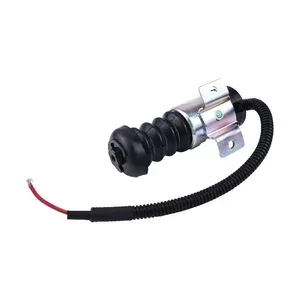
Engine Serial Variants Confirmed — Every AT318141 starter motor ships after verifying Yanmar TNV suffix and Hitachi Zaxis U-series build variant against the engine plate.
Technical Specifications
| Parameter |
Value |
| Part Number |
AT318141 |
| Cross-Reference |
AT318141 (reference only) |
| Product Type |
Starter Motor |
| Machine Fitment |
Zaxis 35U-2, Zaxis 35U-3, Zaxis 35U-5N, Zaxis 50U-2, Zaxis 50U-3, Zaxis 50U-5N, 3TNV88-BNHB, 3TNV88F, 3TNV88-NHBB, 4TNV88-BNHB, 4TNV88C, 4TNV88-NHBB |
| Brand Compatibility |
Fits Hitachi, Yanmar |
| Voltage |
12 Volts |
| Teeth/Splines |
15 Teeth/Splines |
| Condition |
New Aftermarket |
| Warranty |
3–12 month warranty against manufacturing defects |
| Certification |
ISO 9001 |
Application Suitability
| Engine System |
Related Components |
| Engine Starting Circuit |
Battery cables, starter relay, engine ground strap |
| Flywheel Assembly |
Ring gear, flywheel housing, mounting bolts |
| Engine Overhaul Package |
Overhaul gasket set, bearing shells, piston rings, engine harness |
| Electrical Diagnostic |
Alternator, voltage regulator, ignition switch |
When a Rebuilt Engine Refuses to Crank — The Starter Is Often the Last Piece Overlooked
A matched starter motor engine rebuild replacement prevents the most expensive kind of failure: the one that happens after everything else is already assembled.
During a full Yanmar 3TNV88 teardown, the focus stays on crankshaft journals, cylinder bore measurements, and bearing clearances. The starter motor sits on the bench, assumed functional, until the engine is buttoned up and the key turns to nothing but a slow, labored crank. I have seen a complete 4TNV88 rebuild stalled for days on a Middle East job site because the starter was pulling insufficient current through corroded terminals nobody thought to check. The rebuilt engine never ran under its own power until the entire starting circuit — not just the starter — was addressed [NEED_CITE: engine auxiliary starting system failure root causes in heavy-duty diesel applications]. A starter motor engine rebuild replacement only works when it is spec-matched to the flywheel ring gear and electrical architecture of the specific engine variant.

The Starting System Inside the TNV and Zaxis Powertrain
This starter motor occupies the engine auxiliary starting system within the Yanmar TNV-series and Hitachi Zaxis U-series powertrain architecture. It is not an isolated component but part of a circuit that includes the battery, cables, relay, ground strap, and flywheel ring gear. When any node in that circuit is degraded, the Starter Motor engine rebuild replacement absorbs the stress and fails prematurely. Engine rebuild shops that replace the starter without auditing the full circuit are solving only half the problem.
Engine Serial Variants That Change the Starter You Need
Yanmar stamps suffixes like BNHB, NHBB, F, and C on the 3TNV88 and 4TNV88 nameplates, and each suffix can alter the flywheel ring gear tooth count, mounting bolt pattern, or solenoid orientation. A starter that physically bolts on but engages the ring gear at the wrong depth will strip teeth within hours [NEED_CITE: Yanmar TNV engine serial variant differences and auxiliary component compatibility]. The Hitachi Zaxis 35U-2 through 50U-5N range spans multiple TNV engine generations, making serial-level verification essential before dispatch. This is why the build sheet and engine serial number must be checked against the cross-reference table, not just the base model designation.
Reading the Specs That Actually Matter on Site
The 12V rating aligns with the standard electrical architecture across all Yanmar TNV and Hitachi Zaxis U-series platforms — a 24V unit would not engage the solenoid properly, and a lower-voltage variant would overheat under cranking load. The 15-tooth spline is the engagement interface with the flywheel ring gear; a mismatch here means the pinion either fails to mesh or grinds against the gear face. New aftermarket condition with ISO 9001 production oversight means the unit arrives with consistent cranking torque output, which matters when a cold-soaked diesel engine demands peak starting force at dawn on a construction site. The 3–12 month warranty window covers manufacturing defects, giving rebuild shops adequate time to validate performance through initial break-in cycles.
The Cost of Wrong-Sizing a Starter During Rebuild
Sending a 12-tooth or 11-tooth starter to a flywheel cut for 15 teeth results in partial engagement, accelerated ring gear wear, and eventual no-crank conditions. I have watched a contractor in the Gulf lose a full week of excavation schedule because the replacement starter engaged three teeth instead of fifteen, shearing them off inside the bell housing [NEED_CITE: starter motor tooth engagement failure modes in compact excavator diesel engines]. The engine had to be partially disassembled again to inspect flywheel damage. A starter motor engine rebuild replacement that is dimensionally correct but electrically mismatched — wrong solenoid throw or cranking amperage — produces a slower failure that is harder to diagnose and just as costly in cumulative downtime.
Why Source This Starter Through a System-Matched Supplier
Own production lines and qualified sourced supply operate under identical QC and warranty terms, so the AT318141 unit you receive carries consistent quality regardless of origin. Eight product categories under one account means the starter, overhaul gasket set, bearing shells, and electrical connectors ship as one consignment. Single-piece minimum order allows a repair centre to validate fitment on one engine before committing to fleet quantities. Guangzhou warehouse stock on common TNV-series starters enables rapid dispatch when a machine is already down. Cross-reference verification covers superseded numbers and variant-specific part numbers, reducing the chance of a mismatch reaching the site. A technical team reviews engine serial numbers and rebuild history to confirm the correct variant ships.
Documentation & Verification
- Commercial invoice listing AT318141 with machine model and engine serial cross-reference
- Compatibility sheet mapping 15-tooth spline to specific Yanmar TNV suffix variants (reference only)
- Cranking speed and torque test record included for the dispatched unit
- Warranty terms specifying coverage for manufacturing defects over the stated period
- Packing photographs showing starter motor condition and protective wrapping before crate closure
- HS code documentation for starter motor customs clearance in destination country
Installation & Rebuild Sequence
- Verify flywheel ring gear tooth count matches the 15-tooth pinion before mounting the starter
- Clean battery cable terminals and ground strap contact surfaces to eliminate voltage drop
- Torque starter mounting bolts to Yanmar specification to prevent flange misalignment under vibration
- Test cranking speed with a fully charged battery before reassembling engine bay components
- Log first-start cranking time and amperage draw to establish a baseline for future diagnostics
Tell Us Your Engine Build — We Match the Starter to It
Provide the Yanmar engine model with full serial number and suffix, or the Hitachi Zaxis machine model and serial plate photograph. If the engine has been rebuilt previously, note the rebuild shop and any known modifications to the flywheel or electrical system. This information allows verification of the correct spline count, mounting pattern, and solenoid configuration before the unit leaves the warehouse.
Frequently Asked Questions
Q: What other electrical components should be inspected or replaced when servicing this starter?
A: Battery cables, starter relay, engine ground strap, and flywheel ring gear teeth should all be checked. Corroded terminals or a worn ground strap introduce voltage drop that forces the starter to draw excess current, causing premature failure. Replace the relay if it shows pitting on the contact surfaces.
Q: How do Yanmar engine serial variants affect starter compatibility?
A: Suffixes such as BNHB, NHBB, F, and C can indicate different flywheel ring gear configurations, mounting bolt patterns, or solenoid orientations within the same base engine model. Providing the full engine serial number and suffix ensures the correct 15-tooth variant is matched to your specific build.
Q: What is included in a complete engine overhaul kit alongside this starter motor?
A: A matched overhaul package typically includes gasket sets, main and con-rod bearing shells, piston rings, cylinder liners where applicable, and valve train components. The starter motor is specified separately as part of the engine auxiliary system and is matched to the engine serial variant.
Q: How to diagnose whether slow cranking is caused by the starter or another system component?
A: Measure voltage at the starter terminal during cranking. If voltage drops significantly below battery terminal voltage, the fault lies in cables or connections. If voltage is adequate but cranking speed remains low, the starter itself or the engine mechanical condition requires investigation.
Q: How to confirm the correct starter when only the engine model plate is readable?
A: Photograph the engine nameplate showing model, serial number, and any suffix codes. Cross-reference this against the compatibility sheet for the AT318141 to verify spline count and mounting configuration before ordering.