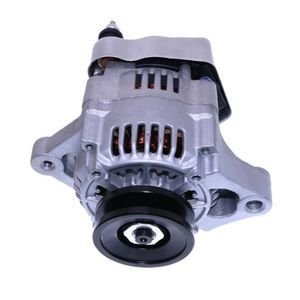
Engine Serial Variants Confirmed — Each A187873 alternator is matched to CASE 4391, 6590, and PX-series engine builds by serial range to avoid mounting and pulley mismatches during rebuild.
Technical Specifications
| Parameter |
Value |
| Part Number |
A187873 |
| Product Type |
Alternator |
| Cross-Reference |
A186125, AQ187873, Q187873, 3604448, 3604448R, 3604448RX, 3604480RX, 3604480, 3911248, 3920679, 39206791, J920679, 1103174, 1105170, 132000090065, 4029/70017, 700710688, 8003/00355, 402970017, 800300355 (reference only) |
| Machine Fitment |
170C, 220B, 480E, 480E LL, 480F, 480F LL, 580E, 580K, 580L, 580SE, 580SK, 580SL, 580M, 580SM, 590, 590L, 590SL, 590SM, 680K, 680L, 780C, 780D, 850D, 850H, 850K, 1150E, 1150H, 1155E, 1550, 1818, 1835, 1835B, 1835C, 1840, 1845C, 1896, 40XT, 450C, 455C, 570LXT, 570MXT, 621, 721, 821, 921, W11B, 584E, 585E, 585G, 586E, 586G, 588G, 686G, 686GXR, 688G, 2096, 4000, 5000, 5120, 5130, 5140, 5150, 5220, 5230, 5240, 5250, 550, 550E, 550G, 550H, 550H-IND, 6030, 8825, 8825HP, 8830, 8840, 8850, MX100, MX110, MX120, MX135, 360, 560, 660, 760, 860, 960, DH4, DH4B, TF300 |
| Voltage |
12V |
| Condition |
New Aftermarket |
| Warranty |
3–12 months against manufacturing defects |
| Standards |
ISO 9001 |
Application Suitability
| Engine System |
Related Components |
| Auxiliary electrical charging circuit |
Starter motor, belt drive, tensioner assembly |
| ECU and sensor power supply |
Voltage regulator wiring harness, battery cables |
| Engine overhaul electrical refresh |
Full wiring loom inspection, sensor connector audit |
| Preventive maintenance at major service |
Pulley alignment check, battery load test |
Why a Charging Fault Is Rarely Just the Alternator
A replacement 12V alternator often fails again within weeks when the root cause sits elsewhere in the engine electrical system.
In the workshops I worked through across Shandong, I saw machines come back with a second charging failure before the first service invoice was even settled. The pattern was consistent: the belt drive was glazed, the tensioner had lost its spring rate, or a corroded battery terminal was forcing the new unit to work outside its regulation window. Swapping the alternator without auditing the full circuit is the most common repeat-failure sequence on CASE 4391 and 6590-family engines [NEED_CITE: electrical system root-cause diagnosis methodology for heavy diesel engines]. A proper 12V alternator engine electrical part rebuild approach addresses the fault, not just the failed component.

The Alternator's Role Inside the Engine Electrical Ecosystem
This unit sits at the center of the engine auxiliary electrical system, feeding stable voltage to the ECU, sensor arrays, and starter motor circuit. On CASE 4391T and 6590TA engines with electronic fuel injection, voltage ripple beyond specification triggers false fault codes that mimic injector or sensor failures. When sourcing a 12V alternator engine electrical part rebuild, the unit must be evaluated alongside the complete charging and starting loop to prevent misdiagnosis downstream.
Engine Serial Variants That Change the Fitment
The same base alternator number maps to different mounting brackets, pulley diameters, and connector types across the 4390, 4391, 6590, and PX-series engine families. An engine that has been previously rebuilt or swapped may carry a serial number that no longer matches the original build record. Confirming the exact engine serial and variant designation before dispatch prevents the situation where a 12V alternator engine electrical part rebuild arrives on site but will not bolt to the existing bracket or align with the belt path [NEED_CITE: engine serial variant identification practices for aftermarket parts].
Voltage Regulation and Load Cycling Demands
The 12V output must hold steady across the full engine speed range while the machine cycles through hydraulic pump loads that create sharp electrical transients. Internal rectifier diodes and bearing specifications in this unit are selected to absorb the voltage spikes generated during backhoe swing and loader bucket dump cycles. Stable regulation protects the ECU from brownout conditions that cause erratic fueling and unexplained power derates. The quality inspection record covers no-load voltage, full-load regulation, and ripple measurement to confirm the unit meets these requirements before it leaves the bench.
The Hidden Cost of Skipping System-Level Verification
Replacing the alternator in isolation and ignoring the belt drive condition, tensioner fatigue, and battery health leads to premature repeat failure of the new unit. The second failure typically damages the replacement beyond warranty coverage because the root cause was never corrected. On a machine already torn down for a 12V alternator engine electrical part rebuild, the labor cost of a second teardown far exceeds the price of inspecting and replacing adjacent components during the first service event [NEED_CITE: repeat failure cost analysis for engine electrical components].
What Makes Sourcing Here Different for Engine Rebuilds
Selected part lines are produced in our own facility while the remainder comes from qualified ISO 9001 manufacturing partners, and both carry identical quality control and warranty terms. Eight product categories mean the alternator ships alongside the belt kit, tensioner, and sensor connectors in a single consignment, removing the multi-supplier coordination problem. Orders start from one piece, so a single emergency replacement does not force an unnecessary bulk purchase. Part identification works from the number, the machine model, a photograph, or a nameplate image. Cross-reference verification covers superseded and alternate numbers across the CASE engine range. A technical team is available to confirm compatibility and grade before commitment, backed by sample supply for fitment confirmation before bulk orders.
Documentation & Verification
- Commercial invoice and packing list referencing engine serial and alternator variant
- Part compatibility and cross-reference sheet marked as reference only for all OEM numbers
- Quality inspection record including no-load voltage, full-load regulation, and ripple test
- Warranty terms covering manufacturing defects for 3–12 months from dispatch
- Packing photographs showing anti-static foam protection inside branded carton
- HS code and customs documentation support for international engine parts shipments
Installation & Rebuild Sequence
- Verify belt drive alignment and tensioner spring rate before mounting the new alternator
- Clean all electrical contact surfaces on battery cables and grounding points to specification
- Confirm pulley matches the existing belt profile and multi-rib configuration
- Torque mounting bolts to engine manufacturer specification and re-check after initial run-in
- Run no-load voltage check at idle and rated RPM before returning machine to service
Send Your Engine Details for a Matched Quote
Provide the engine model, serial number, and any previous rebuild history so we can confirm the correct alternator variant and related electrical components. If the nameplate is worn or painted over, a clear photograph of the mounting bracket and connector allows identification without the number. Request a full engine electrical system audit list alongside the alternator quote to ensure every related item ships in the same dispatch.
Frequently Asked Questions
Q: What other engine electrical components should I inspect when the alternator fails?
A: Check the belt drive for glazing, the tensioner for spring fatigue, battery terminals for corrosion, and the wiring harness for chafed insulation. Voltage drops across any of these points force the alternator to operate outside its regulation window. Inspecting and replacing worn adjacent components during the same service event prevents a second failure within weeks of the alternator replacement.
Q: Do different CASE engine serial variants use the same alternator?
A: Not always. The 4390, 4391, 6590, and PX-series families share a base part number but differ in mounting bracket geometry, pulley diameter, and connector type. Providing the exact engine serial number allows us to verify which variant your specific build requires and avoid receiving a unit that does not align with the existing belt path or wiring harness.
Q: How do I confirm the correct unit if my engine was previously rebuilt or swapped?
A: Engine swaps and rebuilds often leave the machine with a serial number that no longer matches the original build record. Send a photograph of the old alternator nameplate, the mounting bracket, and the connector. Cross-referencing these physical details against the engine build data is more reliable than relying on the machine model alone.
Q: What system-level faults cause premature alternator failure?
A: Common root causes include a slipping belt that allows voltage to drop below ECU thresholds, corroded battery connections that create resistance heating, and hydraulic load transients that spike beyond the rectifier rating. Addressing these underlying conditions during installation is essential; otherwise the replacement unit inherits the same destructive environment as the one it replaced.
Q: Can this alternator ship as part of a complete engine overhaul kit?
A: Yes. The alternator can be consolidated with belt drive components, tensioner assemblies, sensor connectors, and other engine auxiliary electrical parts in a single shipment. Provide the full overhaul parts list or engine service manual reference so we can verify every item matches your specific engine serial and configuration.