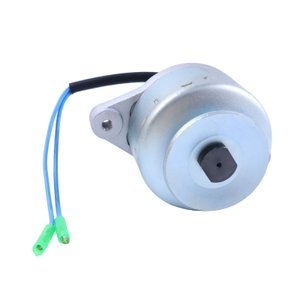
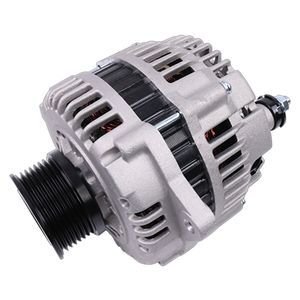
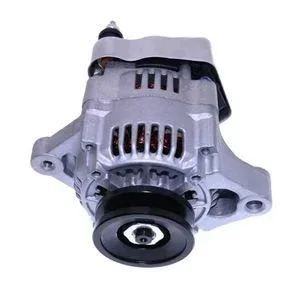
Matched Sets Shipped — Alternator, regulator harness, and terminal hardware verified against Isuzu 4HK1 / 4BD1 serial variants before dispatch.
Technical Specifications
| Parameter |
Value |
| Part Number |
898076-2600 LR1110-735 |
| Product Type |
Alternator |
| Cross-Reference |
898076-2600 (reference only), LR1110-735 (reference only), 8980762602 (reference only) |
| Machine Fitment |
Isuzu 4HK1, Isuzu 4BD1 |
| Voltage |
12V |
| Output Regulation |
13.8–14.4V at 2,000 RPM |
| Regulator Calibration |
14.2V ±0.1V at 25°C ambient |
| Rotor Insulation Class |
Class H (180°C thermal rating) |
| Rectifier Diodes |
Six 60A Schottky diodes, 175°C junction temperature rating |
| Stator Housing |
Die-cast aluminum |
| Bearing Bore Tolerance |
±0.015 mm |
| Vibration Endurance |
5–500 Hz, 1.5g RMS |
| Thermal Soak Test |
30-minute at 85°C |
| Load Test Range |
12V–14.4V across 0–3,000 RPM |
| Condition |
New Aftermarket |
| Warranty |
3–12 months against manufacturing defects |
| Standards |
ISO 9001, ISO 8528-3 |
| MOQ |
1 piece |
Application Suitability
| Engine System |
Related Components |
| Auxiliary Electrical (4HK1) |
Voltage regulator harness, battery cables, main relay, ECU power feed |
| Auxiliary Electrical (4BD1) |
Charge warning circuit, isolation switch, starter motor solenoid feed |
| Emission Controls (4HK1) |
EGR valve actuator power supply, boost pressure sensor reference voltage |
| Engine Management (Both) |
CAN bus termination resistors, diagnostic connector power, cab HVAC blower relay |
Electrical System Failures That Survive a Simple Swap
A replacement 12V Alternator for Isuzu 4HK1 4BD1 engine rebuild solves nothing if the root cause remains in the wiring harness or battery circuit.
In the pit, I have seen units returned to service with a freshly installed alternator only to fail again within a fortnight. The new component was absorbing voltage spikes from a degraded regulator harness or back-feeding through sulfated battery terminals. Rebuild shops that skip the adjacent circuit inspection end up absorbing the warranty cost on a part that was never at fault. [NEED_CITE: electrical system diagnostic procedures for mobile diesel engines]
The Alternator Within the Engine Auxiliary Circuit
The 12V Alternator for Isuzu 4HK1 4BD1 engine rebuild sits at the origin of the entire auxiliary electrical system. Every sensor, actuator, and control module on the engine depends on the stability of its output. During a rebuild, the alternator is often reinstalled without verifying that its output matches the tolerance expected by the ECU and CAN bus architecture. A unit calibrated outside the 13.8–14.4V window at operating RPM forces the battery to compensate, masking the problem until an electronic governor or fuel metering module begins logging phantom fault codes.
Sequence Variants and Rebuild History Matter
Isuzu 4HK1 and 4BD1 families contain multiple alternator mounting patterns and pulley alignments across production years. An engine that has been through a previous rebuild may carry a non-standard bracket or a pulley with a different groove profile. Confirming the engine serial number and measuring the existing unit against the cross-reference 898076-2600 LR1110-735 (for identification purposes) prevents the most common fitment rejection. [NEED_CITE: Isuzu 4HK1 4BD1 engine serial variant identification guides]
Regulator Calibration and Thermal Loading
The internal regulator holds 14.2V ±0.1V at 25°C ambient. In high-temperature deployments common across open-pit and quarry sites, ambient heat pushes the stator and rectifier beyond standard operating margins. The Class H rotor insulation and 175°C-rated Schottky diodes provide thermal headroom that prevents voltage creep under continuous load. A regulator that drifts upward in heat overcharges the battery, boiling electrolyte and damaging sensitive engine management electronics that the rebuild was meant to restore.

What Happens When the Wrong Grade Goes In
Installing an alternator with a bore tolerance wider than ±0.015 mm introduces rotor runout that the bearings cannot absorb. Vibration at the 5–500 Hz range transfers directly into the mounting bracket and adjacent wiring connectors. I have traced repeated electrical gremlins on a 4HK1-powered excavator back to an alternator whose bearing bore was cutting into the stator winding insulation within the first hundred hours. The machine never threw a charge fault — it simply developed intermittent CAN bus dropouts that shut down the hydraulic pilot monitor at random. [NEED_CITE: alternator bearing bore tolerance impact on engine auxiliary systems]
Why Source the Auxiliary Electrical Set Here
Our own production lines and qualified sourced supply carry the same QC and warranty terms, so a matched alternator and regulator harness ship under one account. Eight categories of engine parts mean the complete overhaul electrical list — alternator, sensors, relays, seal kits — consolidates into a single dispatch. One-piece minimum applies, so a single emergency replacement moves as fast as a fleet order. Part identification works from the existing housing stamp, the engine serial plate, or a photograph when the nameplate is painted over. Cross-reference verification catches superseded numbers before the wrong variant leaves the Guangzhou warehouse. A sample ships first for fitment confirmation when a bulk commitment is on the table.
Documentation & Verification
- Commercial invoice listing 898076-2600 LR1110-735 with engine model declared
- Cross-reference sheet confirming 8980762602 interchange (reference only)
- Winding resistance, brush spring pressure, and no-load voltage drift recorded
- Warranty terms specifying coverage for manufacturing defects
- Packing photographs showing die-cast housing protection before crate closure
- HS code and export documentation aligned with destination customs requirements
Installation & Rebuild Sequence
- Clean mounting face and bracket threads before positioning the 898076-2600 LR1110-735 unit
- Verify pulley groove profile matches the existing drive belt specification
- Torque mounting bolts to engine manual values; check ±0.015 mm bore seating
- Test regulator output at 2,000 RPM before reconnecting ECU and CAN bus modules
- Run a 30-minute thermal soak with HVAC blower and lighting loads applied
- Log charge voltage at the battery terminals to confirm 13.8–14.4V under load
Request a System-Verified Quote
Provide the engine serial number, any previous rebuild records, and a photograph of the existing alternator housing stamp. This lets us confirm the correct mounting variant, match the pulley alignment, and quote the adjacent electrical components needed to complete the auxiliary system refresh without a second order.
Frequently Asked Questions
Q: What other engine electrical components should be inspected alongside the alternator during a rebuild?
A: The voltage regulator harness, battery cable terminals, main power relay, and ECU power feed should all be tested for resistance and insulation integrity. Degradation in any of these forces the new alternator to compensate, leading to early rectifier or regulator failure that presents as a component defect rather than a circuit fault.
Q: How do I confirm the correct alternator variant for my engine serial number?
A: Provide the full engine serial from the block stamping or a clear photograph of the existing alternator housing. Variant differences in mounting pattern and pulley offset exist within the 4HK1 and 4BD1 families. We cross-verify against the reference numbers and confirm bracket compatibility before release.
Q: Can unstable alternator output damage the ECU or engine management components?
A: Yes. Output drifting above 14.4V at operating temperature overcharges the battery and feeds excess voltage into the CAN bus and sensor reference circuits. This causes intermittent fault codes and can permanently damage the ECU power stage, which is why our units are regulator-calibrated and thermal-soak tested.
Q: What is included in the quality inspection before shipment?
A: Each unit undergoes winding resistance measurement, brush spring pressure check, no-load voltage drift test, and a load test across the 12V–14.4V range up to 3,000 RPM. Results are documented in the inspection record shipped with the unit, covering the parameters most relevant to engine auxiliary system reliability.
Q: How do I identify my engine model if the nameplate is worn or painted over?
A: Send a photograph of the engine block casting numbers, the injection pump data plate, or the existing alternator housing stamp. Our technical team cross-references these against the 4HK1 and 4BD1 serial databases to confirm the correct variant, even when the primary nameplate is no longer legible.