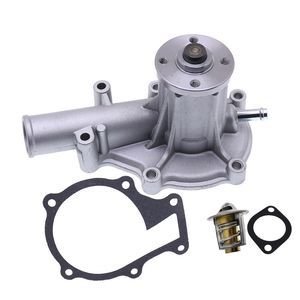
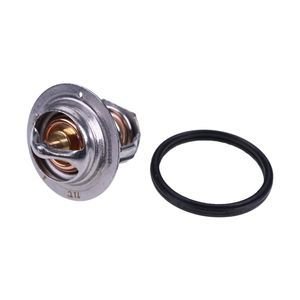
Matched Cooling Kit — pump flow and thermostat opening calibrated together so a D1005/D1105 rebuild ships with verified thermal balance rather than mismatched single parts.
Technical Specifications
| Parameter |
Value |
| Part Number |
16251-73032 |
| Product Type |
Water Pump & Thermostat Kit |
| Cross-Reference |
16251-73032, 16251-73030, 15531-73014, 15531-73010, 15531-73011, 15531-73013, 16851-73270, 15676-73270 (reference only) |
| Machine Fitment |
B1700D, B1700E, B1700HSD, B1700HSE, B21, B2100D, B2100E, B2100HSD, B2100HSE, B2400D, B2400E, B2400HSD, B2400HSE, B2410HSD, B2410HSDB, B2410HSE, B2710HSD, B2910HSD, B7500D, B7500DTN, B7500HSD, BX2200D, F2260, F2560, F2560E, F3060, KX61-2 |
| Water Pump Housing Material |
Precision-cast aluminum |
| Impeller Shaft Material |
Hardened steel |
| Thermostat Opening Temperature |
82°C ±2°C |
| Thermostat Actuator Type |
Wax-element |
| Sealing Surface Flatness Tolerance |
≤0.05 mm |
| Gasket Material |
Nitrile rubber compound |
| Gasket Temperature Rating |
150°C |
| Gasket Coolant Compatibility |
Ethylene glycol blends |
| Kit Contents |
Water pump, thermostat, thermostat gasket |
| Condition |
New Aftermarket |
| Warranty |
3–12 months against manufacturing defects |
| MOQ |
1 piece |
| Standards |
ISO 9001, SAE J1927 |
Application Suitability
| Engine System |
Related Components |
| Primary cooling circuit |
Cylinder head gasket, coolant hoses, radiator cap |
| Cylinder block thermal protection |
Piston sets, cylinder liners, main bearings |
| Lubrication overlap |
Engine oil cooler, oil filter, crankcase ventilation |
| Emission and exhaust interface |
Exhaust manifold gasket, EGR cooler on applicable variants |
Why a Single-Part Swap Fails on D-Series Rebuilds
A water pump replaced without its matched thermostat and gasket set leaves the engine one thermal cycle away from repeat damage.
When I moved from warranty claims into parts planning in Guangzhou, the pattern was unmistakable: D1005 and D1105 engines came back on the test bench within weeks because the root cause was never addressed. A scored cylinder liner was diagnosed, the piston was replaced, but the thermostat that stuck open — causing chronic cold-start bore wash — was never changed. The Kubota D1005 D1105 water pump thermostat kit engine rebuild approach replaces the entire thermal regulation loop in one verified set [NEED_CITE: cooling system root-cause analysis in diesel engine overhaul procedures]. The cost of a second teardown dwarfs the value of the gasket set that was left off the original order.
The Cooling Loop as One System, Not Three Separate Parts
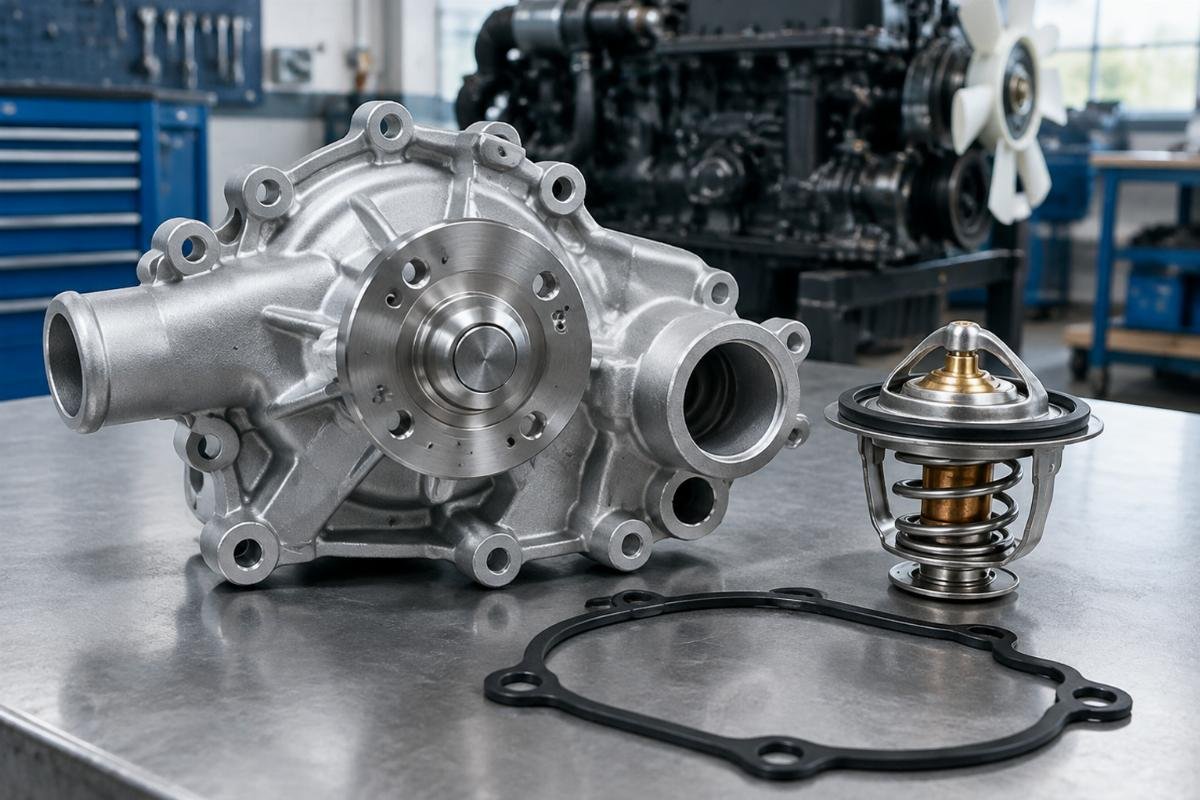
A water pump moves coolant at a flow rate calibrated against a specific thermostat opening threshold. When a Kubota D1005 D1105 water pump thermostat kit engine rebuild specifies 82°C ±2°C, that figure is not arbitrary — it defines the cylinder wall temperature at which piston ring tension and liner clearance operate within design limits. Installing a pump that circulates faster while the thermostat opens later creates localized hot spots in the deck surface. This kit ships the pump, wax-element thermostat, and nitrile gasket as a matched group so the rebuild shop avoids assembling the system from individually sourced parts with unverified thermal interaction.
Serial Variants and the Wrong Kit Problem
The Kubota D-series family — D905, D1005, D1105, D1305, V1305, V1505 — shares external block dimensions but uses different water pump housings and thermostat diameters across production runs. A cross-reference number like 15531-73010 (reference only) may map to an early-production D1005 but not to a later build with revised coolant port geometry [NEED_CITE: engine serial range part number variation in compact diesel platforms]. Confirming the engine serial prefix before ordering eliminates the scenario where the pump bolts align but the thermostat housing flange does not seat against the block face.
Reading the Specification Sheet Against Real Failures
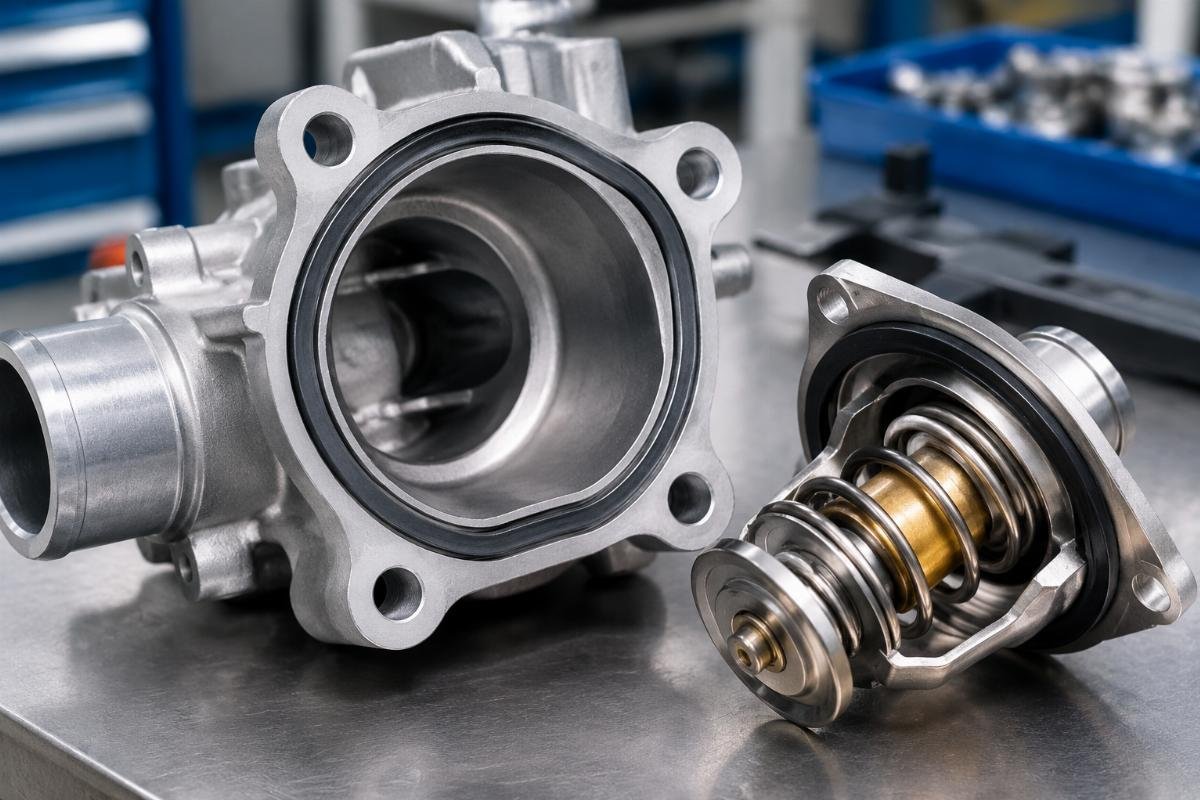
The sealing surface flatness tolerance of ≤0.05 mm matters because nitrile rubber gaskets compress into surface irregularities during torque-down. A housing face that is out of flat by even a fraction beyond that threshold will weep coolant at the block-to-pump joint once the engine reaches operating pressure. The 150°C gasket temperature rating covers the peak metal temperature at the thermostat housing during sustained high-load operation — such as a compact excavator running a breaker in summer ambient heat — without compound hardening. Hardened gaskets lose elastic recovery and leak on cool-down. The wax-element actuator was selected over bimetallic designs because wax capsules respond proportionally to coolant temperature rise rather than snapping open, reducing the thermal shock that fatigues head gaskets [NEED_CITE: wax-element versus bimetallic thermostat actuation characteristics in mobile diesel engines]. The hardened steel impeller shaft resists the radial load from belt tension over the service interval without deflecting into the pump housing bore.
The Hidden Cost of Unmatched Cooling Components
An engine that runs slightly cool because the thermostat opens early will never reach the cylinder wall temperature needed for proper oil film formation. Piston skirts scuff, bearing shells wear prematurely, and the rebuild shop faces a warranty claim on components that were never defective — they were simply operating outside the thermal window the engineer specified. Conversely, a pump with inadequate flow paired with a correctly rated thermostat allows localized boiling in the cylinder head water jacket. Both failure modes trace back to sourcing the water pump and thermostat separately without verifying that their combined behavior matches the original thermal specification. Repeat teardowns consume labor, damage customer trust, and erode the margin on the original overhaul [NEED_CITE: thermal imbalance as a root cause of premature diesel engine component failure].
What the Kit Removes From the Rebuild Workflow
Sourcing from a single account means one quality inspection record covers the entire cooling loop. The part compatibility and cross-reference sheet confirms which OEM reference numbers (16251-73032, 15531-73014, and others — reference only) map to your specific engine serial range, so there is no guesswork at the bench. The Guangzhou warehouse holds stock on these high-turnover cooling kits for fast dispatch, and the minimum order is one piece — a single emergency kit ships without forcing a bulk commitment. The technical team confirms thermostat opening temperature against your engine variant before the kit leaves the warehouse, catching serial-range mismatches before they become installation-day problems.
Documentation & Verification
- Commercial invoice and packing list referencing kit contents and cross-reference numbers
- Part compatibility sheet mapping engine serial prefixes to confirmed housing variants
- Quality inspection record covering flow test and thermostat thermal cycling validation
- Warranty terms covering manufacturing defects for three to twelve months
- Packing photographs showing kit components verified against the order list before crate closure
- HS code and customs documentation support for cross-border aftermarket parts shipments
Installation & Rebuild Sequence
- Flush the block and radiator before installing the new pump to prevent debris from scoring the impeller shaft seal.
- Verify sealing surface flatness on the block face with a straight edge before seating the nitrile gasket.
- Torque the water pump mounting bolts in the specified sequence to maintain the ≤0.05 mm gasket compression uniformity.
- Install the thermostat with the wax-element capsule facing the engine block for correct coolant-sensing orientation.
- Fill with the specified ethylene glycol blend, bleed air from the cooling circuit, and confirm the thermostat opens at 82°C during initial warm-up.
- Inspect for weepage at the pump-to-block joint and thermostat housing flange after the first full heat cycle.
Request the Correct Kit for Your Engine
Provide the engine model, serial number prefix, and any prior rebuild history — including whether oversize pistons or aftermarket liners were installed — so the correct housing variant and thermostat rating can be confirmed before dispatch.
Frequently Asked Questions
Q: What is included in this cooling system kit, and is the gasket set complete for my engine build?
A: The kit contains the water pump, wax-element thermostat, and nitrile rubber thermostat gasket. Additional components such as coolant hoses, radiator caps, or block drain plugs are not included. For a full cooling circuit overhaul, request a compatibility sheet to identify adjacent parts that should be replaced during the same service event.
Q: My previous rebuild used a different thermostat rating — how do I confirm the correct opening temperature?
A: The 82°C ±2°C rating matches the factory thermal specification for standard D1005 and D1105 builds. If your engine was modified or operates in an extreme ambient environment, provide the engine serial number and application details so the technical team can verify whether an alternate rating applies.
Q: The same Kubota engine model has multiple water pump part numbers — which one fits my serial range?
A: Production variations across the D-series family mean housing geometry and port positions changed between early and late serial ranges. Supply the full engine serial number so the cross-reference sheet can isolate the correct variant from the reference-only OEM numbers mapped to this kit.
Q: What other cooling-system components should I inspect when installing this kit?
A: Inspect the radiator for internal scale buildup, check coolant hose integrity at clamp points, and verify the radiator cap pressure rating. A compromised component elsewhere in the loop can mask the improvement from the new pump and thermostat or cause a repeat overheat within the first service cycle.
Q: How do I confirm my engine model when the nameplate is worn or painted over?
A: Photograph the engine block casting numbers, the injection pump data plate, and any visible stamped serial markings. The technical team uses these identifiers to cross-match the engine variant and confirm kit compatibility without relying on the original nameplate.