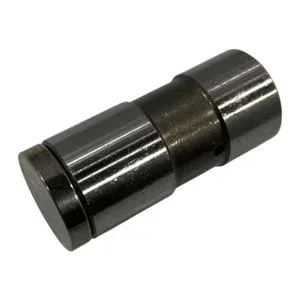
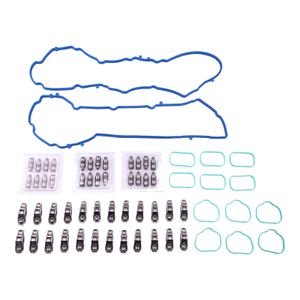
Matched Sets — Valve tappet 04165057 shipped with push rods, rocker arms, and overhaul gaskets so a Deutz TCD2.9 rebuild stays dimensionally consistent from block to head.
Technical Specifications
| Parameter |
Value |
| Part Number |
04165057 |
| Product Type |
Tappet |
| Cross-Reference |
04165057, 4165057, 04164676, 04139032, 04112032 (reference only) |
| Machine Fitment |
Deutz TCD2.9, TCD3.6, D 2.2 L3, D 2.9 L4, D 2008 L4, D 2009 L3, D 2009 L4, G 2.2 L3, TCD 2.2 L3, TCD 2.9 L4, TCD 3.6 L4, TD 2.2 L3, TD 2.9 L4, TD 2009 L4, TD 3.6 L4 |
| Condition |
New Aftermarket |
| Warranty |
3-12 months against manufacturing defects |
| Certification |
ISO-Certified manufacturing partners |
Application Suitability
| Engine System |
Related Components |
| Valvetrain Actuation |
Camshaft lobes, push rods, rocker arms |
| Cylinder Head Assembly |
Valve stems, valve springs, collets, guides |
| Block & Internal Parts |
Lifters, timing gears, cam bearings |
| Lubrication & Cooling |
Oil galleries feeding tappet bores, oil pump pressure regulation |
Why the Same Tappet Reference Ships in Four Variants
Superseded numbers reflect generational changes in cam lobe profile and valvetrain geometry, not interchangeable stock-keeping units.
A rebuild shop ordering a valve tappet 04165057 engine rebuild component by the base number alone risks receiving a variant that does not match the cam profile of the specific engine serial on the bench. Deutz revised the TCD2.9 and TCD3.6 valvetrain across production runs, introducing alternate references like 04164676, 04139032, and 04112032. Each revision carries subtle differences in tappet crown radius or bore diameter. Installing a mismatched tappet does not cause immediate failure but accelerates wear on the cam lobe it rides on [NEED_CITE: valvetrain wear patterns from mismatched tappet and cam profiles in diesel engines]. We have handled claims where the engine ran but developed top-end noise within the first hundred hours because the tappet variant was one revision off.

Valvetrain System Context and Matched Replacement
A tappet never fails in isolation. Its working face rides directly on the camshaft lobe, and its upper end transfers motion through the push rod to the rocker arm. When a valve tappet 04165057 engine rebuild part shows scuffing or concave wear, the mating cam lobe has likely suffered corresponding damage. Replacing the tappet without inspecting and, where necessary, replacing the push rod and rocker arm transfers the mismatch into the next service cycle. Rebuild shops benefit from sourcing the tappet, push rods, and rocker arms as a matched set to maintain consistent contact geometry across the valvetrain.
Rebuild History and Dimensional Shifts
Engines that have been through a prior overhaul may have had the cylinder head or block deck machined, shifting the installed height of the valvetrain. This geometry change means a standard tappet may no longer achieve correct valve lash without compensation. Before dispatching any valve tappet 04165057 engine rebuild component, we confirm whether the block and head remain at factory dimensions or have been machined during previous work. Where machining has occurred, adjusted push rod lengths or selective-fit tappets may be required to restore proper valve clearance [NEED_CITE: cylinder head machining effects on valvetrain geometry in diesel rebuilds]. Ignoring this step leads to either tight valves that burn seats or loose valves that hammer rocker tips.
Reading the Specifications for Tappet Service
The crown radius of the tappet must match the cam lobe profile to distribute contact load evenly across the face. A mismatch concentrates stress at the edge, causing spalling. The bore diameter tolerance controls oil film thickness between the tappet body and its bore in the block — too tight restricts rotation and causes flat-spot wear, too loose allows side loading that scores the bore wall. Surface hardness of the tappet face must be compatible with the cam lobe hardness; if one is significantly harder, the softer component wears prematurely. Oil gallery pressure feeding the tappet bore must be adequate to maintain hydrodynamic lubrication at idle speeds, which is when boundary contact is most likely.
The Cost of Skipping Root-Cause Diagnosis
Replacing a noisy tappet without investigating why it failed invites a repeat visit. The underlying cause may be oil starvation from a blocked gallery, a worn cam bearing bleeding pressure, or incorrect valve lash set during the last service. We have seen engines return with fresh tappets and the same noise within weeks because the oil feed to that bank was restricted. Addressing the valve tappet 04165057 engine rebuild requirement means diagnosing the failure path, not just the failed component [NEED_CITE: root cause analysis methods for recurring valvetrain failures in heavy-duty engines]. A second teardown costs more in labor and reputation than a thorough inspection during the first.
What Makes This Supply Chain Different
Our own production lines and qualified sourced partners operate under one account and one warranty, so a tappet order that includes push rods, rocker arms, and an overhaul gasket kit ships as a single consignment. Eight product categories mean the complete engine job list — from block internals to seal kits — consolidates under one supplier reference. Orders start at one piece, supporting single-engine rebuilds without minimum-quantity barriers. Guangzhou warehouse stock enables fast dispatch on high-turnover tappet references for Deutz engines. Our technical team verifies engine serial ranges against superseded numbers before confirming fitment, and sample units are available for physical fitment checks before bulk commitment.
Documentation & Verification
- Commercial invoice listing each tappet variant by its specific cross-reference number
- Compatibility sheet mapping 04164676, 04139032, and 04112032 to applicable serial ranges (reference only)
- Dimensional inspection records covering crown radius, bore diameter, and face hardness
- Warranty terms covering manufacturing defects for 3-12 months
- Packing photographs showing tappets protected against transit contact damage
- HS code and customs documentation prepared for international engine parts shipment
Installation & Rebuild Sequence
- Inspect cam lobe surfaces for pitting or ridge wear before installing new tappets on the Deutz block
- Verify tappet bore clearance with a bore gauge; score marks indicate the bore needs reconditioning
- Lubricate tappet face and bore with assembly oil to prevent dry start scuffing on initial cranking
- Set valve lash to specification after the engine reaches operating temperature, not cold
- Run the engine at moderate load for the first hour to seat tappet faces against cam lobes
- Recheck valve clearance after the initial break-in period and adjust if drift is detected
Before You Send an Inquiry
Provide the Deutz engine model designation, engine serial number, and any records of prior overhauls or machining work. If the engine nameplate is illegible, a photograph of the block casting number and the existing tappet helps confirm the correct variant among superseded references. Detailing whether the rebuild scope covers just the valvetrain or the full engine allows us to flag related components — such as push rods, cam bearings, and gasket sets — that should ship together.
Frequently Asked Questions
Q: Which valvetrain components should be replaced alongside the tappet during a Deutz overhaul?
A: The tappet contacts the cam lobe directly and drives the push rod, so inspect both for corresponding wear. Rocker arms, valve stems, and collets should also be checked. Sourcing the valve tappet 04165057 engine rebuild components as a matched set — tappets, push rods, and rocker arms — maintains consistent geometry and prevents accelerated wear from mixed-generation parts.
Q: How do superseded reference numbers affect which tappet fits my engine?
A: Numbers like 04164676 and 04139032 reflect design revisions across Deutz production runs. The correct variant depends on your specific engine serial range, not just the base model. We cross-reference your serial number against the supersession chain to supply the tappet that matches your cam profile and bore diameter.
Q: My engine had a previous rebuild — how do I know if standard tappets still fit?
A: Prior machining of the cylinder head or block deck changes installed valvetrain height. Provide the rebuild records or let us know if head or block surfaces were cut. We then confirm whether standard tappets achieve correct valve lash or if adjusted push rods are needed to compensate for the dimensional shift.
Q: What does the overhaul kit include, and does it cover my engine variant?
A: Kit contents vary by engine serial and production revision. Before quoting, we verify your specific variant and confirm the gasket set, seal rings, and hardware match your build. Requesting the contents list upfront prevents discovering a missing item mid-rebuild when the engine is already disassembled on the bench.
Q: How do I identify the exact Deutz engine model if the nameplate is gone?
A: Provide a clear photograph of the block casting number, the cylinder head casting mark, and any remaining data plates on adjacent components. We cross-reference these markings against Deutz production records to confirm the engine family, serial range, and the correct tappet variant for your rebuild.