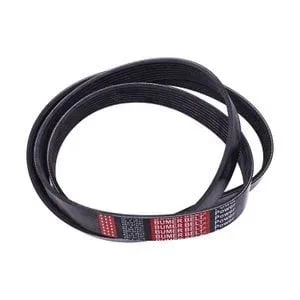
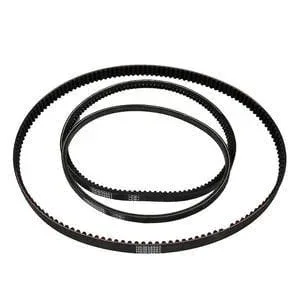
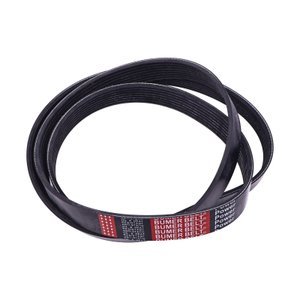
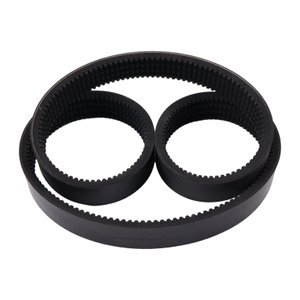
Engine Sequence Match — Cummins B and C series engines carry distinct belt routing layouts across serial ranges, verified against build records before dispatch.
Technical Specifications
| Parameter |
Value |
| Part Number |
3288497 |
| Product Type |
Belt |
| Cross-Reference |
3288497, C3288497 (reference only) |
| Machine Fitment |
ISB, QSB, 6CTA, ISC, QSC, 4B3.9, 6A3.4, 6B5.9, B Series, C Series |
| Material |
High-tensile synthetic rubber compound with polyester cord reinforcement |
| Condition |
New Aftermarket |
| Warranty |
6-month warranty against manufacturing defects |
| Packaging |
Original sealed polybag with XUNPO label and part identification |
| MOQ |
1 piece |
| Standards |
ISO 9001 |
Application Suitability
| Engine System |
Related Components |
| Front-End Accessory Drive |
Belt tensioner assembly, idler pulley, crankshaft pulley |
| Cooling & Charging System |
Alternator bracket, water pump mounting hardware, fan hub |
| Air Compression System |
Compressor drive pulley, mounting gasket, oil supply line |
| Overhaul Refresh |
Complete accessory drive kit, seal kit, front cover gasket |
System Failure Roots That A New V-Belt Alone Cannot Fix
Premature V-belt engine replacement for Cummins ISB QSB usually traces back to a failing tensioner or worn pulley groove, not the belt itself.
In the Pearl River Delta service network, I have repeatedly seen Cummins 6CTA and ISC engines return with shredded belts barely two weeks after a fresh installation. The root cause was almost always a seized tensioner bearing or a pulley worn out of trapezoidal profile, forcing the new belt to ride on an edge rather than seating fully in the groove. Replacing the belt without addressing the accessory drive hardware simply schedules the next breakdown. [NEED_CITE: accessory drive system diagnostic procedures for heavy-duty diesel engines]

Accessory Drive Context for B and C Series Platforms
This V-belt engine replacement for Cummins ISB QSB sits at the front of the engine, transferring crankshaft torque to the alternator, water pump, and air compressor. On B Series blocks like the 4B3.9 and 6B5.9, the belt routing wraps multiple accessories, meaning a single belt failure disables charging, cooling, and braking air supply simultaneously. Treating this component as an isolated wear item ignores the system-level dependency that defines Cummins front-end architecture.
Sequence Variants and Sizing History
Cummins revised the accessory drive layout across ISB and QSB production runs, altering pulley diameters and belt lengths between early and late serial ranges. An engine that underwent a previous rebuild may carry non-standard pulleys or an aftermarket tensioner with different spring rates. Confirming the exact build sequence and any prior overhaul modifications ensures the replacement belt matches the current physical layout, not just the original factory specification. [NEED_CITE: Cummins engine serial number breakpoint identification for belt drive components]
Material Response to Diesel Bay Conditions
The EPDM and neoprene compound formulation resists ozone cracking and oil mist degradation common in enclosed engine compartments. Polyester tensile cords maintain dimensional stability under continuous high-temperature operation, preventing the stretch-induced slip that plagues lower-grade belts. The trapezoidal cross-section must conform precisely to pulley groove geometry — any deviation accelerates sidewall wear and generates heat that degrades the rubber matrix from the inside out.
The Hidden Cost of Skipping System Inspection
Installing a fresh belt over a pulley with worn grooves or a tensioner with weak spring force guarantees rapid sidewall degradation and heat buildup. The belt may appear intact visually while internal cord separation progresses unnoticed until catastrophic failure under load. This pattern repeats across QSC and 6CTA applications where maintenance schedules replace belts on hours alone without verifying the condition of surrounding hardware. [NEED_CITE: predictive maintenance intervals for diesel engine accessory drive belts]
Sourcing Logic for System-Matched Components
Our Guangzhou facility produces selected accessory drive components in-house while sourcing complementary items from ISO 9001-certified partners under unified quality control and warranty terms. A single account covers all eight product categories, meaning this belt ships alongside matched tensioners, pulleys, and seals in one consignment. Part identification works from the original number, machine model, or even a photograph of a worn nameplate, with cross-reference verification covering superseded numbers. Technical support confirms fitment and sizing before commitment, and sample supply allows physical trial fitting before bulk orders proceed.
Documentation & Verification
- Commercial invoice and packing list itemize every belt and associated component by part number
- Compatibility sheet maps cross-reference numbers (reference only) to specific Cummins serial ranges
- Dimensional inspection record confirms belt length, width, and groove profile before dispatch
- Six-month warranty certificate covers manufacturing defects with clear claim procedure
- Packing photographs document sealed polybag condition and XUNPO label placement
- HS code and customs documentation prepared for international freight clearance
Installation & Rebuild Sequence
- Clean all pulley grooves with solvent and verify no rust or debris remains before belt installation
- Confirm tensioner arm travel and spring resistance match Cummins specification for the engine serial
- Route belt according to factory diagram, verifying wrap angle on each accessory pulley
- Apply specified torque to tensioner mounting bolts and verify alignment with straightedge
- Run engine at idle for initial bedding, then re-check tension after thermal expansion stabilizes
Quoting the Right Configuration
Provide your Cummins engine model, serial number, and any known overhaul history so we can verify belt routing and confirm whether standard or variant-length configuration applies. If the nameplate is illegible, photographs of the existing belt, tensioner, and pulley arrangement allow remote identification. Request matched accessory drive components together to consolidate the job list into a single shipment.
Frequently Asked Questions
Q: What other components should I inspect when replacing this V-belt?
A: Examine the tensioner arm for free movement and adequate spring force, check all pulley grooves for wear or rust pitting, and verify idler bearing smoothness. On Cummins B and C series engines, the water pump pulley and alternator bracket alignment also affect belt tracking. Replace any component showing wear to prevent the new belt from failing prematurely due to misalignment or inadequate tension.
Q: How do I confirm this belt fits my specific Cummins engine serial number?
A: Provide the full engine serial number from the dataplate or casting marks on the block. Cummins revised accessory drive configurations across ISB, QSB, and 6CTA production runs, altering belt lengths and routing. Cross-reference verification against build records confirms whether the standard configuration or a variant applies to your specific engine, preventing fitment errors from superseded part numbers.
Q: What causes premature V-belt failure on Cummins B/C series engines?
A: Worn pulley grooves, seized tensioner bearings, and misaligned accessory brackets create edge-loading that degrades belt sidewalls rapidly. Oil mist contamination from front seal leaks softens the rubber compound, while inadequate tension allows slip-induced heat buildup. Addressing these root causes during belt replacement prevents repeat failures and extends service intervals across the accessory drive system.
Q: Can I order matched tensioners and pulleys together with this belt?
A: Matched accessory drive components ship under a single account with unified warranty terms. Consolidating the belt, tensioner, idler pulleys, and associated seals into one order eliminates split shipments and ensures all components arrive simultaneously. This approach prevents the downtime extension that occurs when a repair waits on a second delivery for a forgotten hardware item.
Q: How do I identify my Cummins engine model if the nameplate is worn?
A: Photograph the engine block casting numbers, valve cover configuration, and any legible dataplate remnants. Cummins B and C series engines carry identification marks in multiple locations, including the block deck surface and timing gear housing. These reference points allow remote model and serial confirmation even when paint, corrosion, or abrasion obscures the primary nameplate.