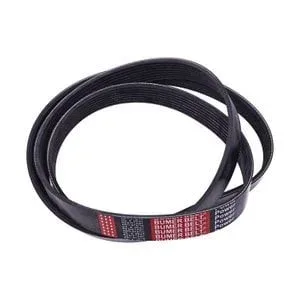
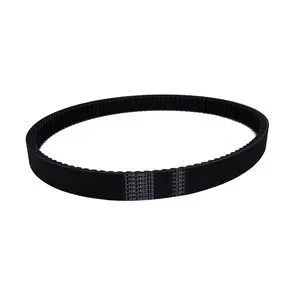
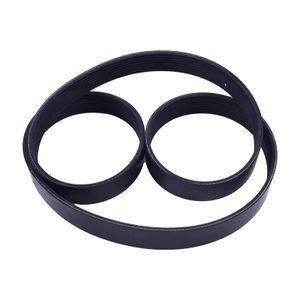
Matched Set Dispatch — Every V-Belt 3288497 ships alongside verified tensioner and idler pulley part numbers matched to your specific Cummins engine serial variant.
Technical Specifications
| Parameter |
Value |
| Part Number |
3288497 |
| Product Type |
Belt |
| Cross-Reference |
3288497 (reference only), C3288497 (reference only) |
| Engine Fitment |
Cummins ISB, QSB, 6CTA, ISC, QSC, 4B3.9, 6A3.4, 6B5.9, B Series, C Series |
| Condition |
New Aftermarket |
| Reinforcement |
High-tensile polyester cords |
| Operating Temperature |
Up to 120°C |
| Warranty |
3-12 months against manufacturing defects |
| Quality Standard |
ISO 9001 |
Application Suitability
| Engine System |
Related Components |
| Front-end accessory drive |
Automatic belt tensioner, idler pulley assembly |
| Cooling system drive |
Water pump pulley, coolant hose connections |
| Charging system drive |
Alternator mounting bracket, electrical connectors |
| Air supply drive |
Air compressor clutch, mounting gaskets |
| Scheduled overhaul |
Complete front cover gasket set, seal kit |
When the Belt Snaps Again Before the Next Oil Change
The replacement V-Belt 3288497 Cummins engine replacement belt failed because the worn tensioner was never swapped.
I have seen this pattern repeat across Cummins ISB and QSB work sites in Shandong. A fresh belt goes on, the machine runs for a few hundred hours, and the belt shows severe cracking or jumps off the pulley groove entirely. The root cause sits in the tensioner spring fatigue or the idler pulley bearing play that was ignored during the last service [NEED_CITE: belt drive system failure root cause analysis for heavy-duty diesel engines]. Replacing the belt alone addresses the symptom while leaving the actual fault untouched inside the accessory drive system.

The Accessory Drive System Behind This Belt
This V-Belt 3288497 Cummins engine replacement belt transmits crankshaft torque to the water pump, alternator, and air compressor through a defined routing path. Each driven accessory places a specific load on the belt, and any single component dragging or seizing will overload the belt beyond its designed capacity. Treating the belt as an isolated consumable misses the system relationship. The tensioner maintains correct wrap angle on the pulleys, and the idler guides the belt through the routing geometry. When the V-Belt 3288497 Cummins engine replacement belt arrives without these supporting components verified, the repair is incomplete from the start.
Engine Serial Variants That Change Belt Routing
Cummins ISB, QSB, 6CTA, ISC, QSC, and B/C Series engines share family architecture but differ in accessory bracket configuration across serial ranges. A belt length that fits one build variant may be too long or too short for another, even under the same base model designation. Previous rebuilds may have introduced alternate tensioner styles or relocated the idler pulley position. Confirming the engine serial number and build code ensures the V-Belt 3288497 Cummins engine replacement belt matches the actual routing on your machine rather than a generic diagram [NEED_CITE: Cummins engine serial variant accessory drive configuration differences]. The 4B3.9 and 6B5.9 variants in particular show bracket differences that affect belt length and tensioner reach.
Material and Construction Under Continuous Heat Load
The heat-resistant rubber compound in this belt is formulated for continuous operation within the high-temperature zone of the engine compartment, where ambient air from the radiator fan and radiant heat from the exhaust manifold combine. The high-tensile polyester cord reinforcement resists stretch under load, maintaining consistent tension across the service interval and reducing the need for manual re-tensioning. Proper cord tension directly affects how evenly the belt seats in the pulley grooves — too loose causes slip and glazing, too tight accelerates bearing wear on the driven accessories. Operating temperature tolerance up to 120°C provides a working margin for typical diesel engine bay conditions.
The Hidden Cost of Skipping the Tensioner
Leaving a fatigued tensioner in place when fitting a new belt guarantees the new belt will experience the same uneven loading that destroyed its predecessor. The workshop tears down the accessory drive a second time, the machine sits idle again, and the total cost of that repair doubles when you count the repeated labor and the second belt [NEED_CITE: cost impact of repeat accessory drive failures in fleet operations]. In overhaul scenarios where the front cover is already off, the marginal effort to replace the tensioner and idler pulley at the same time is minimal compared to the cost of reopening the job later. This is where system-level thinking prevents the repeat failure cycle.
What Makes This Supply Chain Different
Both our self-produced and sourced supply lines carry identical quality control procedures and the same warranty terms, so a single order covers components from multiple production sources under one account. Our eight core product categories mean the tensioner, idler pulley, gaskets, and seals that this belt job requires can ship in one consolidated dispatch from our Guangzhou warehouse. We identify the correct parts from a part number, machine model, photograph, or nameplate image — whichever is available when the engine plate is worn or painted over. Cross-reference verification covers superseded and alternate numbers across Cummins engine generations, catching mismatches before the order ships. Samples are available for fitment confirmation before you commit to a bulk quantity.
Documentation & Verification
- Commercial invoice listing each belt drive component by verified Cummins engine serial number
- Cross-reference sheet mapping 3288497 (reference only) to applicable engine build variants
- Dimensional inspection record confirming belt profile and cord placement before packing
- Warranty certificate covering manufacturing defects for 3 to 12 months
- Packing photographs showing belt condition and protective wrapping at dispatch
Installation & Rebuild Sequence
- Inspect all pulley grooves for wear ridges before routing the new V-Belt 3288497 Cummins engine replacement belt
- Verify tensioner arm travel and spring force against Cummins service specification for your engine serial
- Clean all pulley contact surfaces of oil residue and debris to prevent early belt slip
- Route belt following the exact diagram for your engine build variant, confirming wrap angle on each accessory
- Run engine at idle for initial seating period, then recheck tension after the first thermal cycle
Requesting a Complete Drive System Quote
Provide your Cummins engine model, serial number, and any previous rebuild records so we can confirm the correct belt length, tensioner style, and idler pulley configuration for your specific build. If the engine nameplate is damaged, send a photograph of the accessory drive bracket and existing belt routing for identification. We will return a matched component list with verified compatibility across the entire front-end drive system.
Frequently Asked Questions
Q: What other components should be replaced when servicing this V-belt?
A: The tensioner assembly and idler pulley should be evaluated at every belt change. Worn tensioner springs cause uneven loading that shortens belt life. On higher-hour engines, inspect the water pump and alternator bearings for play. Replacing the belt, tensioner, and idler as a matched set addresses the full drive system rather than repeating the same failure mode.
Q: Does my ISB/QSB/6CTA engine serial number affect which belt variant I need?
A: Yes. Cummins accessory bracket configurations change across serial ranges within the same engine family. Belt routing path and required length differ between builds. Providing the full engine serial number and build code allows us to confirm the correct variant for your specific configuration rather than supplying a generic fitment.
Q: Should I replace the tensioner and pulleys at the same time as the belt?
A: Strongly recommended on any engine with significant service hours. A fatigued tensioner will cause the new belt to fail prematurely, doubling your repair cost through repeated labor. During an overhaul with the front cover removed, swapping these components simultaneously adds minimal effort and prevents repeat teardowns.
Q: How do I identify my exact Cummins engine model if the nameplate is worn?
A: Send a photograph of the accessory drive bracket layout, the existing belt routing path, and any casting numbers visible on the engine block. These physical features differ between engine variants and allow identification even when the data plate is unreadable or painted over from previous service work.
Q: How do I confirm the correct belt routing and tension specification for my engine build?
A: Belt routing diagrams vary by engine build variant and accessory configuration. Provide your engine serial number so we can supply the correct routing reference. After installation, tension should be verified against the specification for your specific build, then rechecked after the initial thermal cycle settles the belt into the pulley grooves.