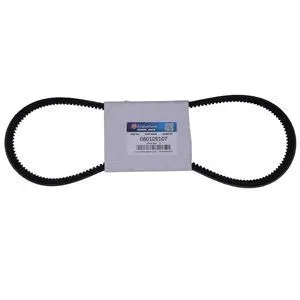
Matched System Dispatch — Every belt drive component verified against the specific Deutz 2011 series engine serial before packing, preventing mismatched tensioner or pulley pairings.
Technical Specifications
| Parameter |
Value |
| Part Number |
01179566 |
| Product Type |
Belt |
| Cross-Reference |
0117 9566, 0117-9566, 02235810, 1179566, MT40285048 (reference only) |
| Machine Fitment |
F3L2011, F4L2011, BF3L2011, BF4L2011, D2011L04I, D2011L04W, TD2011L04I, TD2011L04W, TCD2011L04I, TCD2011L04W, BF4L1011F |
| Condition |
New Aftermarket |
| Warranty |
3-12 months against manufacturing defects |
| Minimum Order |
1 piece |
| Quality Standard |
ISO 9001 |
Application Suitability
| Engine System |
Related Components |
| Belt Drive Auxiliary System |
Tensioner assembly, idler pulleys, alternator mounting hardware |
| Cooling Fan Drive Circuit |
Fan hub bearing, coolant pump pulley alignment |
| Engine Overhaul Accessory Renewal |
Full gasket set, seal kit, fastener torquing sequence |
| Scheduled Service Interval Replacement |
Inspection of pulley groove wear and tensioner spring fatigue |
Why a Belt Drive Failure Often Means More Than Just the Belt
A snapped or glazed belt during a Deutz 2011 series rebuild is rarely an isolated defect; it usually signals misalignment, a seized tensioner, or coolant contamination attacking the rubber compound.
I have seen rebuild shops replace the belt and fire up the engine, only to have the new belt shred within hours because the tensioner bearing was already pitted. The root cause was never addressed. In desert conditions, ambient heat accelerates rubber degradation, and a marginal tensioner that survived one service interval will not survive the next [NEED_CITE: belt drive system failure root cause analysis in heavy-duty diesel applications]. A V-Belt engine replacement rebuild must include systematic inspection of every component the belt contacts, not just the belt itself. Skipping this step means the engine goes back into service with a known weakness still present.

The Belt Drive System Context for Deutz 2011 Series Engines
This V-Belt (cross-reference 01179566) sits within a belt drive subsystem that routes power from the crankshaft pulley to the alternator, coolant pump, and potentially a hydraulic auxiliary pump depending on the engine configuration. Each pulley in that loop must be checked for groove wear, lateral runout, and bearing play before the new belt goes on. A V-Belt engine replacement rebuild that ignores pulley condition is incomplete work.
Engine Serial Variants and Belt Routing Differences
Within the Deutz 2011 family — from the F3L2011 three-cylinder up through the TCD2011L04W turbocharged variants — belt routing and length specification can shift between production runs. The BF4L1011F shares the same basic architecture but may use a different belt profile or tensioner mounting point. Confirming the exact engine serial number against the belt specification prevents installing a belt that is one rib short or one groove too wide. This cross-reference verification covers superseded numbers such as 02235810 and MT40285048, which appear in older service manuals but resolve to the same physical part [NEED_CITE: Deutz engine serial variant identification for belt drive components].
Specification Interpretation for High-Temperature Auxiliary Drive
The belt operates in an environment where under-hood temperatures on construction machinery regularly exceed normal automotive ranges. The rubber compound must resist heat-induced hardening and cracking across sustained high-load operation. Proper tension is critical: too loose and the belt slips, generating friction heat that destroys the compound; too tight and the tensioner bearing and alternator bearing absorb excessive radial load, leading to premature bearing failure. The 3-12 month warranty window covers manufacturing defects, but installation errors such as incorrect tension or misaligned pulleys fall outside that scope. Matched set consideration — replacing the tensioner alongside the belt — eliminates the most common variable in early belt failure.
The Hidden Cost of Skipping the Tensioner During Belt Service
Rebuilding an engine and reusing a worn tensioner means accepting that the weakest link in the belt drive is still in place. When that tensioner fails — and it will — the belt loses tension, slips, and the alternator stops charging or the coolant pump stops circulating. The machine goes down again, and now the diagnosis must start over. In remote job sites, that repeat failure burns days of productive time and erodes confidence in the rebuild itself [NEED_CITE: repeated auxiliary drive failure impact on equipment availability]. The cost of a tensioner is negligible compared to the cost of a second teardown.
Why Procurement Through This Channel Works for Rebuild Shops
Production lines for selected part categories and qualified sourced supply operate under a single warranty and a single account, so a belt, a tensioner, and a full gasket set all ship under one reference. Eight product categories mean a complete overhaul list consolidates into one consignment rather than fragmenting across multiple suppliers. Minimum order is one piece, so a single emergency belt does not force a bulk commitment. Guangzhou warehouse stock enables fast dispatch on common Deutz 2011 series items. Part identification works from the original number, the machine model, a photograph of the nameplate, or even a worn label — the technical team cross-references superseded and alternate numbers before confirming the order. Sample supply is available for fitment confirmation before any bulk commitment.
Documentation & Verification
- Commercial invoice and packing list with line-item part numbers for each belt and associated component
- Compatibility and cross-reference sheet confirming 01179566 interchange with 02235810 and MT40285048 (reference only)
- Quality inspection record covering dimensional check and visual inspection before dispatch
- Warranty terms document specifying coverage period and exclusion conditions
- Packing photographs showing belt condition and protective wrapping prior to crate closure
- HS code and customs documentation support for international shipment clearance
Installation & Rebuild Sequence
- Verify pulley groove condition and tensioner bearing play before removing old belt for reference comparison
- Clean all pulley surfaces of oil, coolant residue, and debris that could degrade the new belt compound
- Route belt according to engine serial-specific diagram, confirming rib count matches each pulley groove count
- Apply specified tension using calibrated tool, then rotate engine two full revolutions and recheck tension
- Run engine at idle for initial break-in period, monitoring belt tracking and listening for tensioner bearing noise
- Record installation date and engine hours for next scheduled belt drive inspection interval
Request a System-Matched Quote
Provide the Deutz engine model, serial number, and any known rebuild history so the correct belt specification and compatible tensioner variant can be confirmed. If the original nameplate is damaged or painted over, send a photograph of the engine block casting numbers and the old belt label. For overhaul kit coordination, share the full component list so matched sets arrive together.
Frequently Asked Questions
Q: What other belt drive components should be replaced alongside this belt during an overhaul?
A: The tensioner assembly should always be renewed during a V-Belt engine replacement rebuild because its bearing and spring are subject to the same thermal cycles that degrade the belt. Idler pulleys should be inspected for bearing play and groove wear. Any pulley showing lateral runout or visible scoring should be replaced to prevent the new belt from tracking incorrectly and failing prematurely.
Q: How do engine serial variants within the Deutz 2011 series affect belt fitment?
A: Production changes across the F3L2011, BF4L2011, and TCD2011L04 variants can alter pulley diameter, tensioner mounting geometry, or belt rib count. The exact engine serial number determines which belt specification is correct. Superseded part numbers such as 02235810 resolve to the same physical component, but confirming against the serial eliminates any ambiguity before the engine is torn down.
Q: What system-level faults cause premature belt failure beyond the belt itself?
A: Misaligned pulleys force the belt to track sideways, wearing the edges. A seized tensioner bearing removes automatic tension compensation, causing slip or overload. Coolant or oil contamination attacks the rubber compound directly. Each of these conditions will destroy a new belt just as quickly as the old one unless the root cause is diagnosed and corrected during the rebuild.
Q: Are tensioner and pulley available as a matched set with this belt?
A: Yes, the tensioner assembly and idler pulleys can be supplied alongside the belt as a consolidated kit matched to the specific Deutz engine serial. This ensures all belt drive components share verified compatibility and arrive in one consignment, eliminating the risk of receiving a tensioner variant that does not match the belt routing configuration.