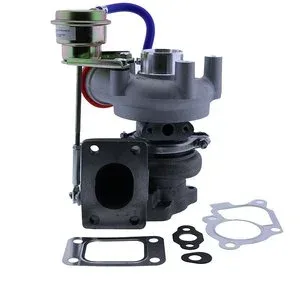
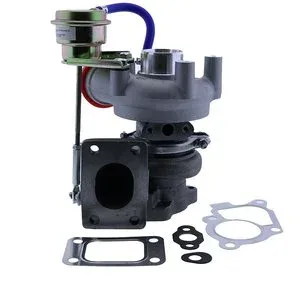
System-Level Overhaul Support — Every TD04L4 turbo we ship is verified against the specific C3.3B engine serial to ensure port orientation, mounting flange geometry, and oil feed configuration match the rebuild requirement.
Technical Specifications
| Parameter |
Value |
| Part Number |
436-1920 |
| Product Type |
Turbocharger |
| Cross-Reference |
CA436-192, 436-192, 436192 (reference only) |
| Turbo Model |
TD04L4, TD04L4-09TK3-5.0 |
| Compatible Engine |
Caterpillar C3.3B |
| Machine Fitment |
308, 308.5, 308E2 CR, 308E2 SR, 309, 310, 236D, 236D3, 242D, 242D3, 246D, 246D3, 257D, 257D3, 259D, 259D3, 262D, 262D3, 277D, 279D, 279D3, 287D, 289D, 289D3, AP300F, AP355F, 906M, 907M, 908M |
| Condition |
New Aftermarket |
| Warranty |
3–12 months against manufacturing defects |
| Minimum Order |
1 piece |
| Manufacturing Standard |
ISO-certified production |
Application Suitability
| Engine System |
Related Components |
| Turbocharged Air Induction |
Exhaust manifold gasket, turbo mounting studs, oil supply line fittings |
| Lubrication Circuit Feeding Turbo Bearings |
Oil feed line, oil drain gasket, crankcase breather |
| Emission and Exhaust Path |
EGR valve seals, exhaust pipe clamp, heat shielding |
| Combustion Chamber Matching |
Piston sets, cylinder liners, injector nozzles (when turbo failure traces to blow-by) |
Why Rebuilds Fail When the Root Cause Is Not Addressed
A replacement Turbocharger 436-1920 TD04L4 for CAT C3.3B engine rebuild only solves the symptom if the oil contamination or exhaust residue that destroyed the original unit is still present in the system.
I have pulled turbochargers off C3.3B engines where the shaft journal was scored to a rough finish within the first handful of hours because the oil feed line was never flushed during the rebuild. The new turbo inherits the same contaminated oil path, and the bearings fail on the same failure mode. Across the engine rebuild shops I support in the Pearl River Delta, roughly half the repeat turbo warranty claims trace back to an oil line or air intake issue that was never diagnosed [NEED_CITE: diesel engine turbocharger failure root-cause analysis methodology]. The rebuild kit went out complete, but the system that feeds the turbo was left carrying debris from the previous failure.

The C3.3B Emission System and Where This Turbo Sits
The TD04L4 sits at the junction of the intake and exhaust paths on the C3.3B, pulling filtered air through the compressor side while the turbine side is driven by exhaust gas that has already passed through the combustion chambers. When piston ring blow-by is excessive, unburned hydrocarbons and soot load the turbine housing and foul the variable geometry passages if equipped. This means a Turbocharger 436-1920 TD04L4 engine rebuild CAT C3.3B installation is incomplete unless the condition of the piston rings, cylinder bore finish, and valve stem seals has been confirmed during the same teardown.
Engine Serial Variants That Change the Physical Fit
The C3.3B family spans multiple serial ranges, and within those ranges the turbo mounting flange orientation and oil port clocking can differ between early and late production builds. A TD04L4-09TK3-5.0 variant has specific compressor housing geometry and turbine wheel trim calibrated for the boost curve the ECU expects on that particular engine build. Installing a turbo with the wrong oil port position forces the rebuild shop to bend the oil feed line, creating a restriction that starves the center cartridge of lubrication. I have seen this exact misfitment cause a turbo seizure during the first post-rebuild load test [NEED_CITE: turbocharger oil supply pressure requirements for light diesel engines]. Confirming the engine serial number before release from the parts counter prevents this bench-level error entirely.
Compressor Trim, Turbine Geometry, and Boost Delivery
The TD04L4 designation covers a family of turbos, but the -09TK3-5.0 suffix encodes the compressor wheel trim ratio and turbine housing A/R ratio that determine how the unit responds across the C3.3B's operating range. A mismatch in trim ratio means the compressor either surges at low engine speed or fails to deliver adequate mass flow at rated RPM. The turbine housing geometry controls exhaust gas velocity hitting the turbine wheel — too restrictive and backpressure rises, pushing exhaust temperatures into a range that accelerates piston crown erosion; too open and the turbo spools slowly, creating a lag that operators compensate for by over-fueling. These parameters are matched to the injector calibration and cam timing of the specific C3.3B variant, which is why a system-level view of the rebuild matters more than treating the turbo as an isolated swap [NEED_CITE: turbocharger compressor map matching for displacement-class diesel engines].
The Cost of Skipping the System Check
When a rebuild shop orders the turbo alone without the associated exhaust manifold gasket, oil drain seal, and air intake couplings, the installer reuses fatigued hardware that was already heat-cycled through the previous turbo's service life. A leaking exhaust manifold gasket introduces unmetered air into the turbine housing, skewing the boost pressure the ECU reads and triggering derate codes. A partially collapsed oil drain hose restricts return flow, pressurizing the center cartridge and forcing oil past the turbine shaft seal into the exhaust — a failure that looks identical to worn piston rings on a smoke test. These secondary failures consume diagnostic hours and erode customer confidence in the rebuild, even though the turbo itself was not at fault [NEED_CITE: turbocharger oil drain restriction diagnostic patterns].
What This Supply Channel Provides
Our own production lines and qualified sourced supply operate under one account with one warranty, so the turbo and its associated gasket sets carry identical quality terms. Eight product categories mean the piston sets, bearing shells, seal kits, and turbo all consolidate into a single consignment with matched lead times. The minimum order sits at one piece, which matters when a rebuild shop needs a single emergency turbo to get a machine off the bench. Identification works from a part number, a machine model, a photograph of the nameplate, or an image of the old unit on the bench. Cross-reference verification covers superseded numbers and alternate references that legacy catalogues carry incorrectly. A sample unit is available for fitment confirmation before a shop commits to a bulk order for its C3.3B fleet.
Documentation & Verification
- Commercial invoice listing turbo part number and cross-reference identifiers with reference-only notation
- Fitment sheet mapping C3.3B engine serial range to the correct TD04L4 variant and port clocking
- Dimensional inspection record covering flange bolt pattern, oil port thread specification, and shaft end-play
- Warranty terms document specifying coverage scope for manufacturing defects on rotating assembly
- Packing photographs showing turbo orientation and protective packaging before crate closure
- HS code classification and customs paperwork aligned with turbocharger export category
Installation & Rebuild Sequence
- Flush oil feed and drain lines with solvent before fitting the new TD04L4 to remove metallic debris from the previous failure
- Verify exhaust manifold mating surface flatness and replace studs if thread stretch is visible
- Pre-lube the turbo center cartridge through the oil inlet port before the first cranking cycle
- Torque turbo mounting nuts in the specified cross-pattern sequence to avoid flange distortion
- Run the engine at idle with the fuel shutoff disabled until oil pressure registers at the turbo feed line
- Log boost pressure against RPM during the first loaded hour to confirm the compressor map matches the ECU expectation
Confirming the Right Unit for Your Rebuild
When requesting a quote on this Turbocharger 436-1920 TD04L4 for CAT C3.3B engine rebuild, provide the full engine serial number from the block stamping or data plate, any prior rebuild history including oversize grades already installed, and the specific failure mode observed on the removed turbo — shaft play, oil leak from the turbine seal, or compressor wheel damage. This information allows the technical team to confirm the correct variant, flag any adjacent components that should ship with the turbo, and ensure the matched system reaches the rebuild bench together.
Frequently Asked Questions
Q: What other components should be replaced when fitting a new turbo on a C3.3B engine?
A: The exhaust manifold gasket, turbo mounting studs or nuts, oil feed line fittings, oil drain gasket, and air intake couplings should all be replaced as a matched set during turbo installation. Reusing heat-cycled hardware introduces leak paths that cause secondary failures indistinguishable from turbo defects during post-rebuild diagnostics.
Q: How do I confirm the correct TD04L4 variant for my specific engine serial number?
A: Provide the engine serial number from the block stamping or valve cover data plate. The serial number determines the oil port clocking, mounting flange orientation, and compressor trim variant required for that specific C3.3B production build, preventing misfitment on the rebuild bench.
Q: What caused the original turbo to fail, and how do I prevent the replacement from failing the same way?
A: Common root causes include contaminated oil from a failing engine, restricted oil drain lines, and excessive blow-by from worn piston rings loading the turbine with soot. Inspect and flush all oil pathways, confirm crankcase ventilation function, and verify cylinder condition before fitting the replacement turbo.
Q: How do I identify my C3.3B engine variant when the nameplate is worn or painted over?
A: Photograph the block casting numbers, any remaining data plate fragments, and the injector arrangement. These visual markers allow the technical team to cross-reference the engine variant against production records and confirm the correct turbo configuration without relying on a legible nameplate.